
You give the 10-minute warning. Then the 5-minute warning. Then the 2-minute warning. Finally, you walk over and turn off the TV.
Instantly, all hell breaks loose. Your 7-year-old throws the remote, screams at the top of their lungs that you are the worst parent in the world, or collapses onto the carpet in tears.
You stand there baffled: "We agreed on 30 minutes! Why is every single screen session an epic war?"
In clinical practice, this is one of the most common referral concerns for families of children with ADHD, autism, or sensory processing differences. The truth is: your child is not addicted to being bad. Their brain has just driven off a Dopamine Cliff without brakes.
In this article you'll learn
- The neuroscience of the dopamine cliff: why ending screen time feels like physical pain.
- Why verbal warnings fail: understanding attentional hyperfocus and time blindness.
- The danger of transitioning directly from screens to high-demand tasks (homework, dinner, chores).
- The 3-Step Off-Ramp Protocol: visual timers, bridging connection, and sensory landing pads.
- How to set screen boundaries without becoming the enemy.
The Dopamine Cliff: What Happens When the Screen Goes Black
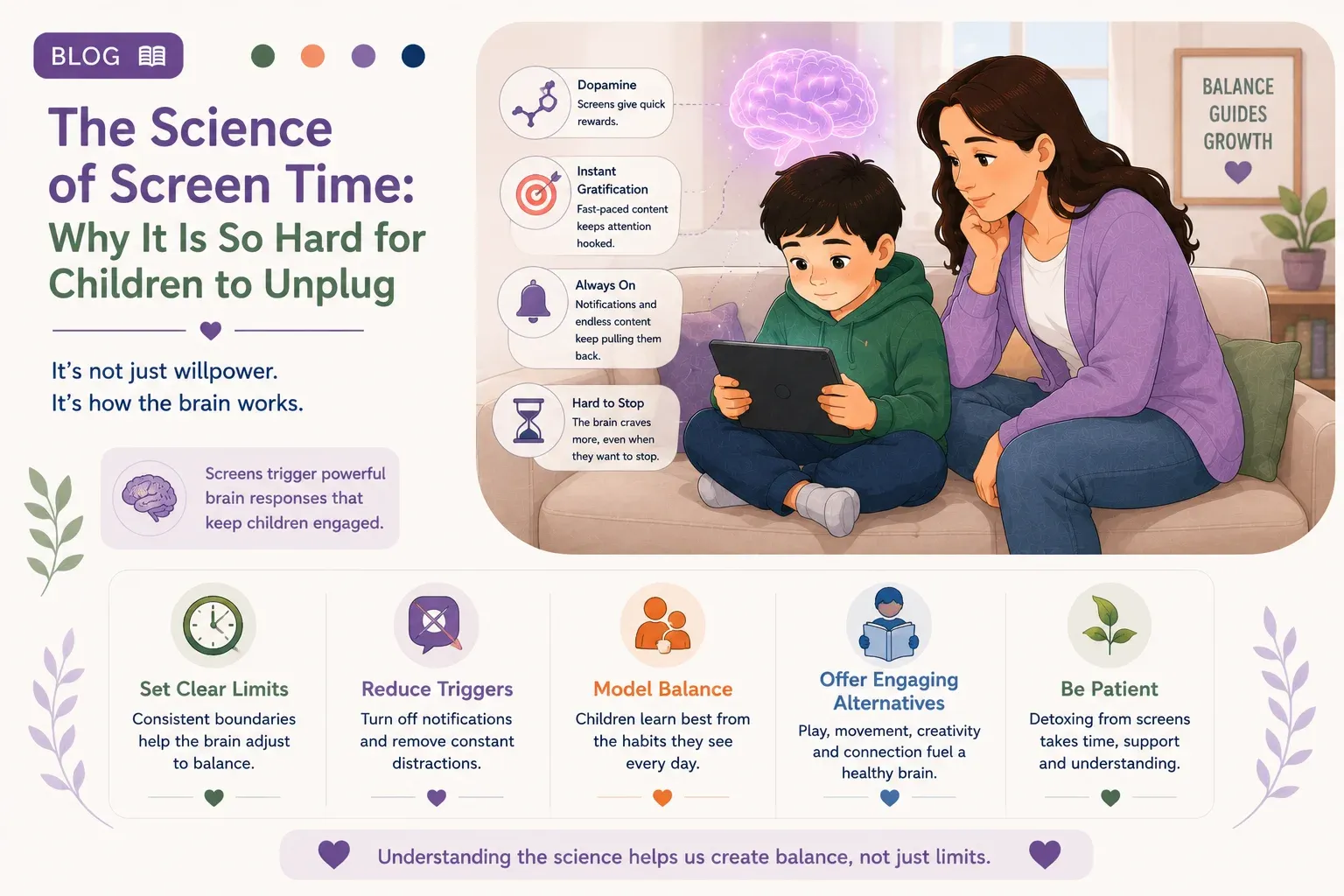
To understand the meltdown, you must look at how digital entertainment is engineered. Video games, YouTube algorithms, and fast-paced animations provide rapid, unpredictable micro-rewards.
For a brain with ADHD—which is chronically under-supplied with baseline dopamine—a screen functions like a neurochemical IV drip. The prefrontal cortex feels alert, peaceful, and fully engaged.
When you shut the screen off, that dopamine supply instantly plummets to zero within a fraction of a second. The child's nervous system experiences this sudden drop as an acute biological crash. Their heart rate spikes, adrenaline floods the bloodstream, and their amygdala sounds the alarm.
Physical Distress, Not Disobedience
Why Shouted Warnings Don't Work
Many parents say: "I gave them three warnings from the kitchen! They knew it was time!"
Unfortunately, shouted warnings violate two neurological realities:
- Thalamic Sensory Gating: When engrossed in a screen, the brain's sensory filter actively suppresses secondary auditory signals. The child literally does not hear your voice.
- Time Blindness: Neurodivergent children do not experience time as a continuous timeline. They live in two zones: 'NOW' and 'NOT NOW.' A phrase like 'five minutes left' has zero concrete meaning to their working memory.
The 3-Step Off-Ramp Protocol
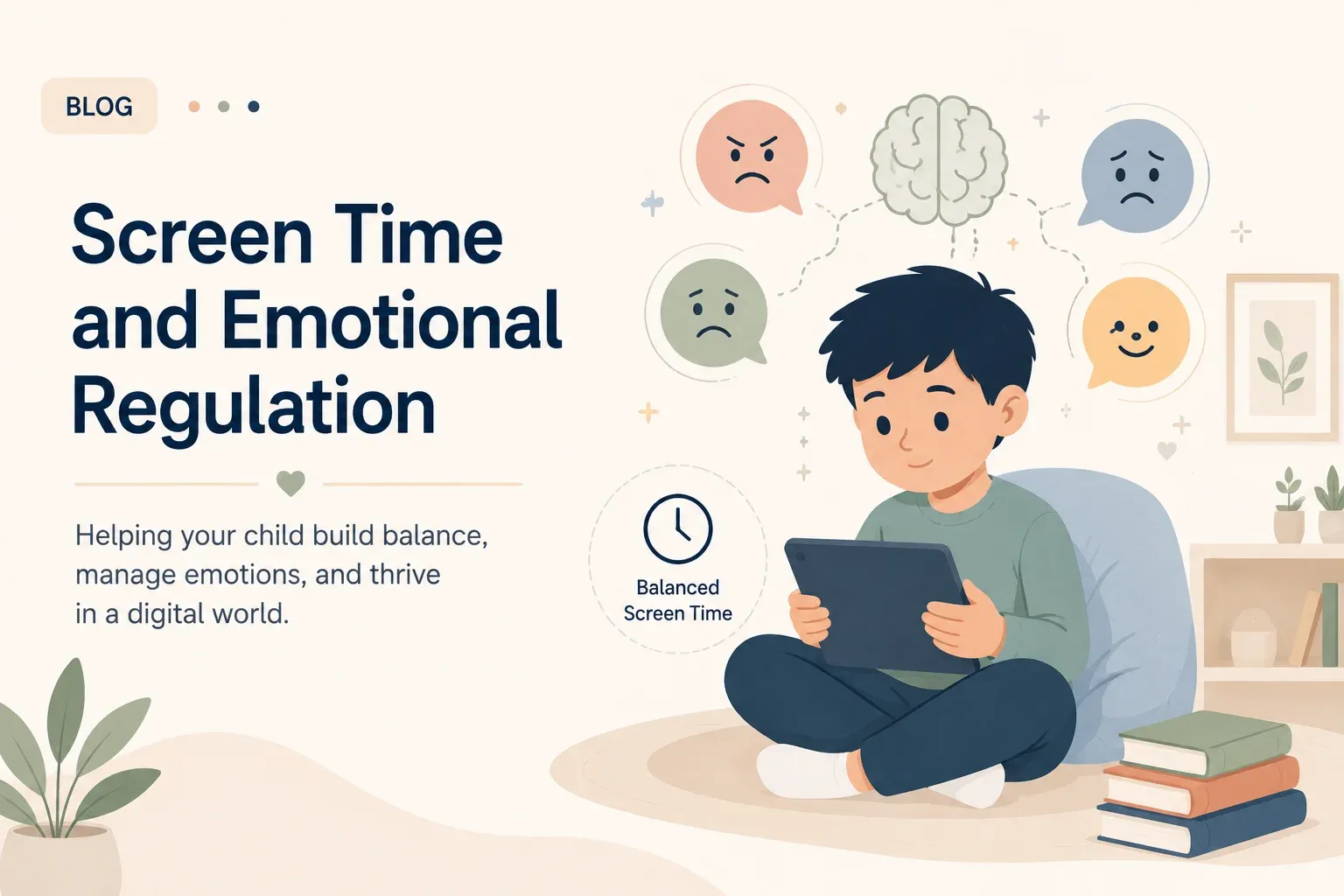
Just as a fast-moving highway requires an off-ramp for cars to decelerate safely, your child's nervous system needs a structured off-ramp to transition away from screens.
Step 1: The Visual Concrete Countdown
Stop giving verbal minutes. Use a visual timer (like a Time Timer or a liquid motion bubbler) placed directly next to the screen.
Walk up to your child, place a hand gently on their shoulder, and say: "Look at the red disk. When the red disappears, the iPad rests." By making time visual and tactile, you bring their thinking brain into awareness.
Step 2: The 60-Second Bridging Connection
One minute before the time expires, sit down beside your child and enter their world. Do not criticize the game. Ask:
"Show me what your character is building right now. Wow, look at those blocks! Where does this level save?"
By engaging in their activity, you connect with them before disconnecting the screen. You become a partner in the transition rather than the adversary who steals their joy.
Step 3: Provide a Dopamine Landing Pad
Never transition a child directly from a high-dopamine screen to a low-dopamine, high-demand task like math homework, cleaning toys, or brushing teeth. That is a recipe for a catastrophic explosion.
Provide a sensory bridge that offers tactile input and mild pleasure:
- A crunchy sensory snack (pretzels, apple slices, popcorn).
- A physical activity (trampoline jumps, swinging, pillow fights).
- A favorite tactile toy (kinetic sand, playdough, Lego).
"If my child has meltdowns over screens, they should be banned from devices forever."
Total bans often create hyper-fixation and secrecy. Teaching children how to transition off screens with scaffolding builds lifelong executive functioning.
"Taking the iPad away as punishment for a meltdown will teach them to stop having meltdowns."
Meltdowns are autonomic nervous system crashes, not willful misbehavior. Punishing an autonomic crash escalates shame and dysregulation.
"Educational apps don't cause dopamine cliffs."
Any digital program that provides instant flashing rewards and rapid pacing triggers dopamine spikes, regardless of whether it teaches math or spelling.
Setting Clear Boundaries with Kindness and Authority
Predictability is the ultimate antidote to transition anxiety. Establish a firm family rhythm: screens happen at predictable windows, and the rules of the off-ramp are reviewed before the tablet is ever turned on.
When you pair unshakeable calm boundaries with compassionate sensory support, the daily screamfest transforms into a peaceful, cooperative routine.
Key Takeaways
- Ending screen time triggers a severe, biological dopamine cliff that feels physically uncomfortable.
- Verbal warnings fail because attentional hyperfocus blocks auditory processing.
- Visual timers turn abstract minutes into concrete, predictable boundaries.
- Connecting with your child for 60 seconds before ending screens bridges the transition.
- Always provide a sensory landing pad (snack, movement, tactile play) before introducing chores or demands.

Rabbia Ashraf
Clinical Psychologist & Certified ADOS-2 Practitioner
Rabbia Ashraf holds an MS in Clinical Psychology and specialized certification in the ADOS-2 (Autism Diagnostic Observation Schedule). She specializes in neurodevelopmental parent guidance, ADHD executive dysfunction, low-arousal strategies, and decoding complex assessment reports for families worldwide.
Need Strategic Clarity for Your Child?
Book a 50 minute private telehealth consultation with Clinical Psychologist Rabbia Ashraf. Receive a tailored 3 step action roadmap within 24 hours.
Private Off Screen Parent Format • 24 Hour Written Protocol • Encrypted Video