
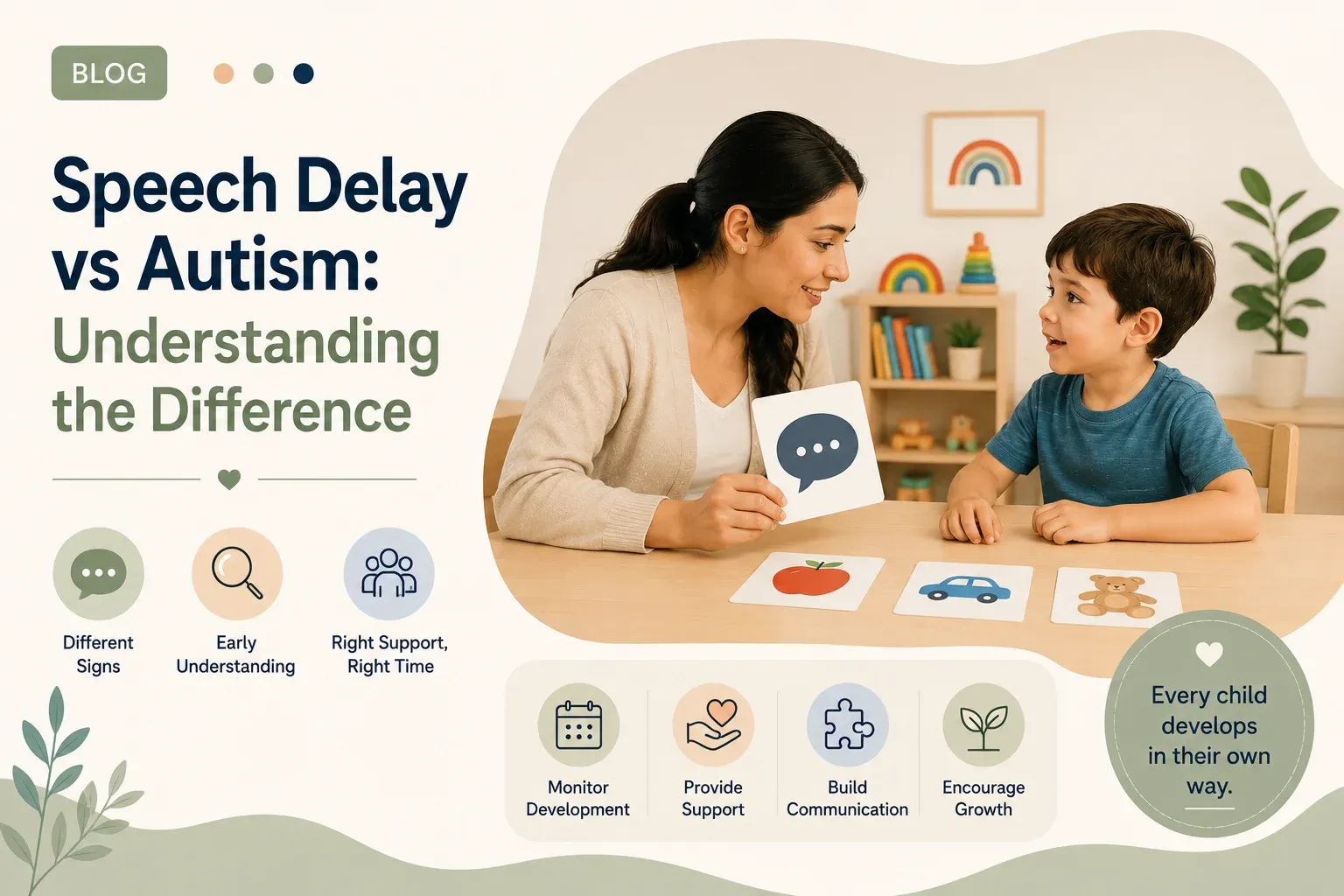
When a toddler reaches 18 to 24 months and is not yet talking, parents are often flooded with well meaning reassurance. Relatives may say that boys just talk late, or acquaintances may suggest waiting until preschool to see if speech suddenly arrives.
While speech delays are relatively common, focusing solely on the presence or absence of spoken words misses the most critical developmental marker: the ability to engage in basic two way communication. In clinical practice, the primary distinction between a simple speech delay and early neurodevelopmental differences like autism does not lie in vocabulary count. It lies in whether communication is being used as a reciprocal bridge between two human beings.
In this article you'll learn
- The critical difference between one way rote scripting and two way reciprocal connection.
- The golden rule of early development: why you must teach the basics before complex speech.
- Key non verbal red flags: hand leading, selective name response, and communicative meltdowns.
- 4 foundational pre-speech milestones to build at home before expecting full sentences.
- Practical floor play adjustments that foster genuine back and forth social engagement.
Words vs. Connection: What Two Way Communication Truly Means
It is common for parents to bring a young child into clinic and explain that their toddler knows hundreds of words. The child might recite the entire alphabet, count backwards from twenty, identify complex dinosaur names, or repeat entire dialogue sequences from their favorite animated videos.
Yet, when that same child feels thirsty, hungry, or overwhelmed, they may scream in distress or pull their parent's hand across the kitchen like a mechanical lever without ever making eye contact or gesturing toward the cup.
Reciting words in isolation is one way communication. True language is fundamentally reciprocal and relational:
- One way expressive speech: The child recites nursery rhymes, reads numbers, scripts video phrases, or labels objects in the room, but does not use those words to share an experience, express a feeling, or ask for help from an adult.
- Two way reciprocal communication: The child points to an interesting dog outside, checks back to see if you are looking, shares a smile of excitement, and awaits your reaction. Even without words, a continuous flow of connection exists between the child and the parent.
Reciprocity Over Vocabulary
The Developmental Rule: Teach the Basics Before the Complex
When parents become anxious about speech, a natural instinct is to drill academic concepts. Parents often buy flashcards, download phonics apps, and repeatedly press their toddler to say words like apple, ball, or blue.
This approach often leads to frustration for both the child and the parent because it skips the natural ladder of developmental milestones. You cannot build the second floor of a house before laying a solid foundation.
In child development, we must teach the basics and master them thoroughly before moving to complex language. Spoken sentences are the roof of the building; reciprocal social gestures are the foundation.
The 4 Foundational Basics That Must Come First
- Shared Joint Attention: The ability of the child to look at what you are looking at, and to direct your attention to something they find exciting.
- Intentional Pointing & Gesturing: Using their own index finger to point toward objects of interest simply to share the experience, waving goodbye, or shaking their head.
- Simple Social Imitation: Copying basic physical actions like clapping, tapping a surface, rolling a car back and forth, or mimicking playful sounds.
- Turn Taking Rhythm: The understanding that interaction happens in back and forth exchanges, whether that is taking turns putting blocks in a bucket or playing peek-a-boo.
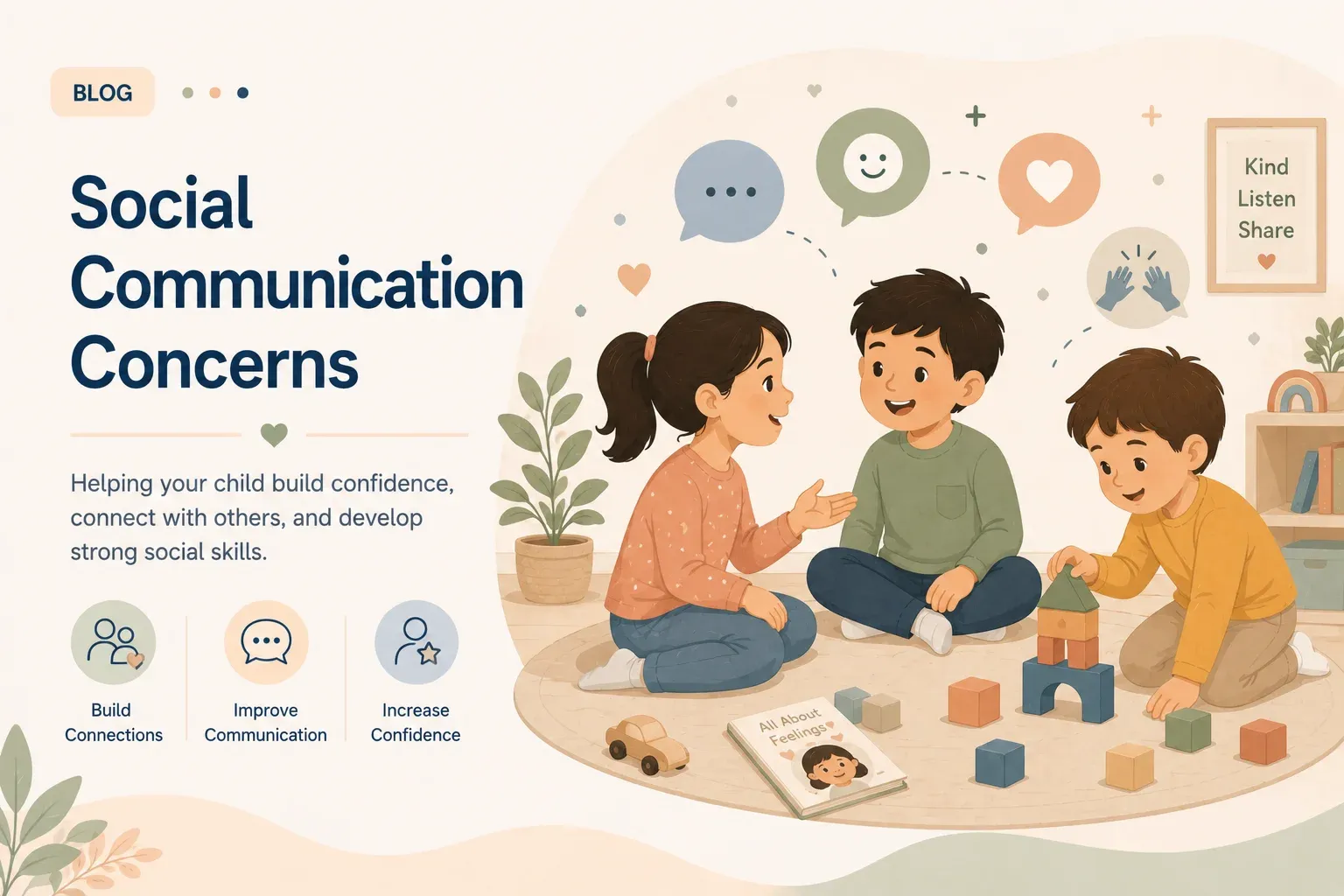
Everyday Signs That Two Way Communication Needs Support
Parents know their children better than anyone else. If you are trying to understand whether your toddler is struggling with basic reciprocal connection, observe their natural play and routines at home:
- Hand Leading Without Eye Gaze: The child takes your wrist or hand and places it onto a door handle or snack jar without looking up at your face or vocalizing. To the child, the hand is an inanimate tool to solve a physical problem.
- The Selective Response to Names: The child runs to the kitchen when hearing a candy wrapper or iPad jingle from rooms away, but does not turn when their name is spoken directly next to them. This reflects a difference in social salience rather than hearing loss.
- Frustration & Communicative Meltdowns: When internal desires cannot be bridged to parents through gestures or sounds, frustration boils over into frequent, prolonged meltdowns.
"Educational videos and YouTube phonics will teach a non verbal child to speak."
Screens provide passive, one way stimulation. They do not teach the child how to read human faces, pause for a response, or initiate reciprocal social interaction.
"If a child is not talking by age 2, we should wait until age 4 before consulting anyone."
The human brain experiences its peak neuroplasticity between ages 1 and 3. Early developmental support for communication produces the greatest lifelong gains.
"Speech therapy alone solves all communication delays."
If the child lacks joint attention and social reciprocity, a comprehensive developmental psychology evaluation is needed to address underlying engagement and sensory processing.
Practical Ways to Build Basic Communication at Home
Supporting a child's communication does not require specialized clinical equipment. It requires simple, mindful adjustments during everyday play:
- Get Down to Their Physical Eye Level: Sit on the floor directly opposite your child so they can clearly see your eyes, smile, and mouth movements without craning their neck.
- Follow Their Lead Instead of Directing: Join whatever they are naturally inspecting. If they are rolling a toy tire, roll one beside them. Entering their world inspires them to look up and connect.
- Create Natural Pauses in Fun Routines: When tickling, swinging, or singing an action song, pause unexpectedly. Wait patiently for a small cue—a glance, gesture, or vocal sound—before continuing the fun.
- Replace Passive Screen Time With Floor Play: Swap solitary video watching for sensory rich, interactive turn taking games like bubbles, ball rolling, or peek-a-boo.
Key Takeaways
- Basic two way communication matters far more than vocabulary count or memorized scripts.
- Developmental scaffolding requires mastering the basics before introducing complex language.
- Joint attention, imitation, pointing, and turn taking form the essential pre verbal foundation.
- Hand leading and selective name response indicate a need for social communication support.
- Early developmental evaluation between ages 18 and 36 months unlocks peak neuroplasticity.

Rabbia Ashraf
Clinical Psychologist & Certified ADOS-2 Practitioner
Rabbia Ashraf holds an MS in Clinical Psychology and specialized certification in the ADOS-2 (Autism Diagnostic Observation Schedule). She specializes in neurodevelopmental parent guidance, ADHD executive dysfunction, low-arousal strategies, and decoding complex assessment reports for families worldwide.
Need Strategic Clarity for Your Child?
Book a 50 minute private telehealth consultation with Clinical Psychologist Rabbia Ashraf. Receive a tailored 3 step action roadmap within 24 hours.
Private Off Screen Parent Format • 24 Hour Written Protocol • Encrypted Video