
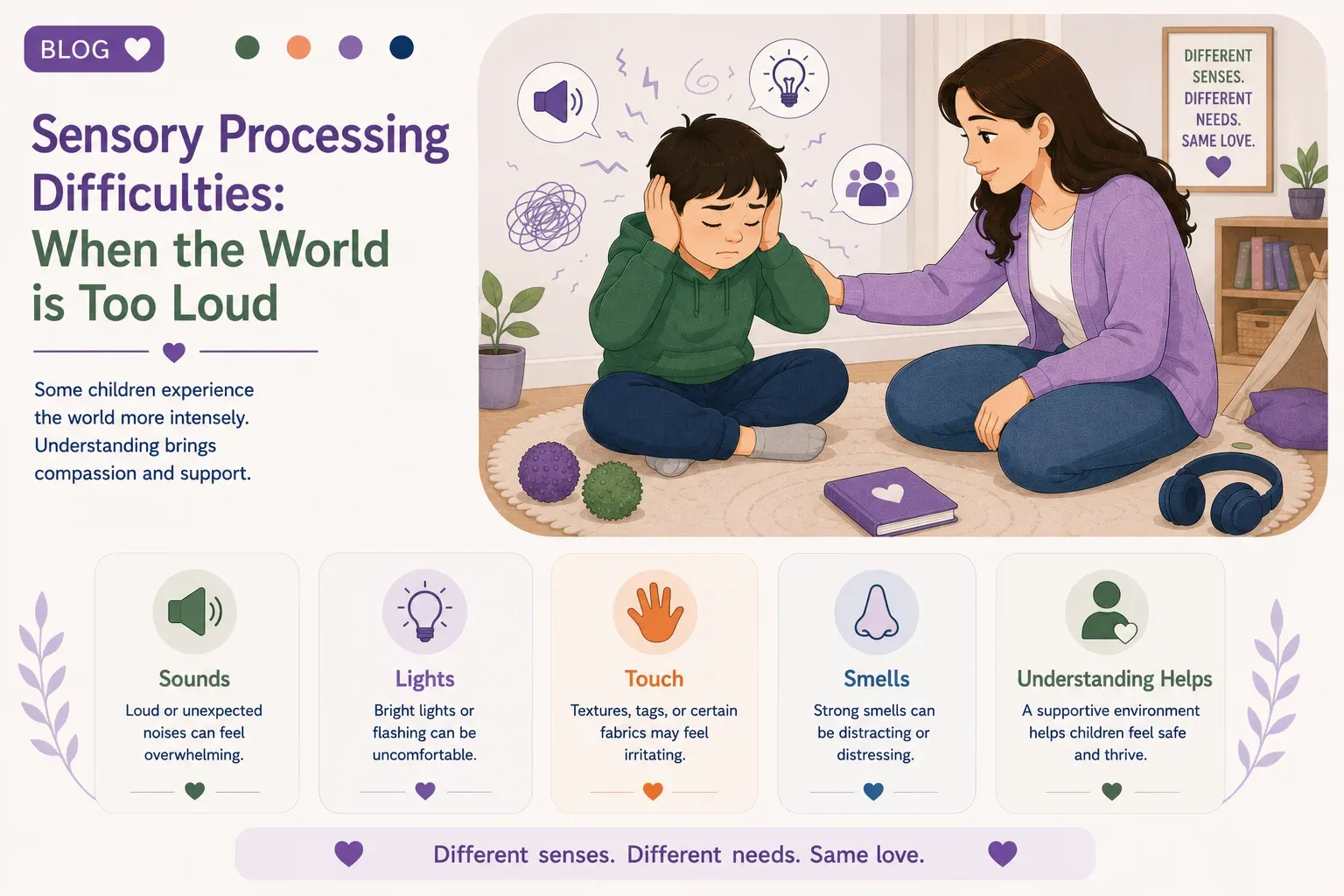
From the outside, a sensory-seeking child and a child with hyperactive-type ADHD look almost identical.
Both can't keep their feet still under the dinner table. Both fidget with whatever pencil, bottle cap, or napkin is within reach. Both might run when they should walk, leap off the bed, and turn every hallway into a gymnastics track.
Teachers often send parents notes saying: "He won't stop moving; he probably has ADHD." But treating sensory seeking with standard ADHD interventions—or treating ADHD with sensory swings alone—often leaves families frustrated and exhausted.
While they appear similar on the surface, the neurological drivers behind them are completely distinct. Understanding the difference between Proprioceptive Hunger and Dopamine Starvation is the key to unlocking your child's calm.
In this article you'll learn
- The neurological difference between vestibular/proprioceptive hunger and ADHD dopamine deficits.
- The 'After Movement Test': the #1 clinical marker to distinguish sensory seeking from ADHD.
- Why children crash into sofas, chew on shirt collars, and stomp down hallways.
- How sensory diet activities can regulate an overstimulated nervous system.
- When to seek a multidisciplinary evaluation combining occupational therapy and developmental psychology.
The Brain Mechanics: What Is Driving the Movement?
1. ADHD Hyperactivity: The Search for Neurochemical Stimulation
In ADHD, the brain has an under-supply of two critical neurotransmitters: dopamine and norepinephrine. These chemicals are responsible for keeping the prefrontal cortex alert, focused, and motivated.
When an ADHD brain feels under-stimulated (such as sitting through a slow classroom lesson or a quiet meal), the brain enters cognitive sleepiness. Physical movement—bouncing, leg shaking, chair tipping—acts as an internal defibrillator. The movement pumps adrenaline and dopamine into the prefrontal cortex just to keep the thinking brain awake.
2. Sensory Seeking: The Body's Search for Spatial Orientation
Sensory seeking is not about brain alertness; it is about neurological feedback. The human body relies on two lesser-known sensory systems:
- The Proprioceptive System: Sensors located in our muscles and joints that inform the brain where our limbs are in space.
- The Vestibular System: Fluid-filled canals in the inner ear that detect head movement, gravity, speed, and balance.
A child with high sensory thresholds has a "foggy" internal body map. They literally cannot feel where their body ends and the environment begins. To feel organized and secure, their brain commands them to crash into furniture, stomp hard on floors, seek tight bear hugs, and hang upside down.
The Proprioceptive 'Heavy Work' Reset
The 'After Movement Test': How to Tell the Difference
The most reliable clinical question parents can observe is: What happens AFTER your child moves vigorously?
🌿 The Sensory Seeker
After 15 minutes of jumping on a mini-trampoline, carrying heavy laundry baskets, or wrestling safely with a parent, their nervous system gets the input it was craving. They sit down, sigh, and can focus calmly on homework or dinner. Movement satiates them.
⚡ The ADHD Hyperactive Child
Unstructured physical exertion does not necessarily calm them. Often, intense movement ramps their nervous system up further. They become sillier, louder, and more impulsive. They need structured cognitive dopamine, not just physical exhaustion.

Common Everyday Clues
Clues That Point Strongly to Sensory Seeking:
- Chewing on sleeves, shirt collars, pencil erasers, or fingernails.
- Preferring tight clothing, weighted blankets, or squeezing into tight spaces behind the sofa.
- Playing too rough without realizing their own physical strength (slamming into peers, hugging too tight).
- Walking on tiptoes or stomping heels heavily with every step.
Clues That Point Strongly to ADHD Hyperactivity:
- Difficulty waiting their turn in games or interrupting conversations impulsively.
- Frequent careless mistakes on tasks they fully understand intellectually.
- Difficulty transitioning between activities without emotional friction.
- Struggling to keep track of school materials, backpacks, water bottles, and instructions.
"A child who can't sit still is just undisciplined and needs stricter consequences."
Neither ADHD nor sensory seeking can be disciplined away. Telling a sensory seeker to 'sit still' is like telling a thirsty person to stop wanting water.
"If my child can sit still for video games for 3 hours, they don't have ADHD or sensory needs."
Video games provide a continuous firehose of rapid dopamine and visual stimulation. Real life lacks this artificial reward frequency, exposing underlying regulation gaps.
"Sensory processing differences only affect autistic children."
Sensory processing challenges occur independently across many children, including those with ADHD, anxiety, or isolated sensory processing disorder (SPD).
Practical Home Accommodations for Both Profiles
You do not need to wait for a formal clinic appointment to give your child relief. Try these immediate evidence-based home adjustments:
- Wobble Cushions & Resistance Bands: Place an inflatable wobble cushion on their desk chair or tie an elastic therapy band around the front legs of their chair so their feet can kick without disruption.
- Proactive 'Heavy Work' Before Focus Tasks: Before asking them to do 20 minutes of math homework, have them do 5 animal walks (bear crawls, crab walks) or help carry two gallon jugs of water to the kitchen.
- Movement-Permissive Learning: Allow them to do spelling words while bouncing on an exercise ball or reciting vocabulary while pacing the room.
- Scheduled Sensory Breaks: Do not use recess or physical play as a reward that can be revoked for bad behavior. Movement is a biological necessity for their nervous system.
Key Takeaways
- Sensory seeking is driven by high proprioceptive/vestibular thresholds; ADHD is driven by prefrontal dopamine deficits.
- The After Movement Test: Sensory seekers calm down after heavy work; hyperactive children often remain dysregulated.
- Crashing, stomping, and chewing are biological attempts to organize an under-stimulated body map.
- Over 50% of children with ADHD also have overlapping sensory processing differences.
- Providing structured heavy work and movement-permissive seating creates immediate daily focus.

Rabbia Ashraf
Clinical Psychologist & Certified ADOS-2 Practitioner
Rabbia Ashraf holds an MS in Clinical Psychology and specialized certification in the ADOS-2 (Autism Diagnostic Observation Schedule). She specializes in neurodevelopmental parent guidance, ADHD executive dysfunction, low-arousal strategies, and decoding complex assessment reports for families worldwide.
Need Strategic Clarity for Your Child?
Book a 50 minute private telehealth consultation with Clinical Psychologist Rabbia Ashraf. Receive a tailored 3 step action roadmap within 24 hours.
Private Off Screen Parent Format • 24 Hour Written Protocol • Encrypted Video