
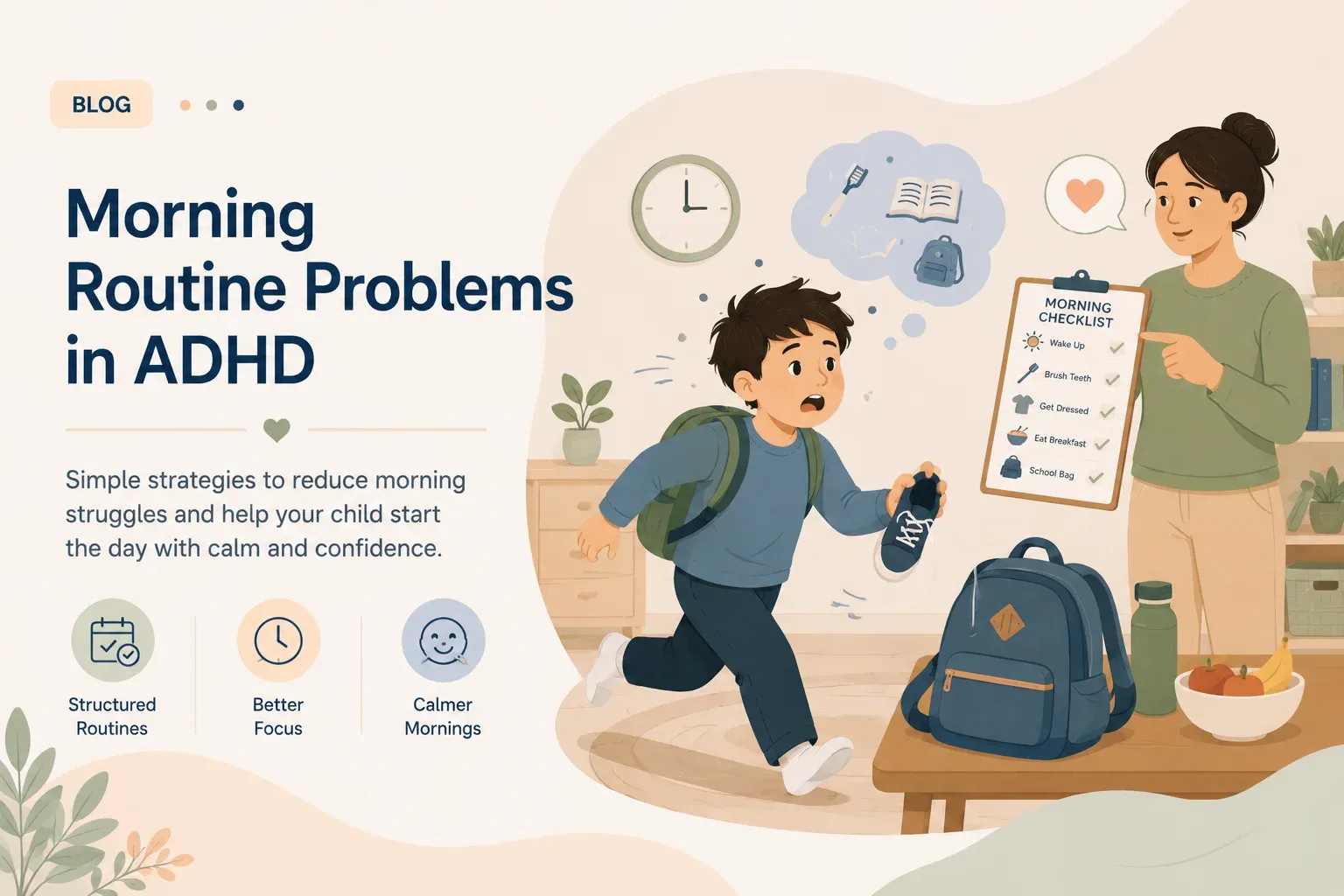
It is 7:15 AM. You have called their name five times, pulled the duvet off, and watched them stare blankly into space with one sock on while the school bus approaches.
By 7:30 AM, everyone is yelling, your child is in tears, and your own workday hasn't even begun.
The most common complaint I hear from parents in my clinic is: "Rabbia, why does every single morning have to be a battle? Why can't he just wake up and get ready like his siblings?"
In this article you'll learn
- The neurobiological basis of deep sleep inertia in the ADHD brain.
- Why shouting commands causes executive functioning paralysis.
- How to build a 10-minute dopamine bridge before leaving for school.
- Using warm sensory breakfast cues to break morning inertia.
The Biological Reality of the ADHD Brain
Your child is not waking up slowly out of spite. Research in pediatric neurodevelopment shows that the ADHD brain often cycles into unusually deep sleep patterns with pronounced sleep inertia. Because their executive functioning network operates differently than a neurotypical brain, transitioning from unconsciousness to task-execution is a biological steep hill.
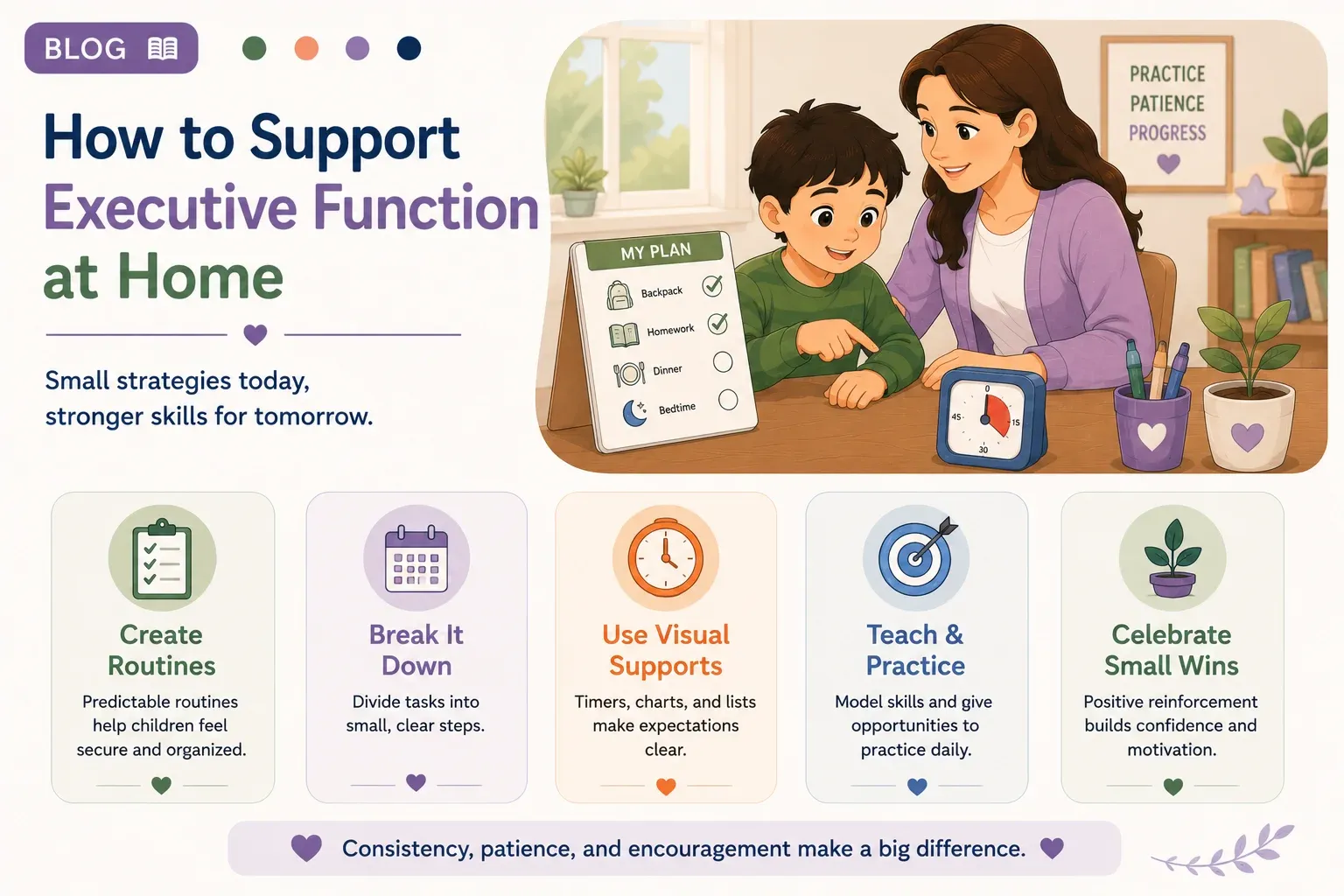
Executive function routines must be externalized into visual and sensory cues.
Two Concrete Dopamine Bridges to End the Morning War
Because the ADHD brain is chronically dopamine-starved in the morning, yelling commands ("Brush your teeth! Get your shoes!") creates friction and paralysis. You must replace friction with positive neurochemical momentum:
1. The 10-Minute Pre-School Game Incentive
Tell your child the night before: "If you wake up, get your clothes on, and eat your breakfast by 7:30, you earn 10 minutes of free game time before we step out the door."
An ADHD brain cannot motivate itself for abstract distant concepts like "being on time for school." But an immediate, tangible 10-minute game reward gives their frontal lobe the stimulant spark needed to jump out of bed.
2. The Sensory Warm Breakfast Cue
Instead of shouting from the hallway, use sensory activation. Cook something with a rich morning aroma that they genuinely love (warm pancakes, eggs, toasted bread). Walk into their room with warmth:
"I just cooked your favourite breakfast. Hurry up, wake up, it's getting cold—let's eat while it's fresh!"
This shifts the waking cue from a sterile chore to an enticing sensory invitation, helping their body break out of inertia.
"If I let him play a 10-minute game in the morning, I am spoiling him."
For an ADHD brain, a clear immediate dopamine target is a neurochemical bridge that activates task initiation. It replaces tears and shouting with focused velocity.
Keep sleep and wake schedules identical 7 days a week. Weekend sleeping-in past 90 minutes resets the ADHD circadian rhythm and causes Monday morning chaos.
Key Takeaways
- ADHD sleep inertia is biological—not an act of willful defiance.
- Yelling creates cognitive paralysis; build positive dopamine bridges instead.
- Use a 10-minute game reward conditional on getting fully dressed first.
- Anchor wakefulness to inviting sensory warm breakfast cues.
Frequently Asked Questions
Won't allowing a morning game make them late for school?
Not if you use a strict visual timer. Set the rule clearly: the game ONLY unlocks once teeth are brushed and shoes are on. If they take too long, the game time shrinks. This creates natural consequence without shouting.
What if my child says they are too exhausted to eat?
Offer a warm protein drink or smoothie first to gently activate their metabolism before expecting solid breakfast.
Every child's executive function profile is unique. In our online parent consultations, we map out morning and evening habit architectures tailored to your family's routine and school timetable.