
In this article you'll learn
- Why bright autistic and ADHD children suddenly 'hit a wall' around ages 8–13.
- The 5 clinical red flags that distinguish Neurodivergent Burnout from teenage laziness.
- Why temporary skill regression (losing the ability to speak, write, or self-care) happens.
- Why tightening discipline and hiring extra tutors accelerates full-blown school refusal.
- The 3-Phase Nervous System Recharge & School Pacing Plan.
When a Capable Child Suddenly "Stops Trying"
In my clinical practice, parents often book an urgent consultation in tears, saying: "Rabbia, I don't recognize my child anymore. He used to be so bright and cooperative. Now he won't shower, won't pick up a pencil, and screams if I mention school. His father thinks he's just become lazy and addicted to his tablet—but punishing him is making him worse."
There is a critical developmental cliff that occurs around ages 8 to 10 (Upper Primary) and again at ages 11 to 13 (Secondary Transition).
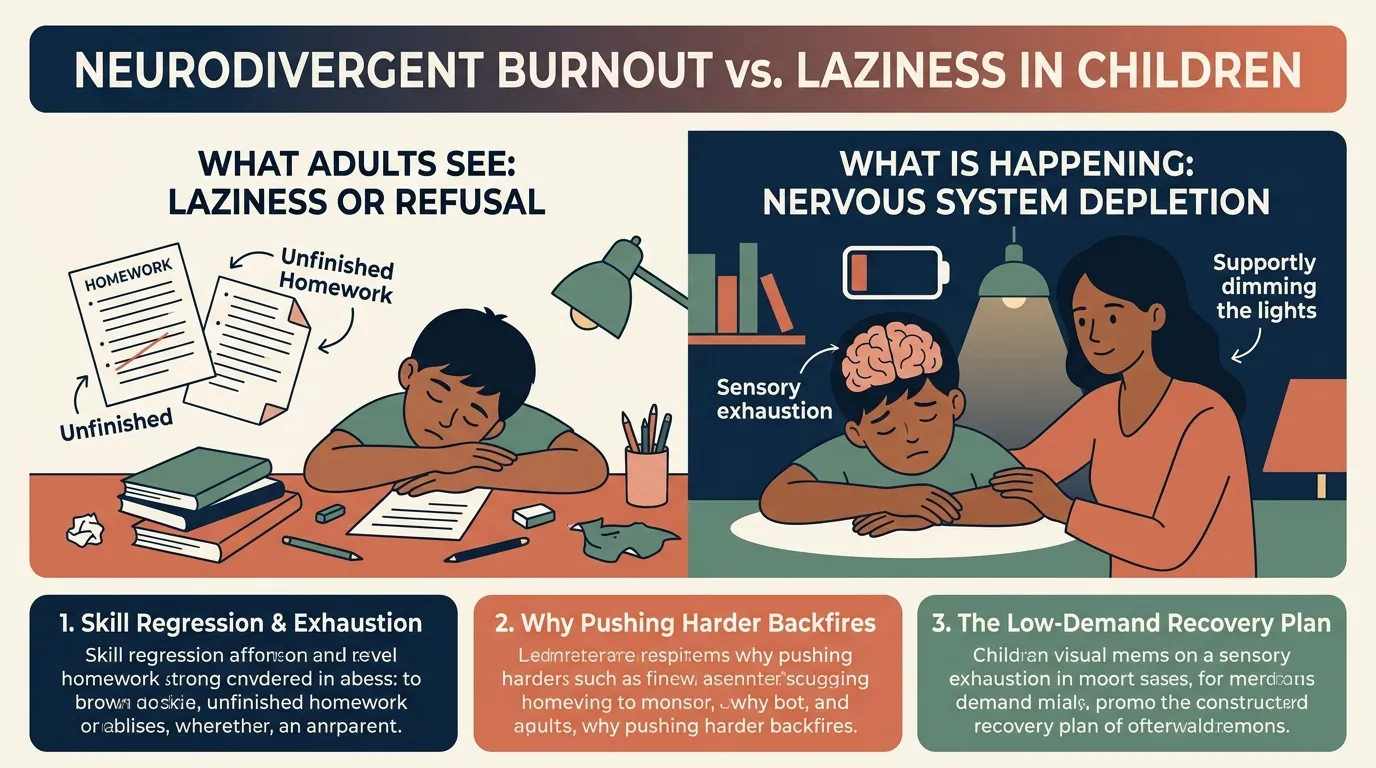
In early childhood, a smart child with Autism or ADHD can use their high intelligence to compensate for executive dysfunction and sensory overload. They work at 150% effort just to look "normal." But as classroom noise increases, social friendships become nuanced, and homework requires multi-step planning, the child's compensatory reserves run dry.
They do not become lazy. They enter Clinical Neurodivergent Burnout.
The Clinical Reality of Skill Regression
5 Ways to Tell Burnout Apart from "Laziness"
Before you confiscate privileges or increase academic pressure, evaluate these five diagnostic distinctions:
📉 1. Loss of Former Skills
In burnout, hygiene, speech fluency, handwriting, and emotional tolerance visibly regress compared to six months ago. Laziness never erases basic developmental skills.
🔊 2. Extreme Sensory Intolerance
Clothing tags, chewing sounds, bright lights, or hair-brushing that your child used to tolerate now trigger instant tears or physical pain.
🎮 3. "Numbed" Screen Usage
A burned-out child isn't gaming with high social excitement; they are staring at familiar, repetitive videos like an intravenous drip to block out sensory pain and internal anxiety.
🤕 4. Somatic Sunday-Night Illness
Genuine nausea, migraines, gut cramps, and low-grade fevers that peak on Sunday evenings and Monday mornings—driven by chronic vagus nerve inflammation.
Get a Clinical Report Review & Burnout Accommodation Plan
If your child is sliding toward school refusal or academic burnout, Clinical Psychologist Rabbia Ashraf can review their history or psychological report and build a tailored Home & School Pacing Plan.
"If we let our child rest or reduce homework, they will learn that quitting gets them out of hard work."
Burnout is a physiological injury, like a stress fracture. Forcing a child to run on a fractured nervous system turns a 3-week recovery into a 2-year school refusal crisis.
"They can play video games for two hours, so they clearly have enough focus for 20 minutes of math."
Video games provide continuous external dopamine and predictable rules with zero social judgment. Math homework demands unassisted working memory, frustration tolerance, and fear of failure.
"Only children with severe support needs experience autistic burnout."
High-masking, verbally gifted children are actually at the HIGHEST risk for sudden burnout because adults place neurotypical expectations on them without accommodations.
The 3-Phase Low-Demand Burnout Recovery Plan
When a child is in burnout, traditional behavioral goals must be paused immediately in favor of Energy Accounting:
- Phase 1: Stop the Energy Bleed (Immediate 50% Demand Reduction):Audit your child's week and cut non-essential drains in half. Pause after-school tutoring, competitive clubs, and non-urgent household chores. Request a temporary 4-week homework exemption or reduced workload from the school SENCO so home becomes a 100% recovery zone.
- Phase 2: Sensory & Special-Interest Refueling:Allow guilt-free immersion in your child's "deep interests" (whether drawing, coding, dinosaurs, or building). In neurodivergent brains, engaging with special interests actively lowers cortisol and restores dopamine pathways.
- Phase 3: Collaborative Pacing & School Scaffolding:Before reintroducing demands, modify the environment so the child doesn't burn out again: negotiate quiet testing rooms, chunked assignments, reduced timetable days if necessary, and visual scaffolds at home.
Key Takeaways
- Neurodivergent burnout is chronic neurological depletion caused by months of masking and unaccommodated demands.
- Skill regression, heightened sensory pain, and Sunday-night physical illness are clinical hallmarks—not laziness.
- Punishing a burned-out child or adding extra tutoring pushes them directly into full school refusal.
- Recovery requires an immediate 50% reduction in home/after-school demands and guilt-free sensory rest.
- A clinical consultation helps parents align partners/relatives and secure formal workload accommodations from schools.

Rabbia Ashraf
Clinical Psychologist | Child & Adolescent Development
Rabbia Ashraf is a dedicated Clinical Psychologist specializing in child and adolescent development. She provides parent coaching, developmental guidance, and psychoeducation.
Need Professional Guidance?
Book a consultation with Rabbia Ashraf to discuss your child's development and receive evidence-based recommendations.