
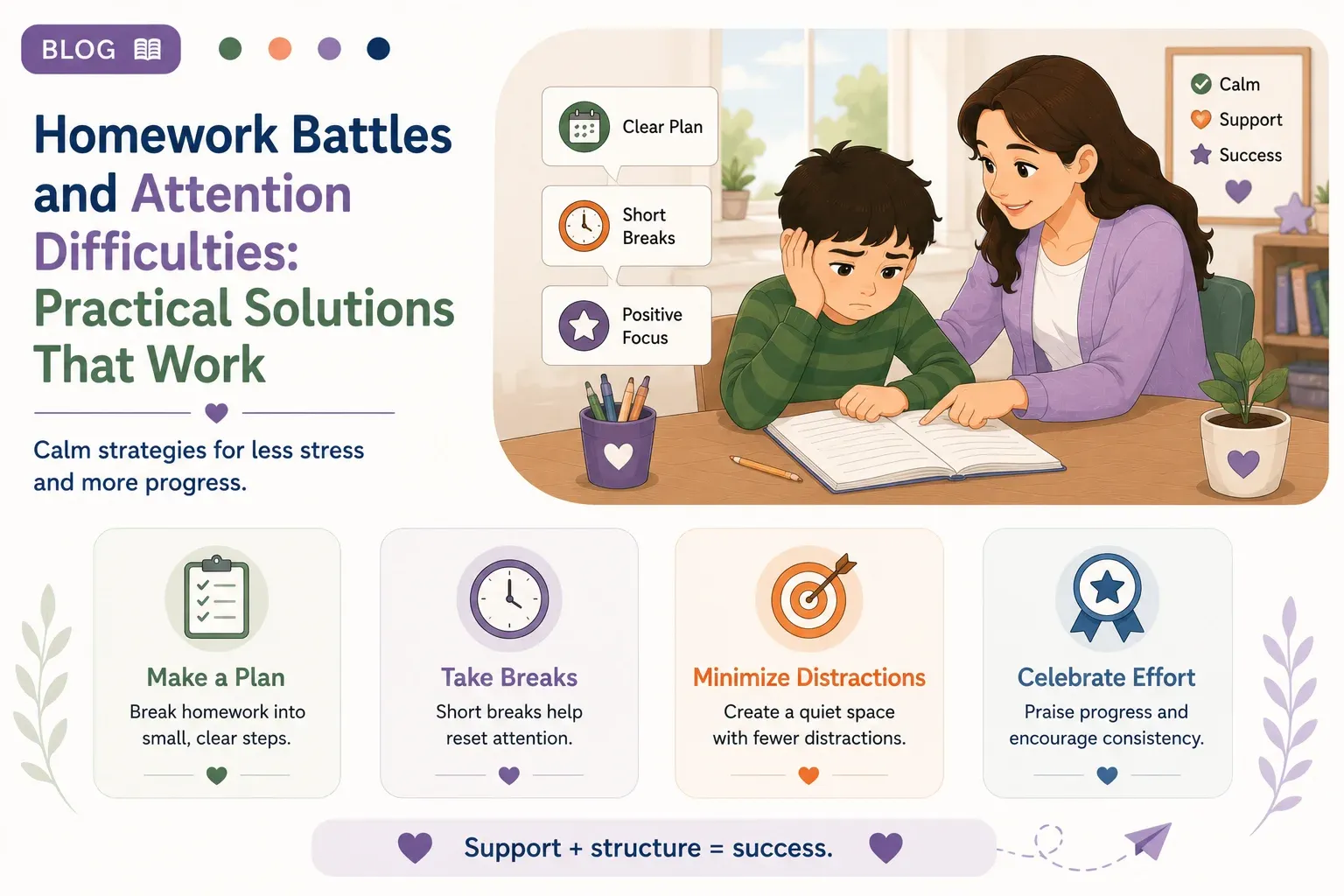
It is a scene repeated in millions of living rooms every evening: a single 10-to-15 minute math worksheet or spelling list turns into two to three hours of nightly tears, screaming, pencil-snapping, and exhaustion.
Parents sit next to their child pleading: "Just write these five words and you are done! Why are you fighting me over something that takes five minutes?"
In this article you'll learn
- Why 10-minute worksheets trigger 2-to-3 hours of nightly tears and screaming.
- The paradox of why silent, barren rooms paralyze the ADHD brain.
- How tactile fidget tools channel motor restlessness into focused study.
- The clinical neuroscience behind why doodling in margins improves working memory.
The Paradox of the Silent Room
Traditional advice says: "Put the child in a quiet room with no distractions." But for an ADHD brain, an under-stimulating, monotonous task in a silent room is agonizing.
Because repetitive worksheets provide virtually zero dopamine, the brain's executive networks literally freeze. The tantrums, shouting, and resistance you see are an unconscious attempt by the child's nervous system to manufacture adrenaline and stimulation to jump-start an under-aroused brain.
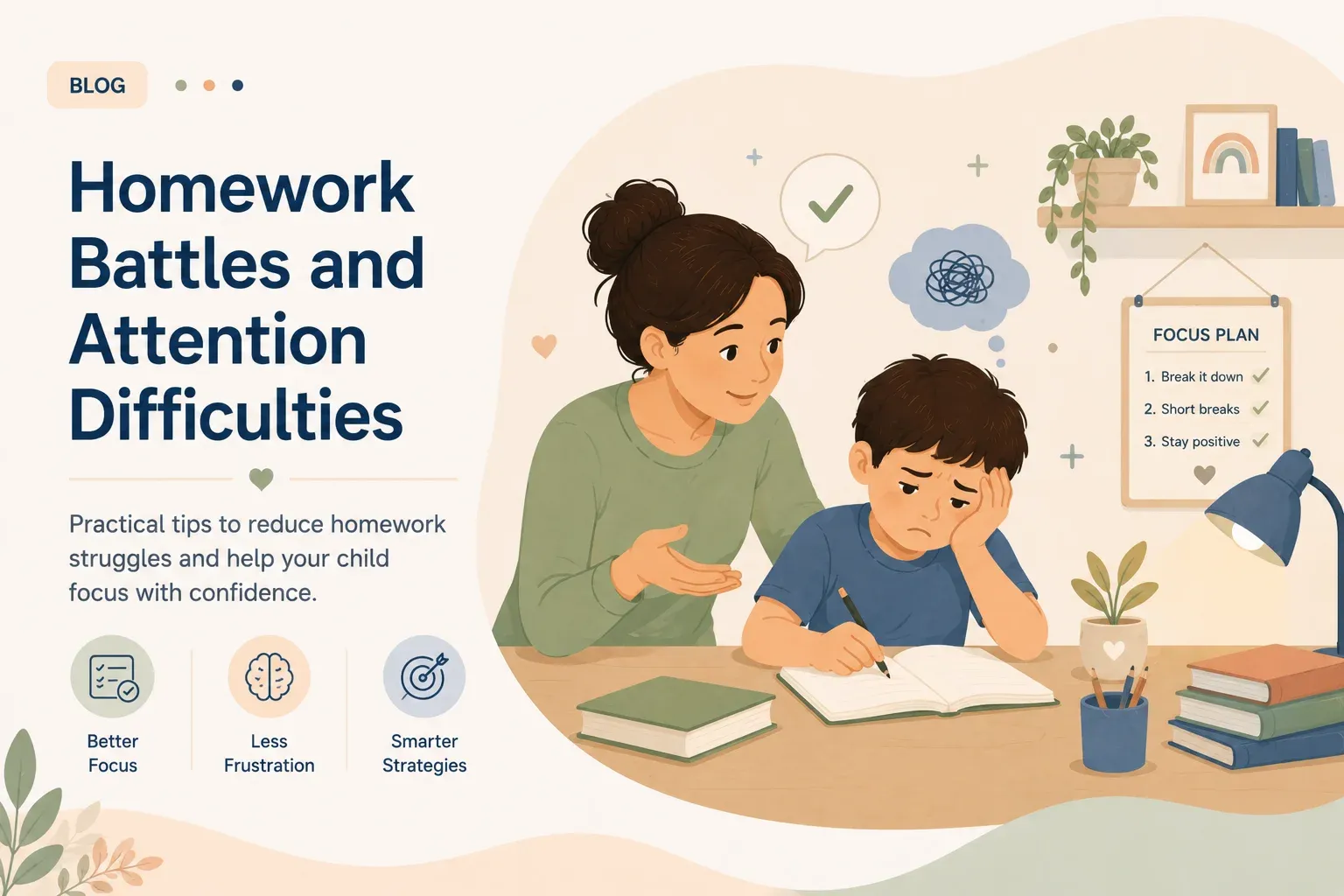
Tactile fidgets and margin doodling provide the sensory arousal an ADHD brain needs to maintain focus.
Two Evidence-Based Fixes to Break Homework Paralysis
Instead of removing all stimulation, the clinical secret is to provide controlled, low-friction sensory stimulation that feeds the brain while the pencil moves:
1. Give Them Sensory Fidgets
Provide tactile tools: a kneading putty, a textured squeeze ball in their non-dominant hand, or a sensory resistance band tied around the chair legs so their feet can bounce. This channels physical restlessness and satisfies the nervous system’s need for movement, freeing up the frontal lobe to read and write.
2. Let Them Doodle!
For decades, parents and teachers said: "Stop doodling in the margins! Eyes on the paper!" But developmental neuroscience reveals that doodling is an executive functioning stabilizer.
Allowing your child to doodle geometric patterns, scribble in margins, or color a sketchpad between math problems keeps their brain at the optimal level of neurochemical arousal. It stops the brain from wandering off into full dissociation or explosive frustration.
"If my child is doodling while doing homework, they are wasting time and not listening."
Kinesthetic micro-movements like doodling keep the frontal cortex alert during low-stimulation tasks, preventing dopamine drops and attention burnout.
Try 'body doubling'. Simply sit nearby at the kitchen table reading your own book or paying bills quietly. Your calm, non-interfering physical presence acts as a grounding anchor for their executive focus without micromanaging.
Key Takeaways
- Monotonous homework starves the ADHD brain of baseline neurochemical dopamine.
- Silent rooms heighten task paralysis; provide controlled, low-friction sensory input.
- Allow tactile fidget toys to quietly satisfy the motor cortex.
- Embrace margin doodling and 5-minute sprints to conquer evening task initiation.
Frequently Asked Questions
Won't fidgets distract them from doing the work?
Not if you use tactile tools that don't make noise or have screens. Sensory putty or chair bands keep the motor cortex satisfied in the background without stealing visual attention.
What is 'body doubling' during homework?
Body doubling means simply sitting quietly at the same table working on your own task (like reading or paying bills). Your calm physical presence acts as an anchor for their executive focus without hovering or micromanaging.
If evening homework has become a toxic battleground that drains your family's peace, you don't have to face it alone. Book an online parent consultation to design an executive functioning homework blueprint that restores calm to your evenings.