
Your seven-year-old throws themselves onto the grocery store floor, shrieking at the top of their lungs because you said no to a box of cereal.
Or perhaps it happens at 7:00 PM: the moment the math binder unzips, your daughter clutches her stomach, tears streaming down her cheeks, insisting she is going to throw up. Ten minutes later, your mother-in-law leans over and mutters under her breath: "You know he's just manipulating you, right? You're letting him run this entire house."
Later that evening, your spouse looks at you over the kitchen counter with genuine frustration: "She's playing you. She turned the tears on the second homework came out, and now she's sitting on the couch drawing. You need to be firmer, or she will keep taking advantage of you."
You sit in the quiet of your living room with a hollow, sickening knot in your chest. A part of you wonders if they are right. Are you being naive? Are you raising an entitled, manipulative child? But another part of you—the part that looked into your child's wide, panicked eyes while they were screaming—knows that something doesn't add up.
As a clinical psychologist working with neurodivergent children and exhausted parents every day, let me reassure you: Your gut feeling is correct. Your child is not a tiny Machiavellian mastermind executing a psychological chess match against you. Your child is drowning in neurological demands they do not yet have the skills to survive.
In this article you'll learn
- The cognitive neuroscience of manipulation: why your child's prefrontal cortex literally cannot play 4D chess.
- The 4 definitive clinical signs that separate lagging developmental skills from learned strategic behaviour.
- Why joint families, grandparents, and traditional discipline models default to the 'manipulation' accusation.
- Word-for-word scripts to align co-parents and de-escalate extended family judgments without defensiveness.
- A 4-step clinical protocol to address skill deficits with high warmth and uncompromising boundaries.
1. The Neuroscience: Why "Manipulation" Demands Brain Power Your Child Doesn't Have
To understand why the word "manipulation" is so clinically inaccurate for children, we have to examine what true psychological manipulation actually requires from human brain architecture.
In cognitive psychology, manipulation is defined as a conscious, calculated, multi-step strategy designed to influence someone else toward a predetermined outcome while concealing your true motive. For a person to successfully manipulate someone, their brain must simultaneously execute four advanced executive functions:
- Second-Order Theory of Mind: The ability to think: "I know that Mummy thinks I am sad, but I am actually faking it so she feels guilty and lets me have an iPad." (This cognitive capacity does not even begin consolidating until ages 7 to 9, and develops significantly later in neurodivergent brains).
- Working Memory & Strategic Planning: Holding the end goal in mind while orchestrating intermediate deceptive steps across time.
- Impulse & Emotional Inhibition: Suppressing genuine internal feelings to project a false emotional state convincingly without losing control.
- Perspective-Taking & Social Risk Calculation: Accurately predicting the adult's reaction and calibrating behaviour in real time to avoid punishment.
Now look at your child during an explosive episode.
Are they calm, collected, and coolly measuring your reaction? Absolutely not. Their heart is pounding at 160 beats per minute. Their pupils are dilated. Their vocal cords are strained. Cortisol and adrenaline are surging through their bloodstream.
The Fronto-Limbic Hijack
To confuse an autonomic fight-or-flight survival state with cold-blooded manipulation is a profound neurological error. As Dr. Ross Greene, developer of the evidence-based Collaborative & Proactive Solutions (CPS) model, famously established: "Kids do well if they can." If your child could regulate their emotions, articulate their frustration verbally, and complete the transition smoothly, they would. When they don't, it is because they can't in that moment.
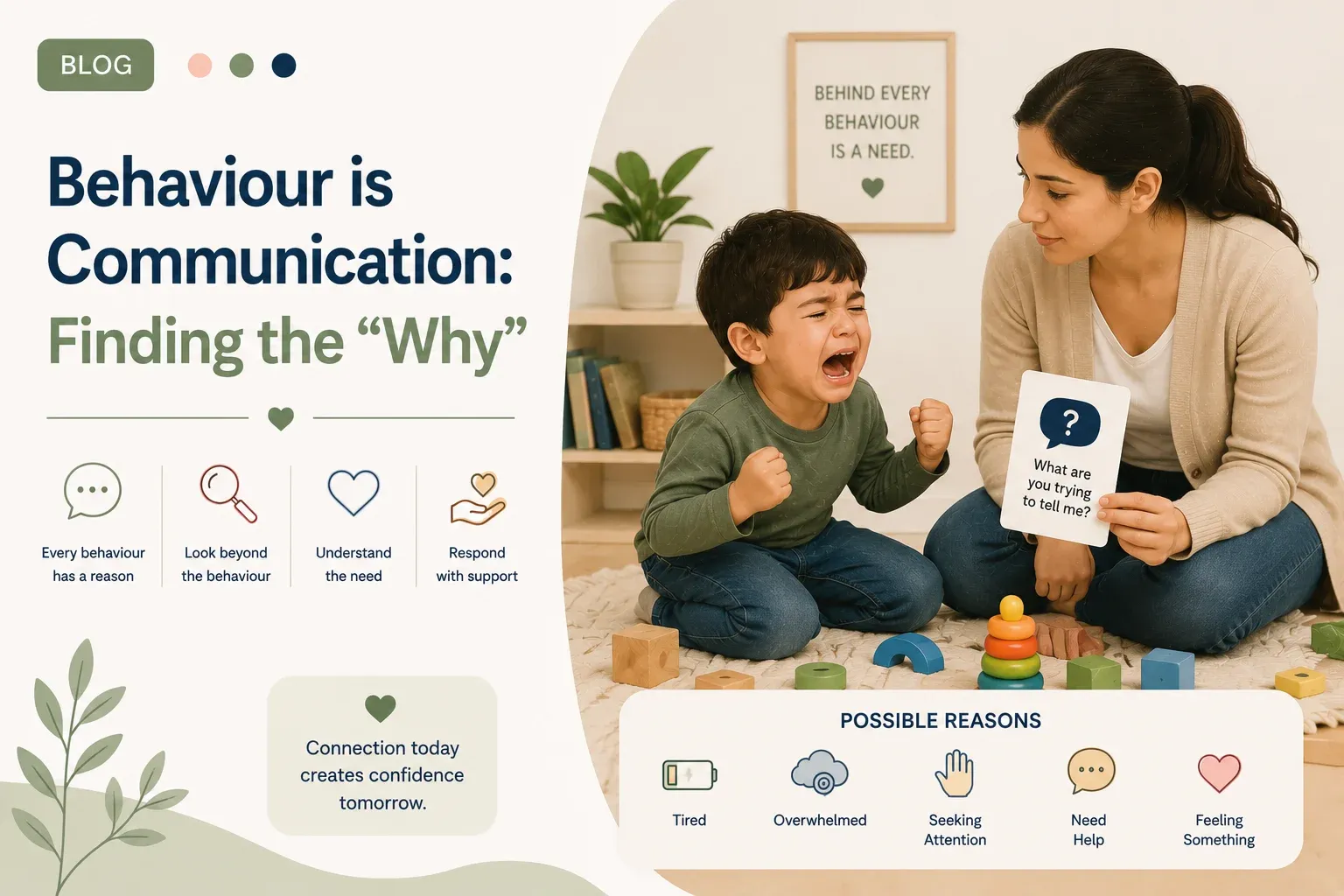
For a deeper look at decoding what challenging actions are actually expressing, explore our clinical foundation on why behaviour is communication: decoding what your child needs.
2. The 4 Clinical Signs: Lagging Skills vs. Strategic Learned Behaviour
Parents frequently ask me: "Rabbia, does this mean children never learn to use behaviour strategically?"
Children are fast learners. If screaming or whining repeatedly results in an iPad being handed over, any human nervous system will repeat the behaviour that worked. But there is a crucial clinical distinction between a learned habit and malicious manipulation—and an even bigger distinction between learned habits and lagging executive skills.
Here are the four clinical markers I look for during psychological diagnostic assessments to differentiate lagging developmental skills from strategic behaviour:
1. Consistency Across Motivation (The "High-Stakes" Test)
Strategic Behaviour: Turns off instantly when the child's desired condition is met or when a high-value incentive is introduced. If offering a favourite treat or shifting to a fun game makes the distress vanish in three seconds flat with zero recovery time, the behaviour was likely goal-directed.
Lagging Skill: Persists even when the stakes are enormously high for the child. If your child has a screaming meltdown even when you offer them a trip to Disneyland or their favourite ice cream to stop, they are not strategizing. Their nervous system is dysregulated, and no reward in the world can bridge an executive function deficit.
2. Autonomic Physiological Markers
Strategic Behaviour: The child maintains steady, watchful eye contact to assess whether their tactic is working on you. Their breathing remains relatively regulated, and their body does not show somatic shock.
Lagging Skill: Involves uncontrollable visceral symptoms: heavy sweating, blotchy skin, hyperventilation, tremors, vomiting, genuine gastrointestinal distress (stomach cramps triggered by stress hormones), or complete non-verbal shutdown. You cannot fake autonomic nervous system activation.
3. The Post-Crisis State (Remorse vs. Smug Triumph)
Strategic Behaviour: Once the child gets the toy or skips the chore, they immediately transition into upbeat, triumphant play without lingering emotional residue.
Lagging Skill: Followed by profound vulnerability, neurological fatigue, shame, or intense confusion. The child often clings to you, cries in remorse, or falls into a deep, exhausted sleep. They often say: "I don't know why I did that, Mummy. I'm a bad kid." This is the hallmark of an autonomic storm, not a victorious con artist.
4. Ability to Articulate the Problem When Calm
Strategic Behaviour: The child can readily articulate their terms: "If you buy me that Lego set, I'll clean my room." They understand the transaction and bargain logically.
Lagging Skill: When asked later what happened, the child cannot explain it. They lack the interoception (awareness of internal body cues), working memory, or expressive emotional vocabulary to pinpoint that the homework felt overwhelming because of undiagnosed dysgraphia, ADHD task initiation paralysis, or sensory exhaustion.
To help you evaluate your child's episodes objectively, use this clinical reference table:
| Clinical Dimension | Lagging Developmental Skill | Learned Strategic Behaviour |
|---|---|---|
| Neurological Driver | Autonomic nervous system overwhelm (Amygdala hijack) | Learned association / goal-directed operant conditioning |
| Child's Internal State | Panic, helplessness, sensory agony, cognitive exhaustion | Frustrated preference, persistence, focused intent |
| Audience Dependence | Happens anywhere when capacity is exceeded (even alone) | Requires an audience who might yield or negotiate |
| Sensory / Somatic Signs | Trembling, flushed cheeks, genuine nausea, dilated pupils | Normal heart rate, controlled pauses, checking adult faces |
| Effective Clinical Response | Co-regulation, sensory calming, scaffolding the task | Calm, consistent boundary; holding firm with warmth |
If you are unsure whether your child's explosive episodes represent standard developmental testing or genuine sensory overload, read our detailed clinical breakdown on tantrum vs. meltdown: what is the actual difference?
3. The Generational Trap: Why Grandparents & In-Laws Default to the "Manipulation" Narrative
One of the most agonizing burdens parents share with me in consultations is family judgment. Whether living in a joint family household in Lahore or Dubai, or receiving unsolicited advice over Sunday dinner in London or Singapore, the accusation is almost universal: "You are being manipulated. In our day, children didn't dare act like this."
Why do older generations and extended relatives default so aggressively to the manipulation framework?
For decades, parenting culture operated on an authoritarian, behaviourist model. In that paradigm:
- Good parenting meant absolute, immediate, unquestioned obedience.
- Any emotional expression of discontent, fear, or frustration was treated as insolence or rebellion.
- Vulnerability was viewed as weakness, and tears were assumed to be weapons designed to usurp parental hierarchy.
Many grandparents were raised in environments where physical discipline, public shaming, or emotional withholding were standard responses to distress. When they see you sitting on the floor with your screaming child, speaking in a low, gentle voice, offering a hug, or adjusting a homework assignment, it triggers unconscious anxiety in them:
"If what this modern parent is doing is right, then how I was raised—and how I raised my own children—was unnecessarily harsh."
To protect their own emotional history, they must label your child as "manipulative" and your gentle firmness as "weakness." Recognizing this dynamic allows you to view their critique with clinical compassion rather than defensive rage—while still holding an ironclad boundary around how your child is treated.
If your family struggles with cross-generational discipline clashes, learn more about our framework for clinical parent guidance for persistent behaviour concerns.
"If you comfort a child who is screaming or crying, you are rewarding bad behaviour and teaching them to manipulate you."
You cannot spoil a dysregulated nervous system with connection. Providing co-regulation calms the amygdala so the prefrontal cortex can return online; only after regulation is restored can actual learning and boundary enforcement take place.
"Children who complain of stomach aches before school or homework are faking it to get out of responsibilities."
The brain-gut axis is biologically direct. Emotional panic floods the digestive tract with stress hormones, causing real visceral pain, nausea, and cramping. The pain is biologically real, even if the origin is emotional overwhelm rather than a physical virus.
"Being a firm parent means you must never back down, adjust a demand, or change your mind."
Rigid obstinacy is not clinical strength. An authoritative parent adjusts expectations when they realize a task exceeds a child's current neurological capacity, scaffolding support while preserving dignity and connection.
4. Reframing Scripts for Co-Parents Who Disagree
When one partner believes in co-regulation and the other is convinced the child is "playing them," marital conflict skyrockets. The child quickly senses the tension, which increases baseline home anxiety and triggers even more dysregulation.
Here are exact clinical scripts to reframe these conversations collaboratively:
Script 1: The 14-Day Clinical Hypothesis (When Your Partner Thinks You're "Too Soft")
"I hear your worry, and I know it feels like she is pushing buttons to avoid work. We both want her to grow into a resilient, respectful child. But clamping down with harsher punishments hasn't stopped the meltdowns over the last six months—it's made all of us more miserable.
What if we run a 14-day clinical test? For the next two weeks, let's assume this is a skill struggle first rather than manipulation. Let's co-regulate, lower the temperature, and help her start the task together without yelling. If after two weeks the behaviour is worse, we will sit down and try your approach. But let's test this together as a team first."
Script 2: In-the-Moment Extended Family Boundary (When In-Laws Say "He's Manipulating You")
"I appreciate that you want to help, but his brain is completely overwhelmed right now. Right now, he doesn't need a lesson; he needs to calm down. Once his body is settled, we will address the boundary together. Let's give him a few minutes of quiet."
Script 3: Addressing Somatic Complaints ("The Homework Tummy Ache")
"I believe you that your tummy hurts. When our brain feels worried or overwhelmed by hard work, our body sends an alarm straight to our belly. We aren't going to cancel the homework, but we are going to make it smaller. Let's take three deep breaths, do problem number one together, and see how your tummy feels."
Notice that none of these scripts abandon parental expectations. Co-regulation is not permissiveness. Permissive parenting says: "Oh, you're crying? Never mind, you never have to do homework again." Authoritative, regulated parenting says: "I see that you are struggling. I will sit beside you and help your body feel safe, and then we will tackle this challenge together."
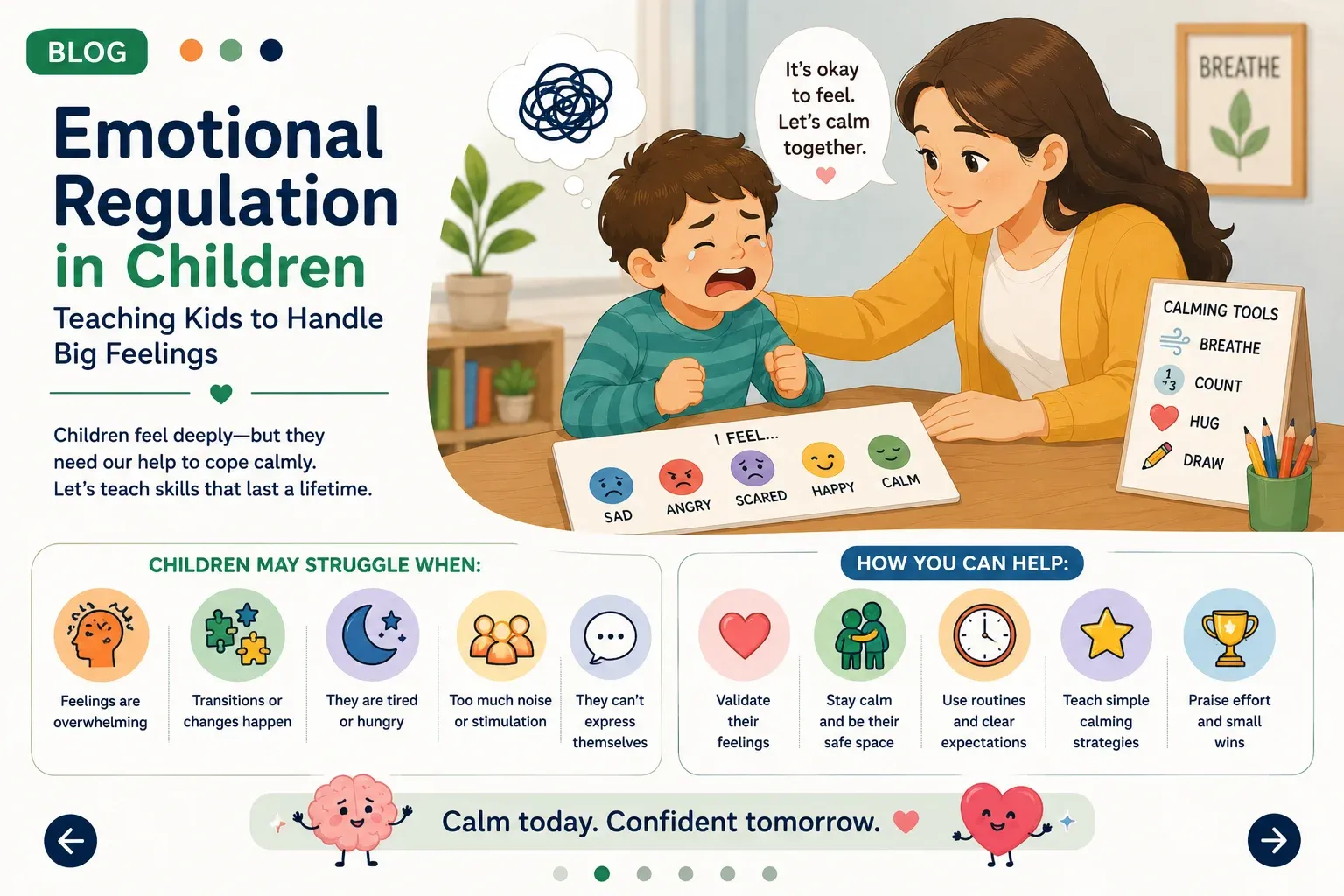
To build these skills systematically, read our practical guide on emotional regulation in children: teaching kids to handle big feelings.
5. What to Do Instead of Punishment When It's a Skill Gap
If your child was struggling with reading because of dyslexia, you would never take away their iPad or send them to sit alone in a corner for failing to read a paragraph. You would recognize that punishment cannot teach a skill that the brain has not yet mastered.
Emotional regulation, cognitive flexibility, task initiation, and frustration tolerance are neurological skills in exactly the same way. When your child fails to exhibit them, punishing the deficit only amplifies panic.
Here is the 4-step clinical protocol to apply whenever challenging behaviour erupts:
- Step 1: Limbic First Aid (Connect Before Directing):Drop your vocal tone, slow your rate of speech, and soften your physical posture. Say: "You are safe. I am right here with you. We will figure this out together." Do not explain rules, lecture on morality, or demand apologies while their amygdala is firing.
- Step 2: Investigate the Lagging Skill (Be a Detective, Not a Judge):Ask yourself: What specific skill was demanded of my child right before the explosion?
- Was it transition flexibility (shifting away from a high-dopamine screen)?
- Was it task initiation (staring at a blank page without knowing where to start)?
- Was it sensory tolerance (a noisy room, itchy collar, or hunger)?
- Was it expressive language (inability to put complex frustration into words)?
- Step 3: Scaffold the Environment:Provide the external structure their brain cannot currently generate internally. Use visual timers, break complex tasks into micro-chunks ("Just write your name on the sheet, that's step one"), provide sensory grounding (weighted lap pads, deep squeezes), and provide physical co-presence.
- Step 4: Collaborative Proactive Solutions (When Baseline Returns):Hours later, when everyone is fed and relaxed, revisit the problem collaboratively: "I noticed math homework felt really heavy tonight. What was the hardest part for you?" Listen without interrupting. When children are invited into solving the problem, compliance rates increase dramatically.
The Regulatory Golden Rule
Key Takeaways
- True manipulation requires advanced executive functions (Theory of Mind, impulse inhibition) that developing children do not possess.
- Explosive outbursts, meltdowns, and refusal are autonomic fight-or-flight reactions driven by amygdala activation, not calculated deceit.
- Autonomic physical markers (dilated pupils, sweating, tremors, exhaustion) distinguish lagging skills from learned strategic habits.
- Generational discipline frameworks equate compliance with respect; reframing distress as a skill gap breaks cycles of intergenerational trauma.
- Co-regulation maintains firm, loving boundaries while loaning parental executive functioning to a child whose prefrontal cortex is offline.

Rabbia Ashraf
Clinical Psychologist | Child & Adolescent Development
Rabbia Ashraf is a dedicated Clinical Psychologist specializing in child and adolescent development. She provides parent coaching, developmental guidance, and psychoeducation.
Need Professional Guidance?
Book a consultation with Rabbia Ashraf to discuss your child's development and receive evidence-based recommendations.