
In this article you'll learn
- Why decades of male-centric diagnostic checklists cause clinicians to miss bright girls and quiet boys.
- How 'Social Mimicry' and high verbal IQ camouflage underlying Autism and ADHD.
- The 6 subtle signs of Internalized (Inattentive) ADHD and High-Masking Autism.
- Why 'making eye contact' and 'having empathy' never rule out Autism.
- How to prepare for a clinical consultation so your child isn't dismissed with 'it's just anxiety'.
The "Squeaky Wheel" Bias in Child Psychology
For decades, classroom referral systems for ADHD and Autism were built around a single question: "Is this child disrupting the teacher?"
If a seven-year-old boy is bouncing off the walls, blurting out answers, refusing to sit in circle time, or lining up toy trains while ignoring his name, he is flagged for an assessment by age five.
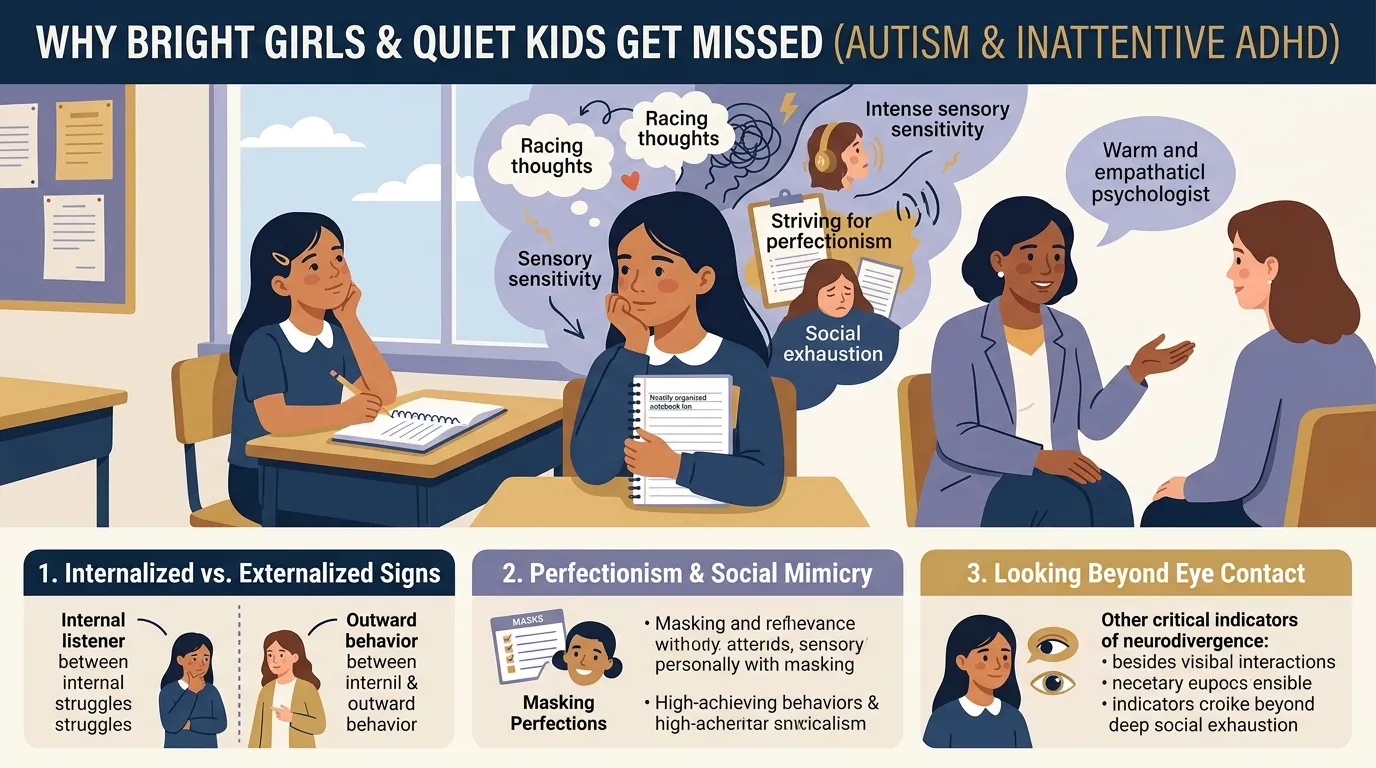
But what happens when a child is verbally gifted, anxious to please, observant, and internalizes their distress?
Instead of throwing a chair when overwhelmed, they chew the inside of their cheek, twirl their hair, stare quietly out the window, or cry silently in the bathroom stall. Because their struggles only hurt themselves rather than disrupting the classroom, they fly completely under the radar—often until age 10, 12, or 14, when academic and social complexity triggers an acute mental health crisis.
The 'Just Anxiety' Misdiagnosis
6 Hidden Signs of High-Masking Autism & Inattentive ADHD
If your parental intuition tells you something deeper is going on despite good report cards, look for these six clinical patterns:
🎭 1. Social Chameleon & Scripting
They study peers like an anthropologist—copying phrases, laugh timing, and body language. They can play with one best friend at a time, but group dynamics (3+ kids) leave them exhausted, bossy, or left out.
📝 2. Paralyzing Perfectionism
They use anxiety as artificial dopamine to force themselves to succeed. If they make a single spelling mistake or don't immediately understand a task, they rip up the entire page in tears.
💭 3. Internal Hyperactivity (Racing Brain)
Their body sits still in class, but their mind has 15 browser tabs open at once. At bedtime, they cannot switch their brain off—asking existential questions at 10:30 PM or picking at their nails and cuticles.
📚 4. " socially Acceptable" Deep Interests
Instead of train timetables, their autistic hyper-fixation is horses, Harry Potter, K-pop, art supplies, or psychology. Because the topic is mainstream, adults miss the autistic intensity of the focus.
💔 5. Hyper-Empathy & Justice Sensitivity
Far from lacking empathy, they absorb everyone else's emotions in the room, cry over hurt animals or unfair classroom rules, and feel crushed if a teacher scolds another student.
🌪️ 6. The Bedroom "Executive Tornado"
At school, their desk looks neat. At home, their bedroom floor is a sea of clothes and craft scraps, they lose their water bottle four times a week, and they forget step two of a three-step instruction.
Has Your Child Been Dismissed as "Too Bright or Social"?
Take our 60-second Triage Screener or book a 1-on-1 Developmental Consultation with Clinical Psychologist Rabbia Ashraf to evaluate high-masking traits and get clear, validating answers.
"My child gets A's and B's in school, so they cannot have ADHD or executive dysfunction."
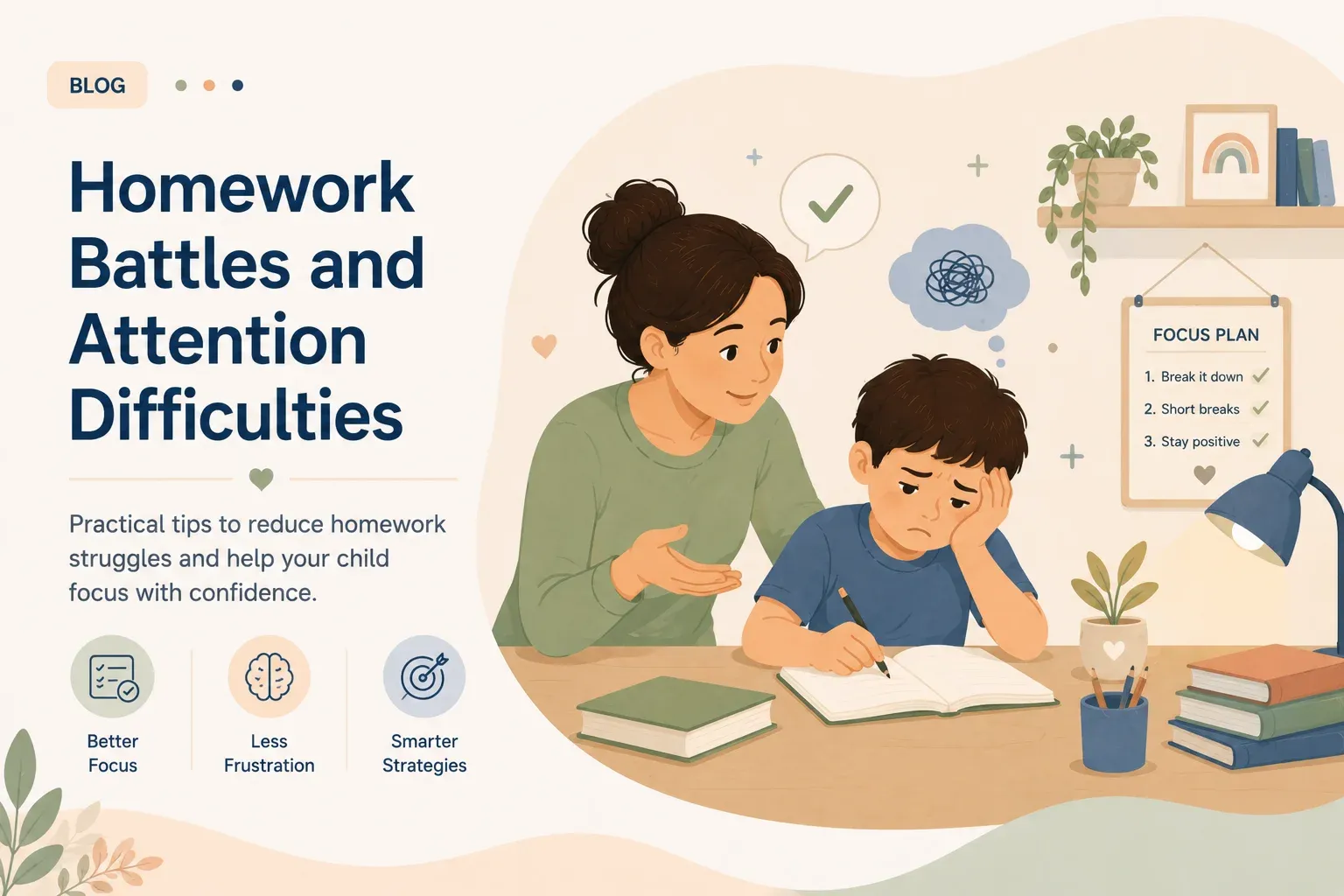
High IQ can mask ADHD in primary school, but the child pays for those grades with chronic anxiety, 3-hour homework nights, and severe emotional exhaustion.
"A diagnosis will just put a limiting label on a bright child."
Without an accurate understanding of their brain, bright neurodivergent kids label themselves as 'broken, lazy, weird, or stupid.' Understanding their neurotype replaces self-blame with self-advocacy.
"If a 10-minute screening checklist from the teacher came back normal, we should drop it."
Standard teacher rating scales primarily measure disruptive external behaviors. A comprehensive clinical evaluation must weight parent observations of home recovery and internal distress.
How to Advocate When Professionals Brush You Off
If you are preparing for a pediatric appointment, school SENCO meeting, or psychological evaluation, use these three clinical strategies:
- 1. Document the "Cost of Compliance":Never just say "She struggles with homework." Quantify the hidden cost: "She completes her homework accurately, but it takes 90 minutes of crying, erasing holes in the paper, and sensory shutdown afterward."
- 2. Separate Intelligence from Executive Function:Highlight the gap between what your child knows and what they can execute independently: "He can explain black holes like a university student, but he cannot remember to put his shoes on or transition from Lego to dinner without a meltdown."
- 3. Get a Specialist Pre-Assessment or Second-Opinion Review:Before spending thousands on a generic clinic that only uses surface checklists, consult a clinical psychologist experienced in high-masking profiles to organize your developmental history or decode existing testing scores.
Key Takeaways
- Bright girls and quiet boys are routinely missed because their struggles are internalized (anxiety, daydreaming, perfectionism) rather than disruptive.
- Eye contact, empathy, imagination, and strong vocabulary do NOT rule out Autism or ADHD.
- High intelligence often camouflages executive dysfunction until the demands of upper primary or secondary school trigger burnout.
- Teacher checklists frequently miss high-masking children because the child suppresses all distress during school hours.
- A 1-on-1 clinical consultation or report review validates your observations and builds a tailored support plan.

Rabbia Ashraf
Clinical Psychologist | Child & Adolescent Development
Rabbia Ashraf is a dedicated Clinical Psychologist specializing in child and adolescent development. She provides parent coaching, developmental guidance, and psychoeducation.
Need Professional Guidance?
Book a consultation with Rabbia Ashraf to discuss your child's development and receive evidence-based recommendations.