
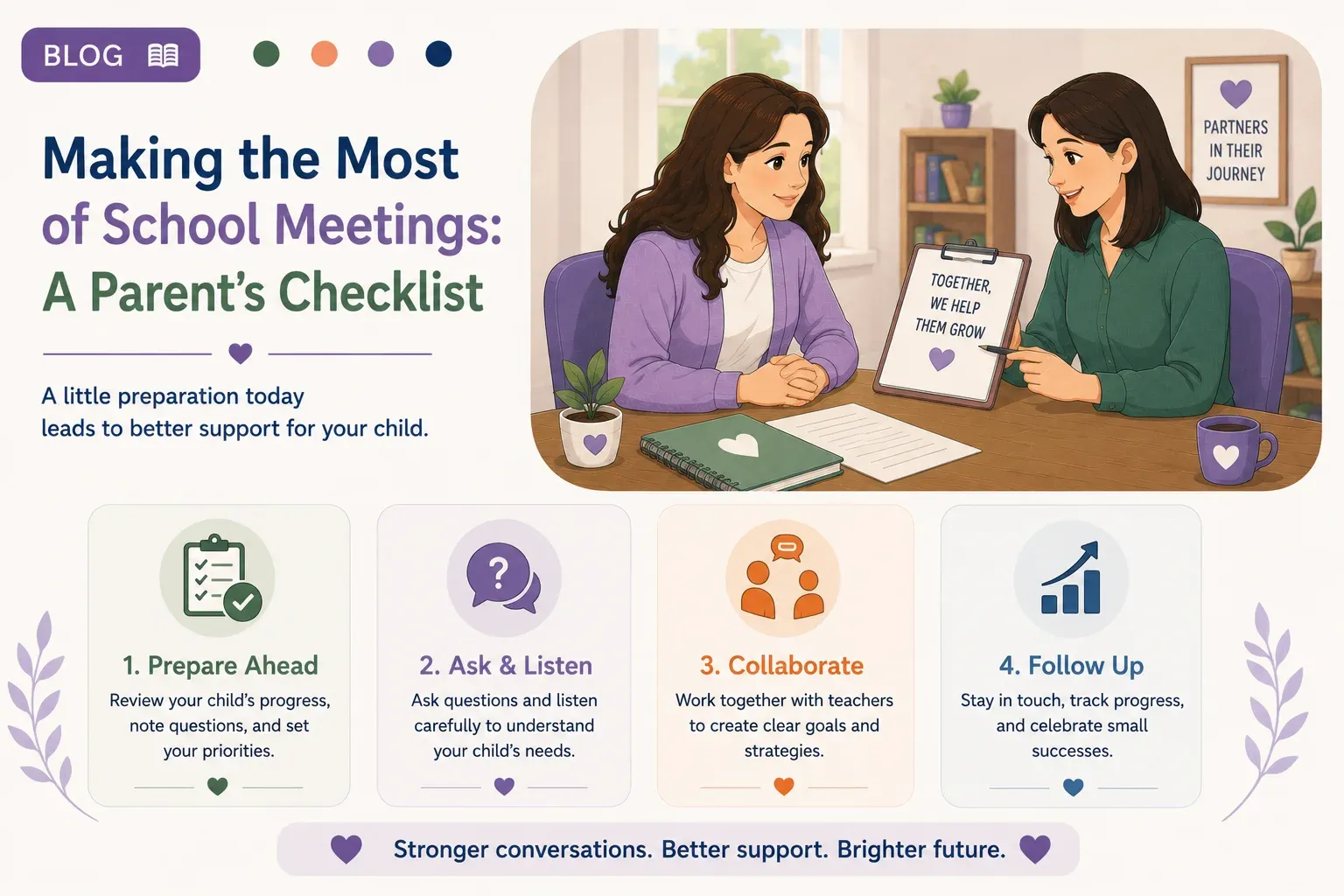
Walking into a school meeting—whether with your child's primary teacher, the school SENCO, or the learning support coordinator—often brings an immediate knot to a parent's stomach.
You feel protective and on edge. You don't want anyone to label your child as "difficult," "bad," or "lazy." And because that protective instinct is so strong, parents often walk in with armor on, wanting to defend their child or instinctively conceal areas where they struggle at home.
In this article you'll learn
- How to overcome defensive anxiety and fear of your child being labeled.
- Why surface grades often hide profound internal emotional distress at school.
- Four critical clinical questions regarding emotional coping and peer stress.
- How to treat behavioral shortcomings as collaborative coaching targets.
Shift from Defense to Collaborative Inquiry
The most effective mindset shift you can make is to realize that a shortcoming is not a character flaw. When educators highlight an area where your child struggles, it is simply a deficit in executive functioning, communication, or emotional regulation that requires targeted scaffolding. Leaving room for honest, critical feedback is how your child gets the help they actually need.
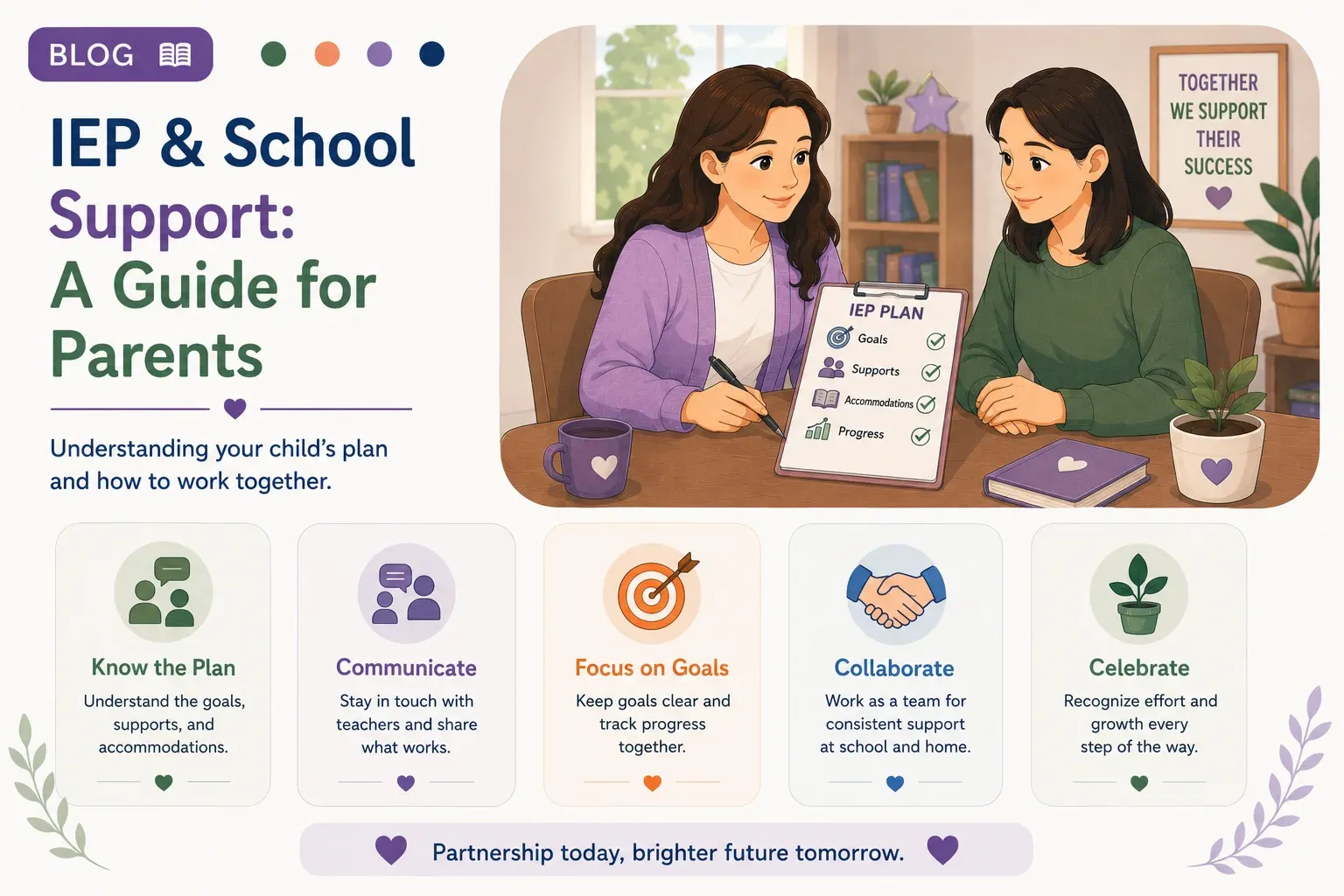
Effective school support bridges home observations with classroom accommodations.
Four Clinical Questions to Ask Beyond "How Are His Grades?"
Too many parent-teacher conferences are spent talking about math scores and reading percentiles. If your child is neurodivergent or having developmental challenges, those metrics tell you almost nothing about their wellbeing.
Here are the four questions I tell parents to bring to the meeting:
1. "When he gets distressed or stuck on work, how does he cope?"
Does he shut down silently? Does he ask for help? Does he rip the paper or act as the classroom clown to mask his embarrassment? This reveals his nervous system's stress threshold in the classroom.
2. "How is he holding up during unstructured peer time?"
How does he behave during recess, lunch, or group activities? Is he able to join games, or does he get overwhelmed by playground noise and retreat to the sidelines?
3. "How does he communicate his feelings when he's having a hard day?"
Does he have a safe way to signal to the teacher that he needs a sensory break, or does he bottle it up until 3:30 PM when he explodes the moment he gets into your car?
4. "What environmental triggers usually happen right before he loses focus?"
Is he sitting next to an open hallway window? Is he hungry right before lunch? Pinpointing the antecedent helps you and the teacher agree on simple classroom adjustments.
"If I tell the teacher my child has meltdowns at home, they will treat him unfairly."
Honest, vulnerable transparency helps educators see that outbursts are neurological stress responses, building a unified team between classroom and living room.
Before concluding your meeting, always schedule an agreed-upon 3-week check-in. Accommodations documented on paper only succeed when there is an active review date on the calendar.
Key Takeaways
- Enter school conferences with collaborative inquiry rather than defensive armor.
- Ask how your child copes when distressed or stuck on classroom assignments.
- Inquire about peer communication during unstructured lunch and playground periods.
- Treat behavioral weaknesses as functional skills that need coaching and accommodations.
Frequently Asked Questions
What if the teacher seems dismissive of our concerns?
Keep your communication objective. Share specific home observations in writing, reference any psychological evaluations, and request an informal 3-week check-in date to review progress.
Should we bring our child to the meeting?
For primary school children, it is usually better for adults to have candid discussions about accommodations first. For older children and teenagers, involving them for a portion of the meeting builds powerful self-advocacy skills.
If you have an upcoming school meeting and aren't sure how to advocate without burning bridges, book an online school strategy consultation. We will draft a tailored, evidence-backed accommodation request list together.