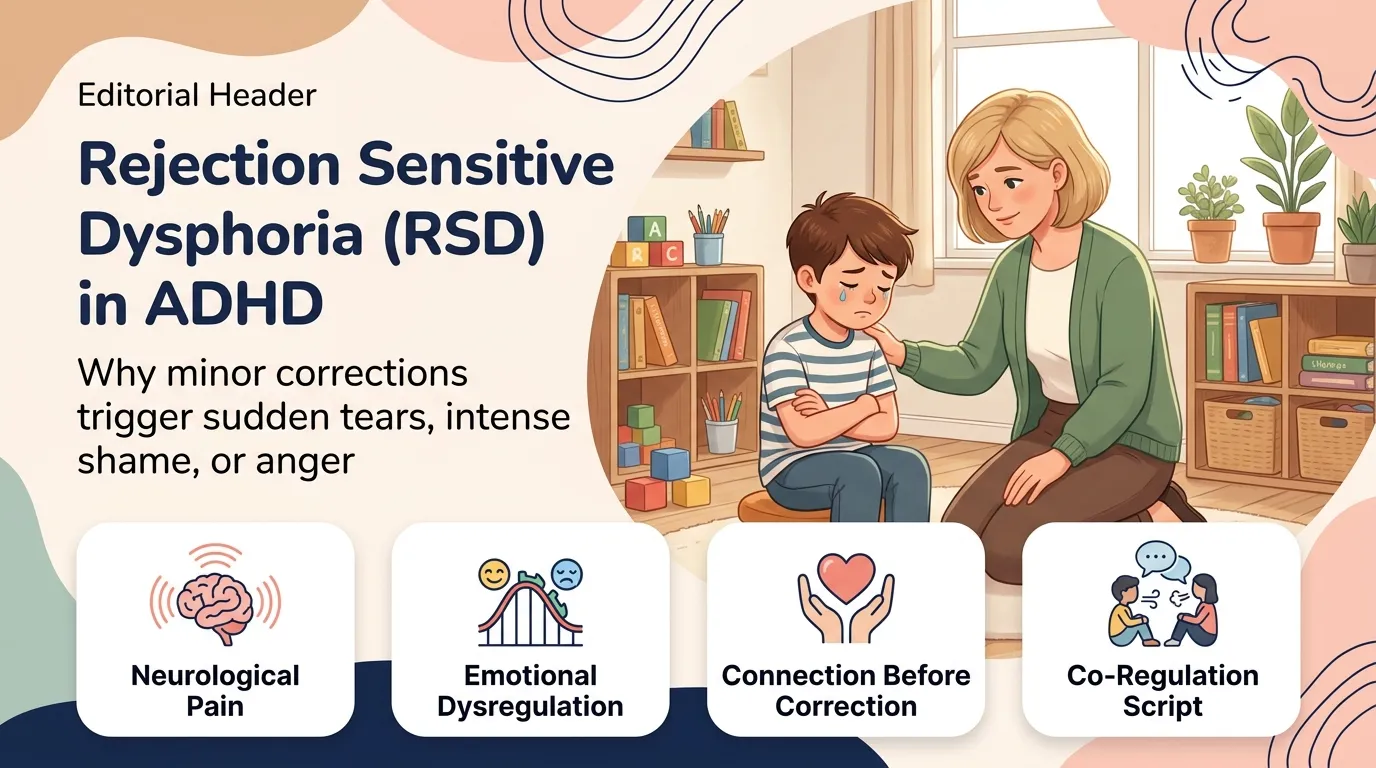
You offer the mildest, gentlest comment: "Sweetheart, you missed buttoning the top button of your shirt," or "Let's erase this one number so it's a bit neater."
In an instant, your eight-year-old child bursts into uncontrollable sobbing, screams "I'm stupid! Everyone hates me! I ruin everything!", slams their bedroom door, or lashes out with white-hot rage.
As a parent, you stand in disbelief thinking: "Why are you making such a gigantic deal out of a button? Why do you take everything as a personal attack?"
What you are witnessing is not theatrical melodrama or manipulative fragility. It is one of the most debilitating, rarely discussed aspects of the neurodivergent brain: Rejection Sensitive Dysphoria (RSD).
In this article you'll learn
- Why the word 'dysphoria' literally translates to 'unbearable, agonizing pain'.
- The neural imaging evidence showing perceived criticism stimulates physical pain receptors.
- How cumulative childhood criticism primes ADHD kids for defensive explosions.
- The 4-step 'Connection Before Correction' blueprint for everyday parenting.
The Science Behind RSD
By age 12, children with ADHD receive an estimated 20,000 more negative or corrective messages than their neurotypical peers ("Sit still", "Pay attention", "Don't touch that", "Hurry up", "Where are your shoes?").
Combined with lagging emotional regulation networks in the prefrontal cortex, the ADHD brain interprets even constructive guidance as catastrophic relational rejection. To your child's nervous system, minor criticism doesn't mean "try again"—it registers as "I am unlovable and defective."
How RSD Manifests in Everyday Behaviors
Children do not say: "Mom, my autonomic nervous system is experiencing acute social pain." Instead, RSD manifests in two common behavioral patterns:
1. Externalized Rage & Blame
- • Instant shouting, cursing, or slamming doors.
- • Blaming others: "The teacher is unfair! You tricked me!"
- • Vehement denial: "I didn't even do that!" even when caught red-handed.
- • Aggression used as an armor to defend against crushing shame.
2. Internalized Shame & Withdrawal
- • Devastating tears and emotional collapse.
- • Severe self-criticism: "I wish I wasn't born. I'm a loser."
- • Hiding under blankets or refusing to leave their bedroom.
- • Quitting new games or hobbies the second they aren't flawless.
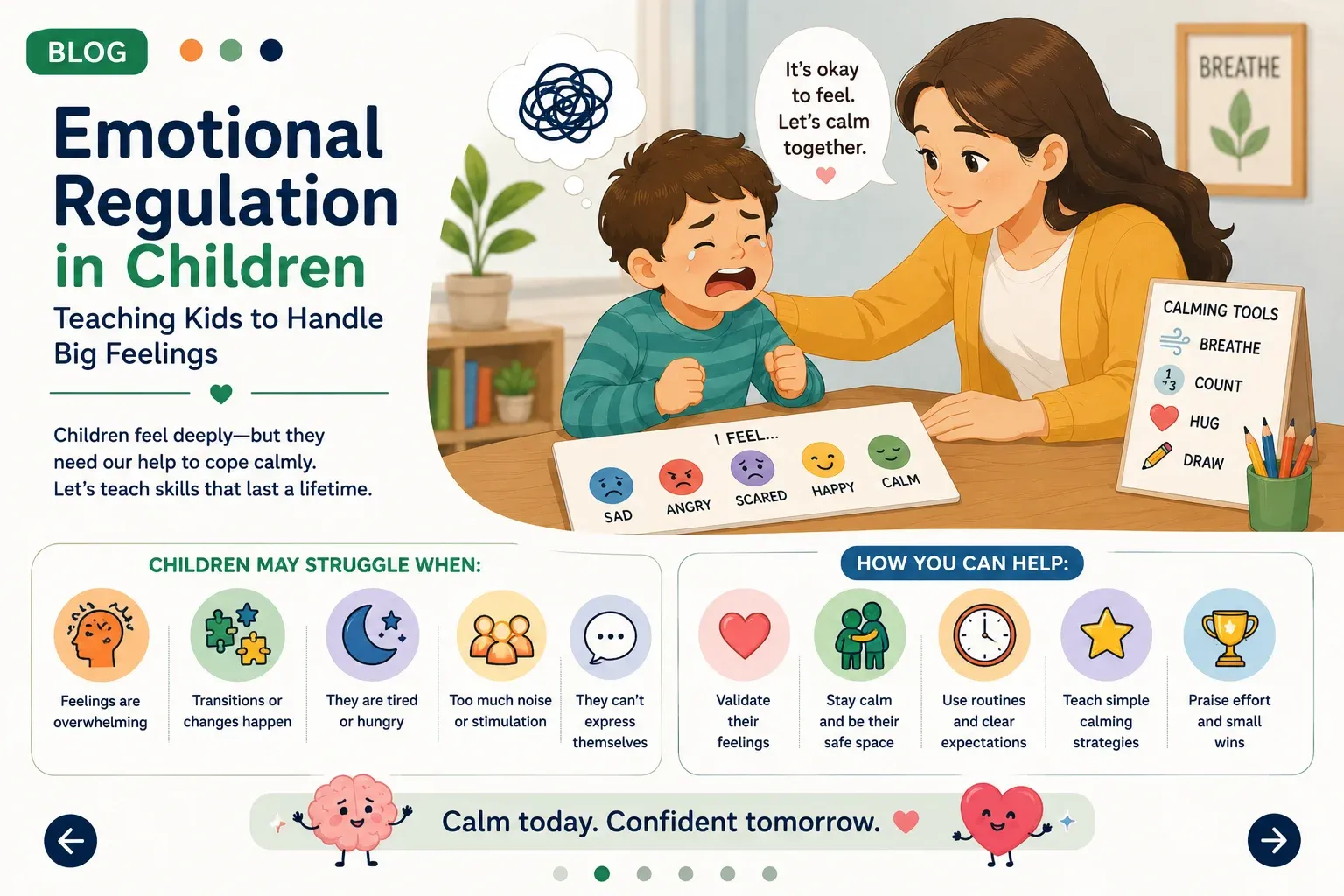
When a child is drowning in shame, logic is useless. Connection and physical presence are the life rafts.
Parenting Pitfalls: What Accidentally Amplifies RSD
"Saying: 'Stop being so sensitive, you are overreacting!' will help them toughen up."
Invalidation confirms the child's greatest fear—that their feelings are fundamentally wrong. It escalates panic into severe defiance.
"Trying to debate and prove the fact while they are screaming will bring reason."
During an RSD episode, the prefrontal cortex is completely offline. Explaining logic to a child in emotional dysphoria is like lecturing a drowning person on swimming technique.
"RSD is a personality flaw that will fix itself with age."
RSD is an established neurobiological feature of ADHD. It requires explicit co-regulation coaching, shame-resilience strategies, and compassionate scaffolding.
The 4-Step 'Connection Before Correction' Protocol
- Step 1: Anchor the Safety (Validate First):Lower your voice and drop your physical height. Say: "I see how upset you are right now. I am right here with you. You are safe, and we are going to get through this together."
- Step 2: Externalize the Problem:Never say "Why are you acting out?" Say: "That homework problem is being so stubborn right now," or "This math question is being really confusing today." This separates the child's identity from the error.
- Step 3: Allow the Neurochemical Storm to Pass:Offer water, a weighted blanket, or silence. Do not ask for apologies or force task completion while adrenaline is surging.
- Step 4: Collaborative Post-Regulation Debrief:Hours later, during a peaceful moment: "Earlier when I pointed out the button, it felt like I was saying you did something bad. I love you no matter what, and I will always help you fix mistakes without judgment."
Key Takeaways
- Rejection Sensitive Dysphoria (RSD) produces neurological pain in response to perceived failure or disapproval.
- Shame spirals manifest either as explosive aggression and blame, or tearful self-loathing and withdrawal.
- Telling an ADHD child they are 'overreacting' confirms their deepest fear of being defective.
- The 'Connection Before Correction' rule prevents minor adjustments from triggering full-scale household battles.
- Targeted parent consultations provide customized de-escalation phrasing suited to your child's exact temperament.

Rabbia Ashraf
Clinical Psychologist | Child & Adolescent Development
Rabbia Ashraf is a dedicated Clinical Psychologist specializing in child and adolescent development. She provides parent coaching, developmental guidance, and psychoeducation.
Need Professional Guidance?
Book a consultation with Rabbia Ashraf to discuss your child's development and receive evidence-based recommendations.