
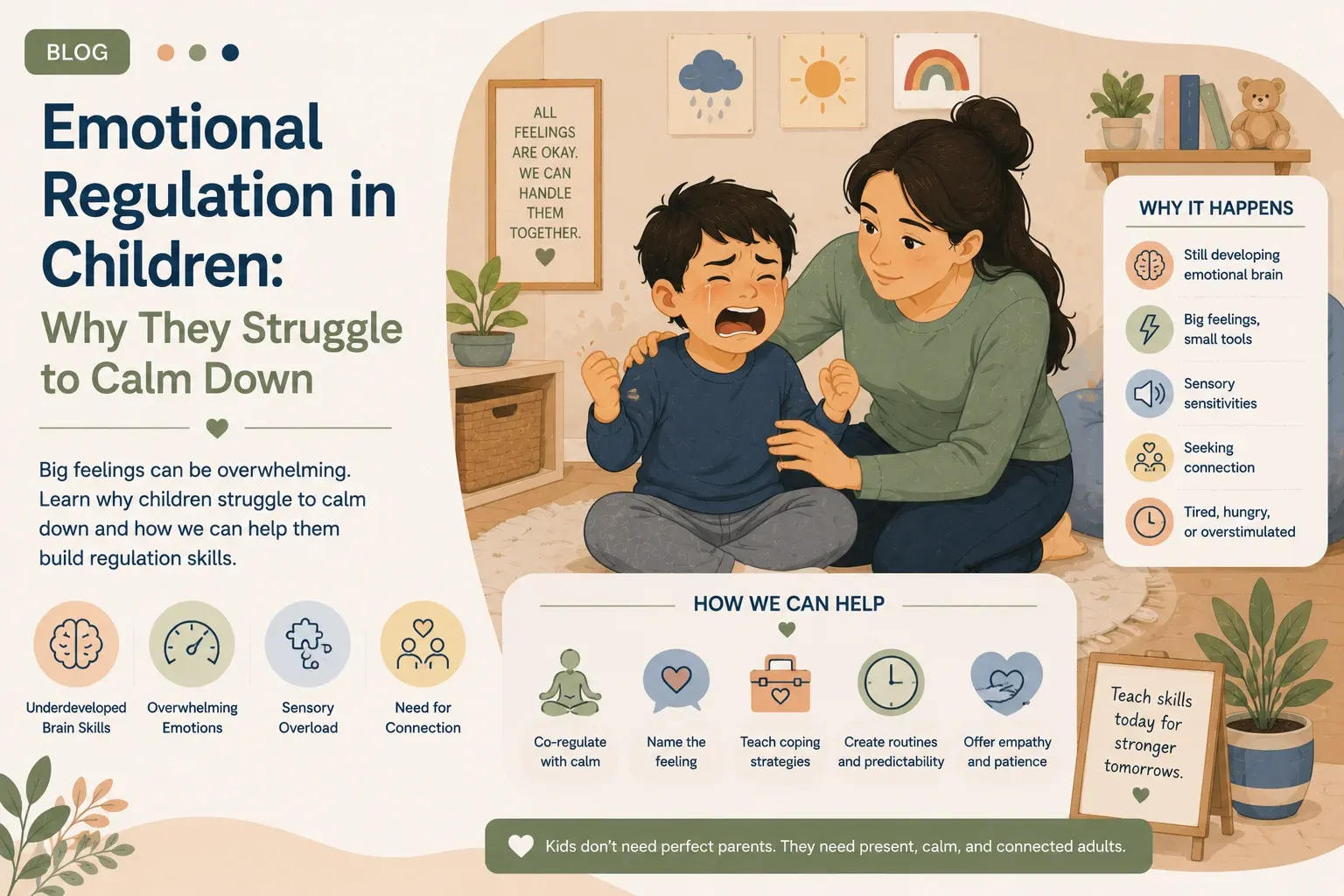
You've asked them calmly. Then firmly. Then through clenched teeth. Nothing. Then you SHOUT — and suddenly they move. You feel guilty for 3 hours. The next day, the exact same cycle repeats.
That heavy pit in your stomach during the quiet drive to school or while watching them sleep at night is universal. You promised yourself this morning would be different. You read the gentle parenting books, you practiced deep breathing, and yet by 7:45 AM, your nervous system frayed, your vocal cords strained, and the house erupted into chaos.
Here is the clinical truth that every exhausted parent needs to hear: You are not a bad parent, and your child is not inherently defiant. You have simply fallen into The Yelling Trap—a powerful, neurochemically reinforced loop between your vocal cords and your child's autonomic nervous system.
In this article you'll learn
- Why shouting gets instant compliance through amygdala threat activation, not cognitive understanding.
- The cortisol habituation loop: how children's brains learn to treat calm voices as background noise.
- Auditory processing deficits vs. willful refusal: when a child can't process multi-step verbal demands.
- The Calm Authority Protocol: 4 practical steps to secure cooperation without raising your voice.
- Clinical repair scripts to restore attachment and eliminate guilt after you have lost your temper.
Why Shouting 'Works': The Amygdala Threat Hijack
The reason parents shout is simple: it works. When you yell, your child drops what they are doing, startles, and finally puts their backpack on. But as a clinical psychologist, I look closely at how that compliance is achieved in the brain.
When your voice crosses a specific decibel and pitch threshold, your child's auditory cortex transmits a high-priority warning directly to their amygdala—the brain's primitive alarm center. The amygdala does not evaluate grammar, parental exhaustion, or the clock. It evaluates survival threat.
In an evolutionary sense, a loud, sudden, aggressive roar signals imminent physical danger: a predator or an immediate territorial threat. Within milliseconds:
- Adrenaline surges: Heart rate accelerates, pupils dilate, and muscles tighten into action.
- Cortisol spikes: Blood rushes away from non-essential cognitive centers to prepare the body for defensive action.
- The Prefrontal Cortex shuts down: The "thinking brain"—responsible for empathy, logic, motor planning, and intrinsic motivation—goes offline.
Your child moves not because they realized that punctuality matters, but because their brain entered an autonomic flight-or-freeze state. They are complying out of survival panic. When children comply under fear, their brain forms zero neurological pathways for self-discipline, internal responsibility, or long-term emotional regulation in children.
Compliance Through Fear vs. Cooperation Through Connection
The Cortisol Habituation Loop: Why Only Yelling Gets a Response
If shouting works in the short term, why does it backfire so terribly over time? The answer lies in neural habituation.
Consider how your brain processes sensory input. If you sit in a café with a humming air conditioner, you hear it loudly for five minutes. After twenty minutes, your Reticular Activating System (RAS) filters out the hum as irrelevant background noise so you can focus on your conversation.
In many busy households, calm parental requests undergo the exact same filtering process. If a parent habitually calls out from the kitchen five times:
- "Hamza, please put your shoes on." (Level 1 — Child's brain: Ambient noise, no consequence.)
- "Hamza, I asked you nicely, shoes on." (Level 2 — Child's brain: Mom is warming up, still safe to play.)
- "I'm not going to say it again, shoes!" (Level 3 — Child's brain: Still just words, keep building Lego.)
- "HAMZA! SHOES ON RIGHT THIS SECOND OR WE ARE NOT GOING!" (Level 10 — Child's brain: Threat detected! Scramble!)
By repeating requests without physical presence or immediate boundary follow-through, we inadvertently train our children to operate under a dangerous cognitive algorithm: "My parent's words do not mean action until their vocal cords reach a decibel level of 10."
Their baseline resets. Just like a body building a tolerance to caffeine, the child's nervous system habituates to cortisol. Calm speech ceases to register as meaningful input. You haven't raised an uncooperative child; you have conditioned a nervous system that requires an acoustic emergency to take action. This chronic escalation is one of the leading contributors to parent burnout and developmental exhaustion.
Won't Listen vs. CAN'T Process: The Auditory & Executive Function Reality
Before you assume your child is deliberately ignoring your calm voice, you must evaluate their neurological hardware. In clinical assessments, we find that a significant percentage of "stubborn" children are experiencing legitimate developmental processing bottlenecks.
🧠 Working Memory Capacity
A 6-year-old has an average working memory span of 2 to 3 chunks of information. When you shout across the living room: "Put your shoes on, grab your water bottle, and brush your teeth," their working memory drops steps 2 and 3 the moment they start looking for their left shoe.
🎧 Attentional Tunneling & Auditory Lag
Children with ADHD or sensory processing differences experience intense "attentional hyperfocus." When engrossed in a drawing or puzzle, their brain's thalamus actively suppresses secondary sensory channels. They literally do not hear your voice until you break their visual field.
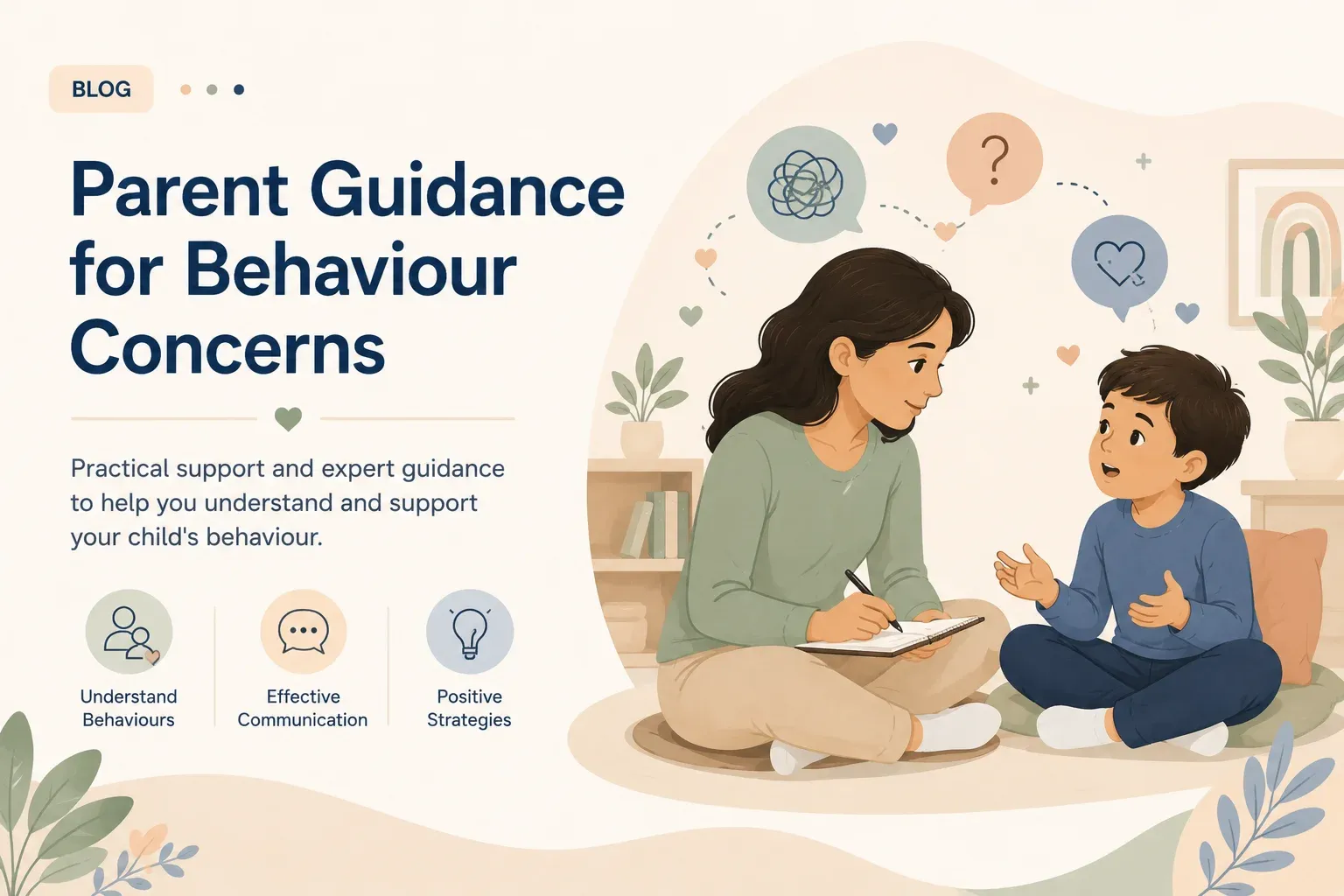
Expecting a child with executive function challenges to respond to verbal commands shouted from across a room is setting them up for failure. When you understand how to support executive function at home and seek clinical parent guidance for behaviour concerns, the battle transforms from an emotional clash into a neurological adjustment.
"If I don't raise my voice, my child will think they run the house and become entitled."
Shouting actually signals a loss of parental emotional control. Grounded, calm physical presence communicates true, unshakeable authority that makes children feel safe.
"My child hears me perfectly from the hallway; they are just testing my patience."
Children under 10 lack mature selective attention. Without visual engagement and direct physical proximity, verbal instructions rarely cross into actionable working memory.
"Yelling every once in a while teaches children that there are real-world boundaries."
Yelling teaches children how to react under stress, not how to self-regulate. They learn to regulate their behavior through the modeled nervous system of their caregiver.
The Calm Authority Protocol: 4 Steps to Break the Yelling Cycle
To retrain your child's nervous system to register calm communication, you must dismantle the expectation of volume. Here is the clinical 4-step framework we teach families to replace acoustic escalation with quiet, definitive leadership:
Never issue an instruction from another room, around a corner, or from the top of the stairs. Walk into the room. Bridge the physical distance until you are within two feet of your child. Proximity instantly elevates the cognitive priority of your presence.
Drop down to their physical eye level. Place a gentle, grounded hand on their shoulder or forearm. This tactile input gently disconnects them from attentional hyperfocus without triggering a defensive startle response. Wait until their eyes meet yours before speaking.
Lower your vocal pitch rather than raising your volume. In mammalian biology, high-pitched shrieks indicate distress, while low, calm frequencies communicate grounded dominance and security. Give one instruction only: "Feet in shoes, please." Avoid multi-part lectures.
After speaking, close your mouth and count silently to seven. Most parents intervene after 1.5 seconds, interpreting silence as defiance. In reality, a child's brain requires several seconds to decode language, disengage from motor play, and initiate a new physical action plan. Give their synapses room to fire.
Verbatim Calm Authority in Action
Walk to the sofa, sit beside him, place a hand on his knee, and wait 3 seconds. In a steady, quiet voice: "Ayaan. Look at my eyes. Screen is pausing in 30 seconds; dinner is on the table." Stay seated right there until the transition begins.
Post-Shout Repair: How to Heal the Nervous System After Losing Your Cool
You are human. Despite your best intentions, there will be mornings when fatigue, deadline stress, or sensory overload overwhelms your own prefrontal cortex and you scream.
When this happens, the most damaging thing you can do is pretend it didn't happen, sulk in cold silence, or rationalize the yelling by blaming the child ("Look what you made me do!"). Children who are blamed for their parents' emotional outbursts develop chronic vigilance and relational anxiety.
Instead, clinical resilience is built through Relational Repair. Once your nervous system regulates, walk back to your child and use these exact scripts:
Script for Young Children (Ages 3–7):
"I used my big, loud voice just now, and that was scary for your ears. I was feeling frustrated because we are late, but it is my job to speak to you kindly. That was not your fault. I am taking a deep breath, and I am going to try again."
Script for Older Children and Tweens (Ages 8–13):
"I lost my temper earlier about your messy room, and I shouted. That wasn't fair to you, and it's not the way I want us to communicate. I still need your room cleaned, but I apologize for raising my voice. Let's reset and figure out how to get this done together."
Relational repair teaches your child two profound neurological lessons: first, that big feelings can be managed and repaired without destroying connection; and second, that accountability is a strength, not a weakness.
Key Takeaways
- Shouting produces compliance through amygdala threat activation, shutting down higher-order learning and self-regulation.
- The cortisol habituation loop trains the child's brain to treat calm requests as meaningless ambient noise.
- Multi-step commands often fail due to working memory bottlenecks and ADHD attentional tunneling, not willful disobedience.
- The Calm Authority Protocol (proximity, eye-level touch, low pitch, and 7-second pause) secures cooperation reliably.
- Prompt relational repair after losing your temper eliminates guilt, restores attachment security, and models emotional resilience.

Rabbia Ashraf
Clinical Psychologist | Child & Adolescent Development
Rabbia Ashraf is a dedicated Clinical Psychologist specializing in child and adolescent development. She provides parent coaching, developmental guidance, and psychoeducation.
Need Professional Guidance?
Book a consultation with Rabbia Ashraf to discuss your child's development and receive evidence-based recommendations.