
Understanding the Confusion Between ADHD and Hyperactivity in Children

Quick Facts
In this article you'll learn
- The difference between ADHD and hyperactivity
- The three main presentations of ADHD
- Why misdiagnosis often occurs
- Common myths vs facts
- When to seek professional assessment
Attention Deficit Hyperactivity Disorder, commonly known as ADHD, is a neurodevelopmental condition.
It can affect a child’s attention, activity level, impulse control, learning, and emotional regulation.
A child may have ADHD with strong hyperactive symptoms, but another child may have ADHD without being visibly hyperactive at all.
Hyperactivity Is a Symptom, Not the Whole Disorder
Many people assume that a child must be very active or disruptive to have ADHD.
This is not always true.
Hyperactivity can be one part of ADHD, but ADHD also includes problems with attention and impulsivity.
Common signs of hyperactivity may include:
- Excessive talking or interrupting
- Difficulty sitting in one place
- Constant fidgeting
- Difficulty playing quietly
- Acting as if always “on the go”
These behaviours may be more visible to parents and teachers.
Because of this, hyperactive children are often noticed earlier.
However, ADHD can also be present in children who are quiet, dreamy, forgetful, or mentally distracted.
ADHD Can Present in Different Ways
ADHD is not the same in every child.
Clinical tools help professionals look at different patterns of symptoms and impairment.
ADHD may present in three main patterns:
1. Predominantly Hyperactive/Impulsive Presentation
In this pattern, the child shows more difficulty with sitting still, controlling impulses, and waiting.
2. Predominantly Inattentive Presentation
In this pattern, the child may not be physically hyperactive.
Instead, the child may struggle with:
- Forgetfulness and careless mistakes
- Losing things
- Avoiding tasks that require mental effort
- Being easily distracted
- Difficulty completing instructions
Common Mistake
- •These children may be misunderstood as lazy, careless, or uninterested.
- •In reality, they are struggling with attention regulation and executive functioning.
3. Combined Presentation
In this pattern, the child shows both inattentive and hyperactive/impulsive symptoms.
This is often the pattern most people imagine when they think of ADHD.
Why Misdiagnosis Can Happen
Sometimes a child may look hyperactive, restless, or disorganized, but the reason may not be ADHD.
Other developmental, emotional, sensory, or environmental factors can create ADHD-like behaviours.
For example, some children with sensory processing difficulties may struggle to sit still because their body needs movement input.
"If a child can focus on video games, they cannot have ADHD."
Children with ADHD can hyperfocus on highly stimulating tasks like video games, as these provide immediate dopamine rewards.
Why Proper Assessment Matters
A good ADHD assessment does not only ask whether the child is hyperactive.
It looks at the full picture, including attention span, impulsivity, sensory concerns, sleep routine, and school performance.
The main question is whether these symptoms are affecting the child’s functioning at home, school, or socially.
When to Seek Professional Support
Early support can help parents understand the child’s needs and create practical strategies for home and school.
What Parents Can Do Today
- Observe if the child struggles consistently with schoolwork completion or following instructions.
- Note if emotional outbursts or impulsive behaviours affect daily family life.
- Track forgetfulness, poor organization, or peer difficulties.
- Book a formal developmental assessment if concerns persist.
Key Takeaways
- Hyperactivity is just one possible symptom of ADHD.
- Many children have 'Inattentive ADHD' and are never hyperactive.
- Sensory and emotional issues can look like ADHD, making proper diagnosis crucial.
- A child with ADHD can still hyperfocus on things they enjoy, like screens.
- Early assessment leads to better strategies for home and school.
References
- Centers for Disease Control and Prevention. ADHD signs and symptoms.
- National Institute of Mental Health. Attention-Deficit/Hyperactivity Disorder.
- NICHQ Vanderbilt ADHD Assessment Scales.
Frequently Asked Questions
Is hyperactivity the same as ADHD?
No. Hyperactivity can be one part of ADHD, but ADHD also includes problems with attention and impulsivity. Some children with ADHD are not visibly hyperactive.
Can a child have ADHD without being hyperactive?
Yes. This is called the Predominantly Inattentive Presentation of ADHD. These children may struggle with forgetfulness, losing things, avoiding mental effort, and being easily distracted, rather than physical hyperactivity.
Rabbia Ashraf
Clinical Psychologist | Child & Adolescent Development
Rabbia Ashraf is a dedicated Clinical Psychologist specializing in child and adolescent development. She provides parent coaching, developmental guidance, and psychoeducation.
Need Professional Guidance?
Book a consultation with Rabbia Ashraf to discuss your child's development and receive evidence-based recommendations.
Related Articles

Parent Guidance for Behaviour Concerns
When traditional discipline fails, parent guidance helps. Learn how understanding the 'why' behind behaviour and changing your response can transform your home.
Morning Routine Problems in ADHD
Mornings are often the hardest part of the day for families with ADHD. Understand the executive function struggles behind morning chaos and learn practical parent strategies.
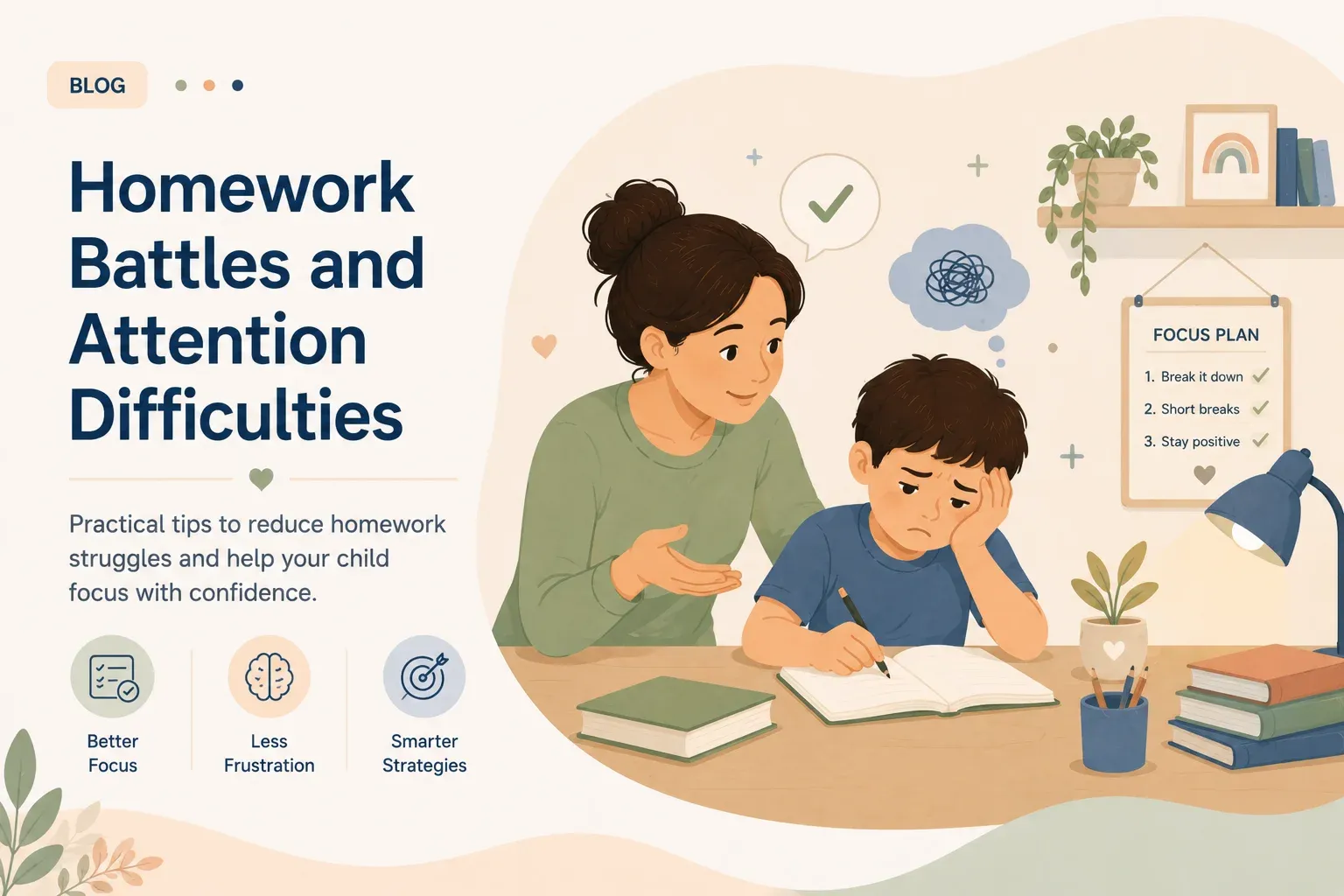
Homework Battles and Attention Difficulties
Why homework is a battleground for children with attention difficulties and how parents can help.
Parent Burnout in Child Development Support
Supporting a child with developmental differences is exhausting. Learn why parent burnout happens and how to manage it.
Table of Contents
Related Articles
Parent Guidance for Behaviour Concerns
When traditional discipline fails, parent guidance helps. Learn how understanding the 'why' behind behaviour and changing your response can transform your home.
Morning Routine Problems in ADHD
Mornings are often the hardest part of the day for families with ADHD. Understand the executive function struggles behind morning chaos and learn practical parent strategies.
Homework Battles and Attention Difficulties
Why homework is a battleground for children with attention difficulties and how parents can help.
Parent Burnout in Child Development Support
Supporting a child with developmental differences is exhausting. Learn why parent burnout happens and how to manage it.