
Parent Burnout When Supporting a Child with Developmental Needs

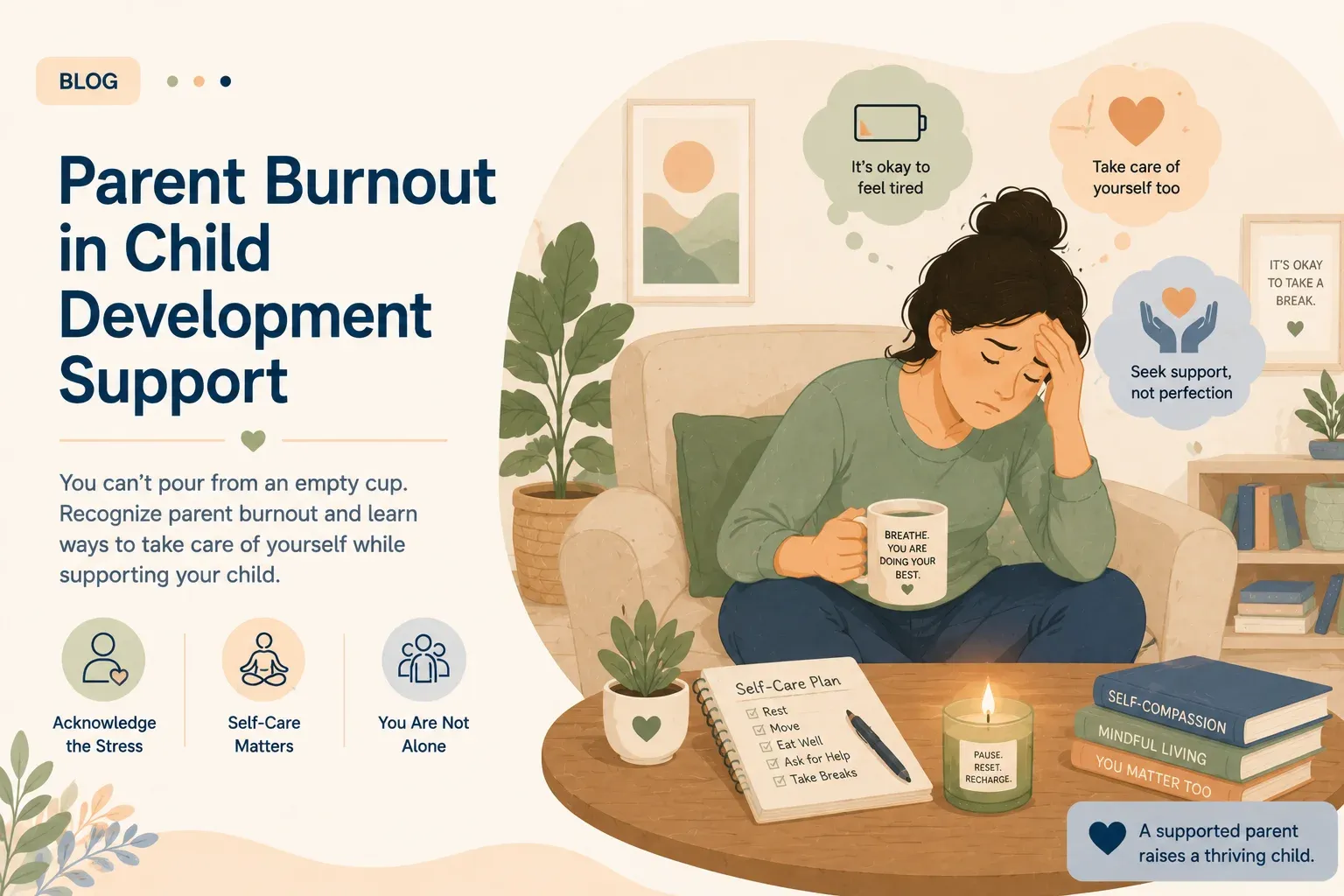
Quick Facts
In this article you'll learn
- The reality of the 'invisible load' of special needs parenting
- How to recognize the physical and emotional signs of burnout
- Why guilt is the enemy of recovery
- Realistic strategies to survive when you cannot just 'take a vacation'
- How parent consultation supports the parent, not just the child
The Invisible Load of Special Needs Parenting
Parenting is hard for everyone, but raising a neurodivergent child or a child with developmental delays requires a different level of vigilance.
You are not just a parent. You are an occupational therapist, an IEP advocate, a sensory-meltdown de-escalator, a schedule manager, and a translator for the rest of the world. This constant state of hyper-vigilance keeps your nervous system in "fight or flight" mode for years.
Signs You Are Experiencing Burnout
Parent burnout goes beyond just needing a nap. It is a chronic state of physical, emotional, and mental exhaustion. Signs include:
- Emotional Detachment: Feeling numb or disconnected from your child, or just going through the motions.
- A Short Fuse: Yelling over minor infractions that you used to handle calmly.
- Physical Symptoms: Chronic headaches, stomach issues, or getting sick frequently because your immune system is depressed.
- Resentment: Feeling jealous of parents with neurotypical children, and then feeling crushing guilt for having those thoughts.
"Good parents never feel angry at their children."
Anger and resentment are normal human responses to chronic stress and lack of sleep. Feeling angry does not mean you don't love your child; it means you are exhausted.
The Cycle of Guilt and Exhaustion
The hardest part of parent burnout is the guilt loop. You lose your temper because you are exhausted. Then, you feel immense guilt for yelling at a child who has developmental challenges. To make up for it, you push yourself even harder the next day, leading to more exhaustion and another loss of temper.
Breaking this cycle requires dropping the guilt and accepting that you are a human being with limits.
Realistic Strategies for Survival
When you are in the thick of burnout, advice like "take a bubble bath" or "go on a vacation" feels insulting. You need realistic, in-the-trenches strategies.
What Parents Can Do Today
- Lower the bar: If your child eats chicken nuggets for dinner three days in a row so you can avoid a meltdown and sit in silence, that is a win.
- Enforce 'Quiet Time': Even if your child no longer naps, enforce 45 minutes of mandatory independent quiet time (screens are fine) so you can literally just sit and stare at a wall.
- Drop the therapies that aren't working: If dragging your child to a specific therapy is ruining your relationship with them and destroying your afternoon, take a pause.
- Find your people: Connect with other parents of neurodivergent children. You need people who 'get it' without you having to explain.
When to Seek Professional Support for Yourself
If you are experiencing symptoms of clinical depression, panic attacks, or having thoughts of harming yourself or running away, seek immediate psychological support.
Additionally, a Parent Guidance Consultation is not just about fixing the child. It is a space for you to offload the mental burden. A clinical psychologist can take the lead on creating the behaviour plans, telling you exactly what to do, so you don't have to figure it out alone anymore.
Disclaimer: This article is for educational guidance only and does not replace professional medical or psychological support. If you are experiencing severe depression or a mental health crisis, please contact your local emergency services or a mental health provider immediately.
Key Takeaways
- Parent burnout is a biological response to the chronic stress of special needs parenting.
- Anger, numbness, and resentment are normal symptoms of burnout, not signs of bad parenting.
- The cycle of guilt and exhaustion only makes burnout worse.
- Lower your daily expectations to focus on survival and nervous system regulation.
- Parent consultation provides a safe space to offload the mental burden of caregiving.
Frequently Asked Questions
Is it normal to feel angry or resentful about parenting?
Yes. It is entirely normal to feel grief, anger, and resentment when raising a child with high developmental needs. These feelings do not mean you love your child any less; they mean you are exhausted.
How can I take a break when my child only wants me?
This is a common challenge, especially with separation anxiety. Start micro-breaks (5 minutes alone in a room). Gradually build a network of safe people (like a partner or trusted sitter) and tolerate the child's short-term distress while they learn you will always return.
Can parent consultation help with burnout?
Absolutely. Parent consultation focuses on giving you effective strategies to reduce daily battles, which directly lowers your stress. It also provides a safe, non-judgmental space to process the heavy emotional load you are carrying.
Rabbia Ashraf
Clinical Psychologist | Child & Adolescent Development
Rabbia Ashraf is a dedicated Clinical Psychologist specializing in child and adolescent development. She provides parent coaching, developmental guidance, and psychoeducation.
Need Professional Guidance?
Book a consultation with Rabbia Ashraf to discuss your child's development and receive evidence-based recommendations.
Related Articles
Parent Guidance for Behaviour Concerns
When traditional discipline fails, parent guidance helps. Learn how understanding the 'why' behind behaviour and changing your response can transform your home.
Emotional Regulation in Children: Why They Struggle to Calm Down
Emotional regulation is a learned skill, not an automatic one. Why co-regulation is the key to helping your child manage big feelings.
Behaviour is Communication: Finding the 'Why'
Children don't act out for no reason. Learn how to map triggers and understand what your child is trying to tell you.
How to Prepare Your Child for a Psychological Assessment
Practical tips to reduce anxiety and explain testing to your child without making them feel broken.
Table of Contents
Related Articles
Parent Guidance for Behaviour Concerns
When traditional discipline fails, parent guidance helps. Learn how understanding the 'why' behind behaviour and changing your response can transform your home.
Emotional Regulation in Children: Why They Struggle to Calm Down
Emotional regulation is a learned skill, not an automatic one. Why co-regulation is the key to helping your child manage big feelings.
Behaviour is Communication: Finding the 'Why'
Children don't act out for no reason. Learn how to map triggers and understand what your child is trying to tell you.
How to Prepare Your Child for a Psychological Assessment
Practical tips to reduce anxiety and explain testing to your child without making them feel broken.