
How to Prepare for a Child Developmental Assessment

Quick Facts
In this article you'll learn
- The essential documents and history you need to gather
- The exact phrasing to use when explaining the test to your child
- What a typical testing day looks like
- How to manage your own stress so your child stays calm
- What happens immediately after the assessment is complete
Gathering Your Documents
A psychologist needs context. How your child performs in the clinic for two hours is important, but how they perform in daily life over the last five years is even more crucial.
What Parents Can Do Today
- Report cards: Bring the last 2-3 years of school reports.
- Previous assessments: If they have had speech therapy, occupational therapy, or medical evaluations, bring those reports.
- Teacher communications: Bring a few printed emails if there has been ongoing correspondence about behaviour or learning struggles.
- A timeline: Write down a rough timeline of when they hit major milestones (walking, talking) and when you first noticed your main concern.
What to Tell Your Child
How you frame the assessment will dictate your child's anxiety level on the day.
"I should just tell them we are going to see a doctor."
For many children, 'doctor' means getting a shot or taking medicine. Avoid medical terminology. Frame it as meeting a 'learning helper' or a 'brain coach'.
For younger children (Under 8):
"Tomorrow we are going to meet someone named Rabbia. She helps kids figure out how their brains learn best. You are going to play with some blocks, look at pictures, and do some puzzles. There are no shots and no medicine."
For older children and teens:
"You know how reading (or math, or focusing) has been really frustrating lately? We are going to meet with a psychologist to figure out why. They are going to give you some different types of puzzles and questions. It's not a school test you can fail; it's just to see how your brain works so we can make school easier."
What to Expect on Testing Day
Ensure your child has a good night's sleep and a solid breakfast (bring their medication if they take it, unless the psychologist specified otherwise).
The assessment usually involves a mix of:
- Conversations and interviews.
- Table-top tasks (like block building or pattern matching).
- Academic tasks (reading a paragraph, doing some math).
- iPad or computer-based attention tasks.
The clinician will provide breaks as needed. Bring water and a preferred, non-messy snack.
How to Manage Your Own Anxiety
Children are emotional sponges. If you are visibly nervous about the testing, they will assume there is something to be afraid of.
Remember that the assessment is not a judgment of your parenting. It is simply an information-gathering mission. Your child is the exact same person walking out of the clinic as they were walking in; you will just have a better instruction manual for them.
Next Steps After the Assessment
You will not get a full diagnosis or report on the day of testing. The clinician needs time to score the data, analyze the patterns, and write a comprehensive report.
You will typically be scheduled for a "feedback session" a few weeks later. During this session, the psychologist will explain the results without the child present, allowing you to ask questions freely.
Disclaimer: This article is for educational guidance only and does not replace a professional developmental, psychological, or medical assessment. If you are concerned about your child’s development, behaviour, attention, learning, or communication, it is helpful to consult a qualified professional.
Key Takeaways
- Gather all relevant school and medical history before the appointment.
- Do not use the word 'doctor'; explain the visit as doing puzzles to learn how their brain works.
- Ensure they are well-rested and bring a preferred snack.
- Manage your own anxiety so you do not accidentally transfer it to your child.
- Be prepared to wait a few weeks for the final report and feedback session.
Frequently Asked Questions
Should I tell my child they are going to the doctor?
Avoid using the word 'doctor' if it makes them think of shots or medicine. Instead, say they are going to meet someone who helps kids learn how their brains work by doing puzzles, drawing, and talking.
Do I need to bring my child's old report cards?
Yes. Bringing report cards, teacher emails, previous therapy reports, and a timeline of developmental milestones provides critical context for the psychologist.
Can I stay in the room with my child during testing?
It depends on the child's age and the specific tests. For older children, parents usually wait outside so the child isn't distracted. For very young children or those with severe separation anxiety, parents may sit quietly in the back of the room.
Rabbia Ashraf
Clinical Psychologist | Child & Adolescent Development
Rabbia Ashraf is a dedicated Clinical Psychologist specializing in child and adolescent development. She provides parent coaching, developmental guidance, and psychoeducation.
Need Professional Guidance?
Book a consultation with Rabbia Ashraf to discuss your child's development and receive evidence-based recommendations.
Related Articles
When to Seek a Developmental Assessment for Your Child
How to know if your child's struggles are a normal part of development or if it's time to get a professional opinion.

Parent Guidance for Behaviour Concerns
When traditional discipline fails, parent guidance helps. Learn how understanding the 'why' behind behaviour and changing your response can transform your home.
Parent Burnout in Child Development Support
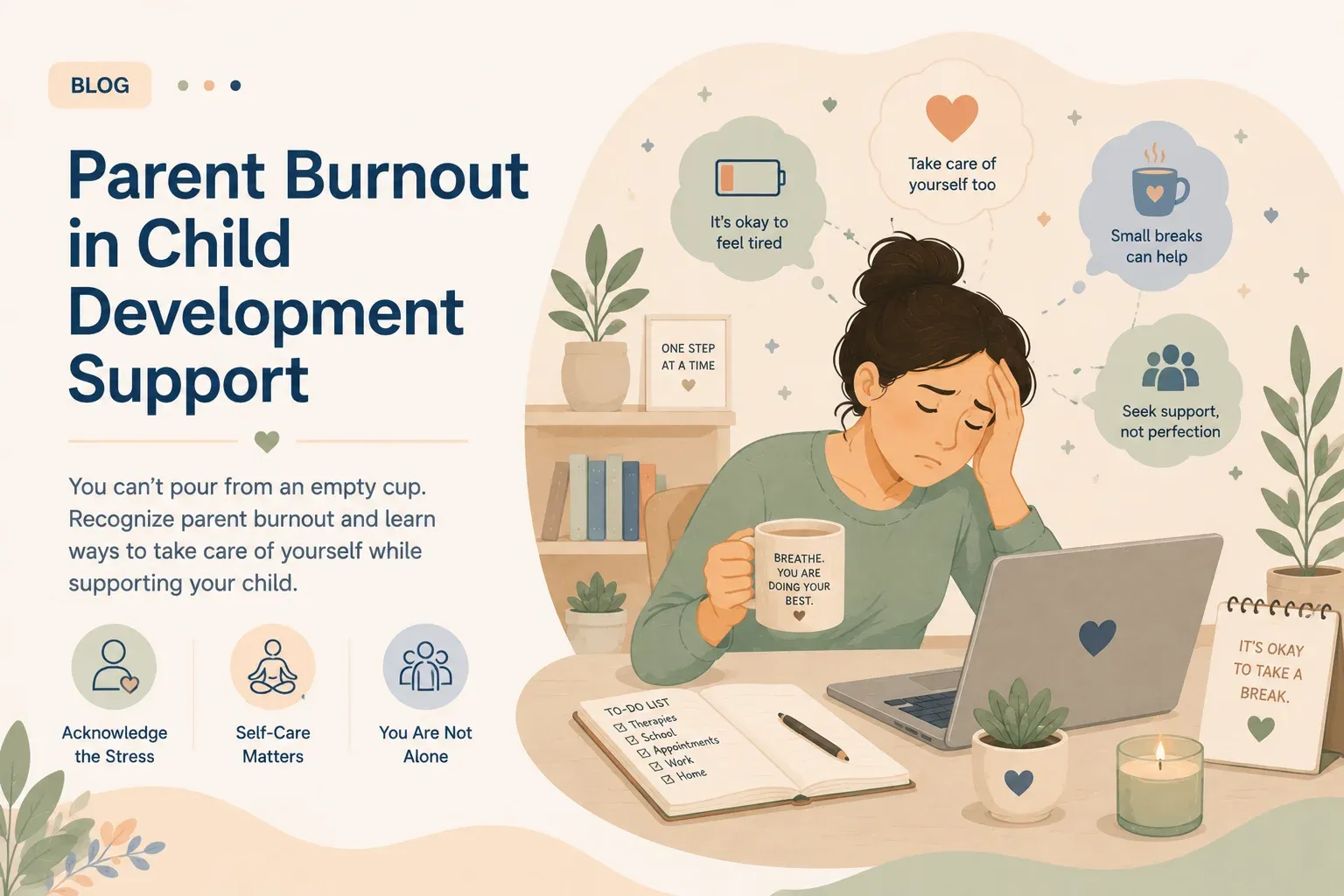
Supporting a child with developmental differences is exhausting. Learn why parent burnout happens and how to manage it.
Emotional Regulation in Children: Why They Struggle to Calm Down
Emotional regulation is a learned skill, not an automatic one. Why co-regulation is the key to helping your child manage big feelings.
Table of Contents
Related Articles
When to Seek a Developmental Assessment for Your Child
How to know if your child's struggles are a normal part of development or if it's time to get a professional opinion.
Parent Guidance for Behaviour Concerns
When traditional discipline fails, parent guidance helps. Learn how understanding the 'why' behind behaviour and changing your response can transform your home.
Parent Burnout in Child Development Support
Supporting a child with developmental differences is exhausting. Learn why parent burnout happens and how to manage it.
Emotional Regulation in Children: Why They Struggle to Calm Down
Emotional regulation is a learned skill, not an automatic one. Why co-regulation is the key to helping your child manage big feelings.