
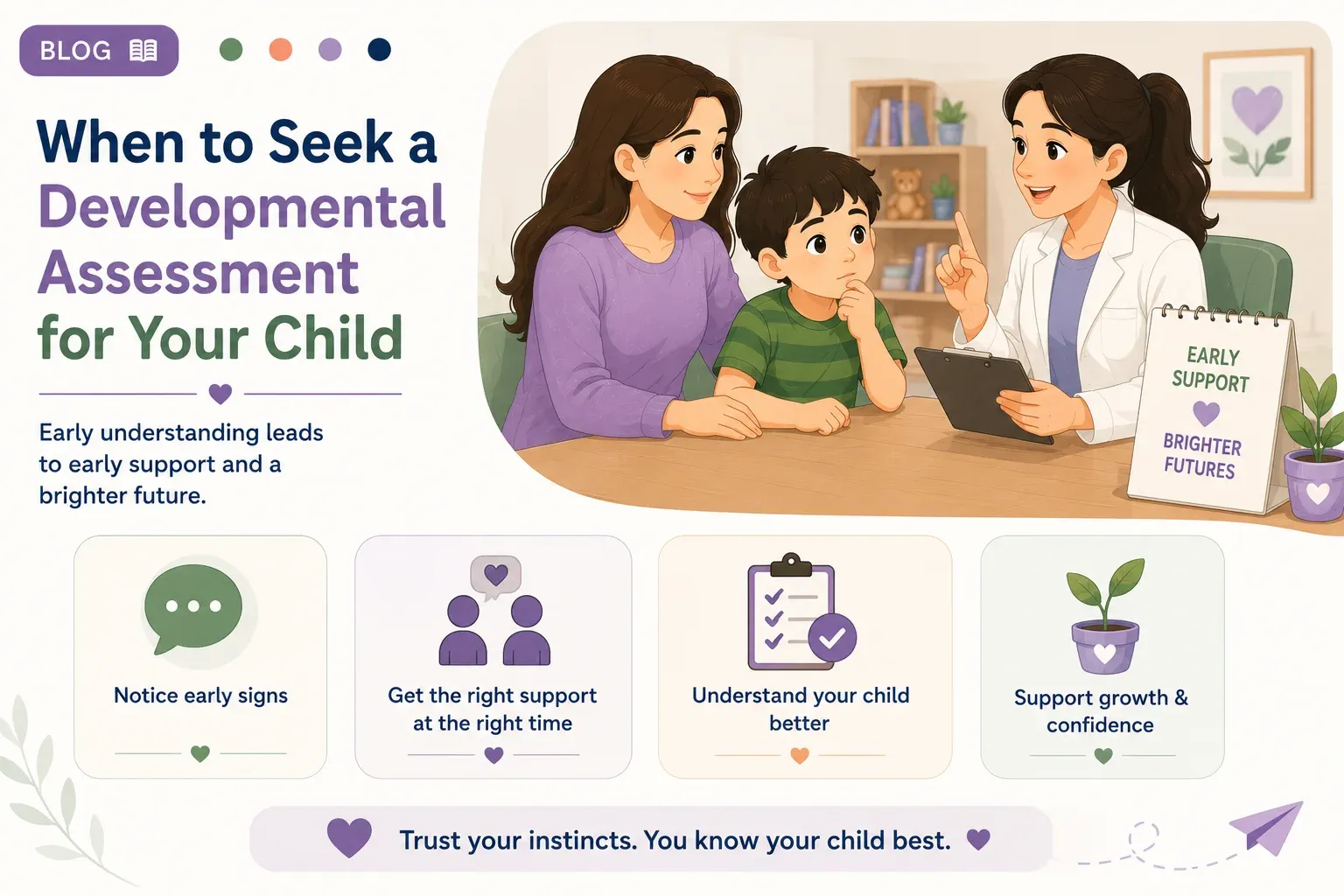
When to Seek a Developmental Assessment for Your Child

Quick Facts
In this article you'll learn
- Why the 'wait and see' approach can sometimes delay vital support
- Common signs that indicate an assessment is necessary
- What actually happens during a developmental assessment
- How a formal report helps parents and schools
- How to prepare for your first consultation
The Problem with 'Wait and See'
Friends and family often mean well when they say, "Oh, they will grow out of it," or "Einstein didn't talk until he was four."
While it is true that children develop at their own pace, taking a strict "wait and see" approach can sometimes delay crucial early intervention. The early years of a child's life involve rapid brain development. Providing the right support during this window can significantly improve their long-term social, emotional, and academic outcomes.
Common Reasons Parents Seek Assessment
Parents usually initiate a developmental assessment when they notice persistent patterns that interfere with daily life. Common triggers include:
- Communication delays: Not responding to their name, lack of pointing or gesturing by 15 months, or a noticeable delay in spoken language compared to peers.
- Intense behavioural reactions: Frequent, severe meltdowns that last a long time and seem out of proportion to the trigger.
- Social difficulties: Struggling to make or keep friends, not understanding personal space, or preferring to play entirely alone.
- Attention and focus: Inability to finish tasks, extreme forgetfulness, or constant physical restlessness (fidgeting, running, jumping) that disrupts learning.
- Academic struggles: Working incredibly hard but still falling behind in reading, writing, or math.
"The school will tell me if my child needs an assessment."
Schools often focus strictly on academic performance. Many children 'mask' their difficulties during the day, performing well academically but suffering extreme emotional exhaustion at home. Parents are usually the first to notice the full picture.
What Happens During an Assessment?
A comprehensive assessment is not a single test; it is a process of gathering data from multiple sources to build a complete profile of your child.
What Parents Can Do Today
- Initial Parent Interview: A detailed discussion about your child's developmental history, medical background, and your main concerns.
- Information Gathering: Questionnaires filled out by parents and teachers to see how the child behaves in different environments.
- Direct Testing: Standardized play-based or table-top activities with the child to assess cognitive, academic, and emotional skills.
- Feedback Session: A meeting where the psychologist explains the results, provides any diagnoses, and outlines a clear support plan.
How an Assessment Helps
The primary goal of an assessment is clarity. It answers the "why" behind your child's behaviour.
With a formal psychological report, parents can:
- Stop guessing and blaming themselves for their child's struggles.
- Secure specific accommodations at school (like extra time on tests, sensory breaks, or an IEP).
- Gain access to specialized therapies or funding support.
- Learn targeted parenting strategies tailored specifically to their child's unique brain.
Taking the First Step
If you have been worried about your child's development for several months, trust your instincts. The first step is usually to book a parent consultation. During this meeting, a clinical psychologist can listen to your concerns and help you decide if a full formal assessment is the right next step.
Disclaimer: This article is for educational guidance only and does not replace a professional developmental, psychological, or medical assessment. If you are concerned about your child’s development, behaviour, attention, learning, or communication, it is helpful to consult a qualified professional.
Key Takeaways
- Trust your instincts; parents are usually the first to notice developmental differences.
- The 'wait and see' approach can sometimes delay critical early support.
- Assessments provide clarity, answering 'why' a child is struggling.
- A formal report is often required to secure school accommodations and specialized support.
- The first step is a parent consultation to discuss your observations and concerns.
Frequently Asked Questions
What does a developmental assessment involve?
It usually involves parent interviews, reviewing school reports, and direct play-based or structured testing with the child to evaluate cognitive, social, and emotional development.
Will an assessment guarantee a diagnosis?
No. The goal is clarity. Sometimes a child meets the criteria for a specific diagnosis like ADHD or Autism, and other times the assessment simply highlights a specific learning difference or environmental stressor.
Should I wait for the school to recommend an assessment?
You do not need to wait. Parents are often the first to notice differences, especially since many children 'mask' their difficulties at school and only melt down at home. Trust your instincts.
Rabbia Ashraf
Clinical Psychologist | Child & Adolescent Development
Rabbia Ashraf is a dedicated Clinical Psychologist specializing in child and adolescent development. She provides parent coaching, developmental guidance, and psychoeducation.
Need Professional Guidance?
Book a consultation with Rabbia Ashraf to discuss your child's development and receive evidence-based recommendations.
Related Articles
How to Prepare Your Child for a Psychological Assessment
Practical tips to reduce anxiety and explain testing to your child without making them feel broken.
Parent Guidance for Behaviour Concerns
When traditional discipline fails, parent guidance helps. Learn how understanding the 'why' behind behaviour and changing your response can transform your home.
Parent Burnout in Child Development Support
Supporting a child with developmental differences is exhausting. Learn why parent burnout happens and how to manage it.
Emotional Regulation in Children: Why They Struggle to Calm Down
Emotional regulation is a learned skill, not an automatic one. Why co-regulation is the key to helping your child manage big feelings.
Table of Contents
Related Articles
How to Prepare Your Child for a Psychological Assessment
Practical tips to reduce anxiety and explain testing to your child without making them feel broken.
Parent Guidance for Behaviour Concerns
When traditional discipline fails, parent guidance helps. Learn how understanding the 'why' behind behaviour and changing your response can transform your home.
Parent Burnout in Child Development Support
Supporting a child with developmental differences is exhausting. Learn why parent burnout happens and how to manage it.
Emotional Regulation in Children: Why They Struggle to Calm Down
Emotional regulation is a learned skill, not an automatic one. Why co-regulation is the key to helping your child manage big feelings.