
Parent Guidance After an Autism Diagnosis: Next Steps at Home

Quick Facts
In this article you'll learn
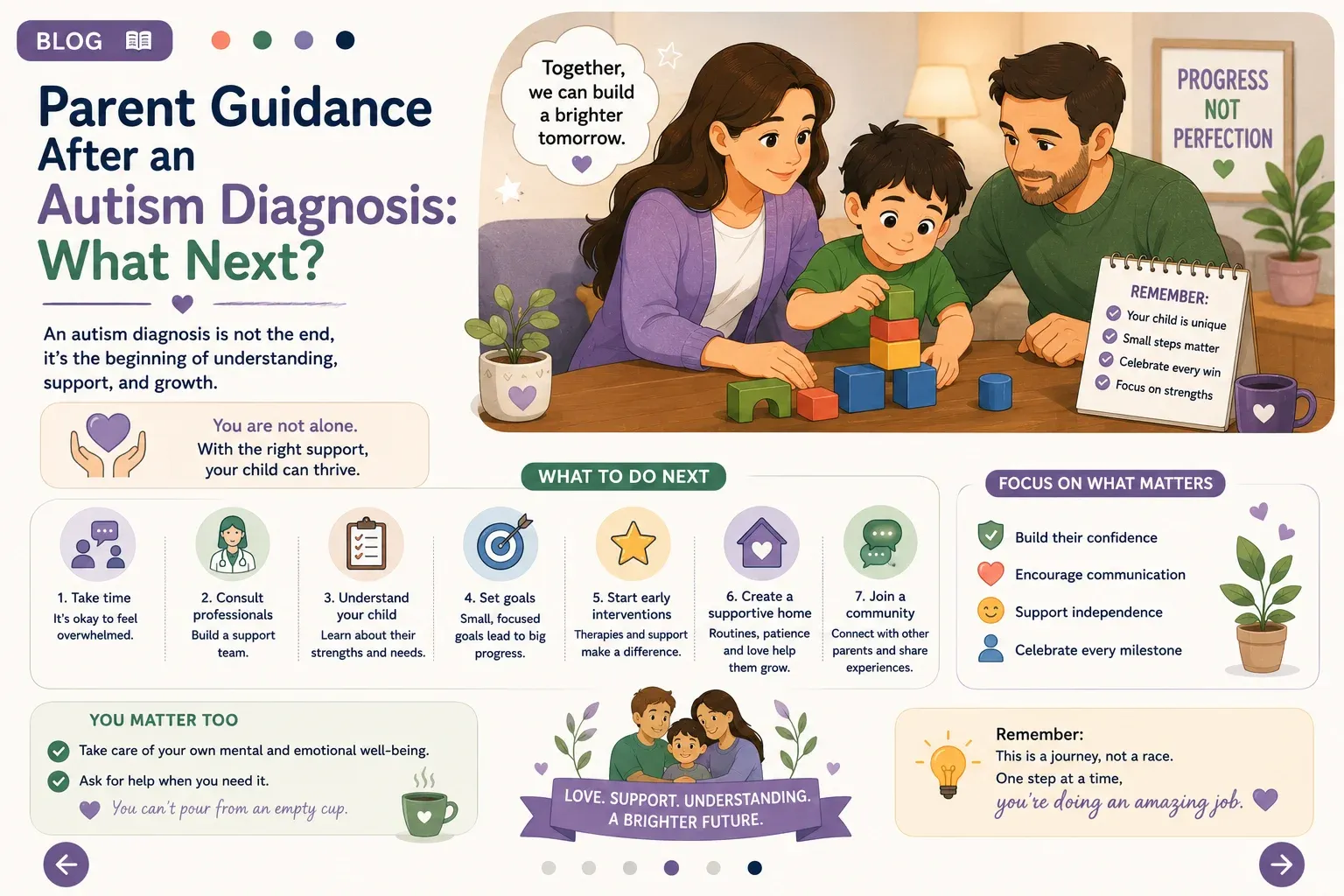
- How to process the emotional impact of a new diagnosis
- Why your child's identity remains exactly the same
- Immediate, practical strategies you can start using at home today
- How to build a balanced support team
- The role of parent consultation in the early stages
Take Time to Process
The first step after an assessment is often to do nothing but breathe. You do not need to read every book, join every support group, or book five different therapies in the first week.
It is entirely normal to experience a grieving process—not for the child you have, but for the typical parenting journey you may have expected.
Your Child Has Not Changed
A diagnosis changes the lens through which you view your child, but it does not change the child. They still have the same laugh, the same favorite toys, and the same unique personality.
The diagnosis simply gives you a better 'instruction manual' for how their brain works. Behaviours that used to seem "stubborn" or "naughty" can now be understood as sensory overwhelm or communication difficulties.
Immediate Home Strategies
While you wait for formal support services or school meetings, there are practical things you can do at home to make daily life easier.
What Parents Can Do Today
- Reduce demands: Lower the pressure on non-essential tasks (like wearing stiff clothes or eating complex meals) to reduce daily meltdowns.
- Use visual schedules: Autistic children often process visual information better than verbal. Draw a simple morning routine map.
- Prepare for transitions: Give 5-minute and 1-minute warnings before leaving the house or turning off the TV.
- Identify sensory triggers: Notice if bright lights, loud noises, or certain textures cause distress, and make small accommodations.
"I need to push my child to act more typical so they fit in."
Forcing a child to 'mask' their autistic traits takes a massive emotional toll. The goal is to support their development and communication, not to make them look indistinguishable from non-autistic peers.
Building a Support Team
Over time, you will build a team around your child. This may include speech therapists, occupational therapists, and special education teachers.
However, the most important members of the team are the parents. You spend the most hours with your child, and your home environment has the biggest impact on their regulation.
When to Seek Parent Consultation
Parent consultation is a highly effective next step. It bridges the gap between receiving a thick assessment report and knowing what to do at 7:00 AM on a Tuesday when your child refuses to get dressed.
A clinical psychologist can help you translate the report's recommendations into practical parenting strategies tailored to your family's actual life.
Disclaimer: This article is for educational guidance only and does not replace a professional developmental, psychological, or medical assessment. If you are concerned about your child’s development, behaviour, attention, learning, or communication, it is helpful to consult a qualified professional.
Key Takeaways
- Give yourself grace and time to process the emotional impact of the diagnosis.
- Remember that your child is exactly the same amazing person they were yesterday.
- Focus on small, immediate changes like using visual schedules and reducing sensory overwhelm.
- Don't try to fix everything at once. Pick one routine to improve first.
- Consider parent guidance consultations to help you translate clinical reports into home strategies.
Frequently Asked Questions
What should I do immediately after my child is diagnosed with autism?
First, take a deep breath. Give yourself time to process the information. Read through the assessment report slowly, and focus on one or two immediate home routines (like creating a visual schedule) rather than trying to fix everything at once.
Will an autism diagnosis change who my child is?
No. Your child is the exact same person they were before the evaluation. The diagnosis simply gives you a better 'instruction manual' for how their brain works and how to support them.
How does parent consultation help after a diagnosis?
Parent consultation bridges the gap between reading a report and living everyday life. It helps parents translate clinical recommendations into practical home strategies, like managing meltdowns, improving communication, and setting up daily routines.
Rabbia Ashraf
Clinical Psychologist | Child & Adolescent Development
Rabbia Ashraf is a dedicated Clinical Psychologist specializing in child and adolescent development. She provides parent coaching, developmental guidance, and psychoeducation.
Need Professional Guidance?
Book a consultation with Rabbia Ashraf to discuss your child's development and receive evidence-based recommendations.
Related Articles
Parent Guidance for Behaviour Concerns
When traditional discipline fails, parent guidance helps. Learn how understanding the 'why' behind behaviour and changing your response can transform your home.
Social Communication Concerns
Understanding the difference between speech delays and social communication challenges in young children.
Parent Burnout in Child Development Support
Supporting a child with developmental differences is exhausting. Learn why parent burnout happens and how to manage it.
Sensory Processing Difficulties
Understand sensory processing differences in children, how to spot sensory overload, and practical ways to create a sensory-friendly home.
Table of Contents
Related Articles
Parent Guidance for Behaviour Concerns
When traditional discipline fails, parent guidance helps. Learn how understanding the 'why' behind behaviour and changing your response can transform your home.
Social Communication Concerns
Understanding the difference between speech delays and social communication challenges in young children.
Parent Burnout in Child Development Support
Supporting a child with developmental differences is exhausting. Learn why parent burnout happens and how to manage it.
Sensory Processing Difficulties
Understand sensory processing differences in children, how to spot sensory overload, and practical ways to create a sensory-friendly home.