
Social Communication Concerns: Beyond Just Talking

Quick Facts
In this article you'll learn
- The difference between speech mechanics and pragmatic language
- Common signs that a child is missing the 'unwritten rules' of socializing
- How social communication difficulties relate to autism
- Why a child might talk constantly but still feel isolated
- Ways parents can model and teach social nuances at home
What is Social Communication?
Social communication, clinically known as pragmatic language, refers to how we use language to interact with others. It is the "unwritten rulebook" of human socializing.
It involves knowing how to take turns in a conversation, adjusting your tone based on who you are talking to (e.g., speaking differently to a teacher than a baby), and understanding non-verbal cues like eye contact, facial expressions, and body language.
Signs of Social Communication Differences
Children struggling with pragmatic language often experience friction on the playground or at school. You might notice:
- Monologues instead of dialogues: Talking at people rather than with them, especially about a highly preferred topic (like dinosaurs or trains), without noticing if the other person is bored.
- Taking things literally: Struggling to understand sarcasm, jokes, or idioms (like "it's raining cats and dogs").
- Inappropriate greetings: Walking up to a group of peers and immediately stating a random fact instead of saying "Hi, can I play?"
- Poor eye contact or personal space: Standing too close to others or rarely looking at the person speaking to them.
- Scripting: Repeating phrases from movies or YouTube videos out of context to initiate an interaction.
"They just need to spend more time around other kids to learn social skills."
For a child with a social communication deficit, throwing them into a chaotic playground is like throwing someone into the deep end of the pool to teach them to swim. They need explicit, step-by-step instruction on how to socialize.
The Link with Autism
Social communication difficulties are a core diagnostic feature of Autism Spectrum Disorder (ASD). In fact, differences in joint attention (sharing an interest with someone else) and eye contact are often the earliest signs of autism.
However, it is possible for a child to have a Social (Pragmatic) Communication Disorder without being autistic. The key difference is that autism also includes restricted, repetitive patterns of behaviour and sensory processing differences.
How to Support Social Skills at Home
Social skills can be explicitly taught, much like math or reading.
What Parents Can Do Today
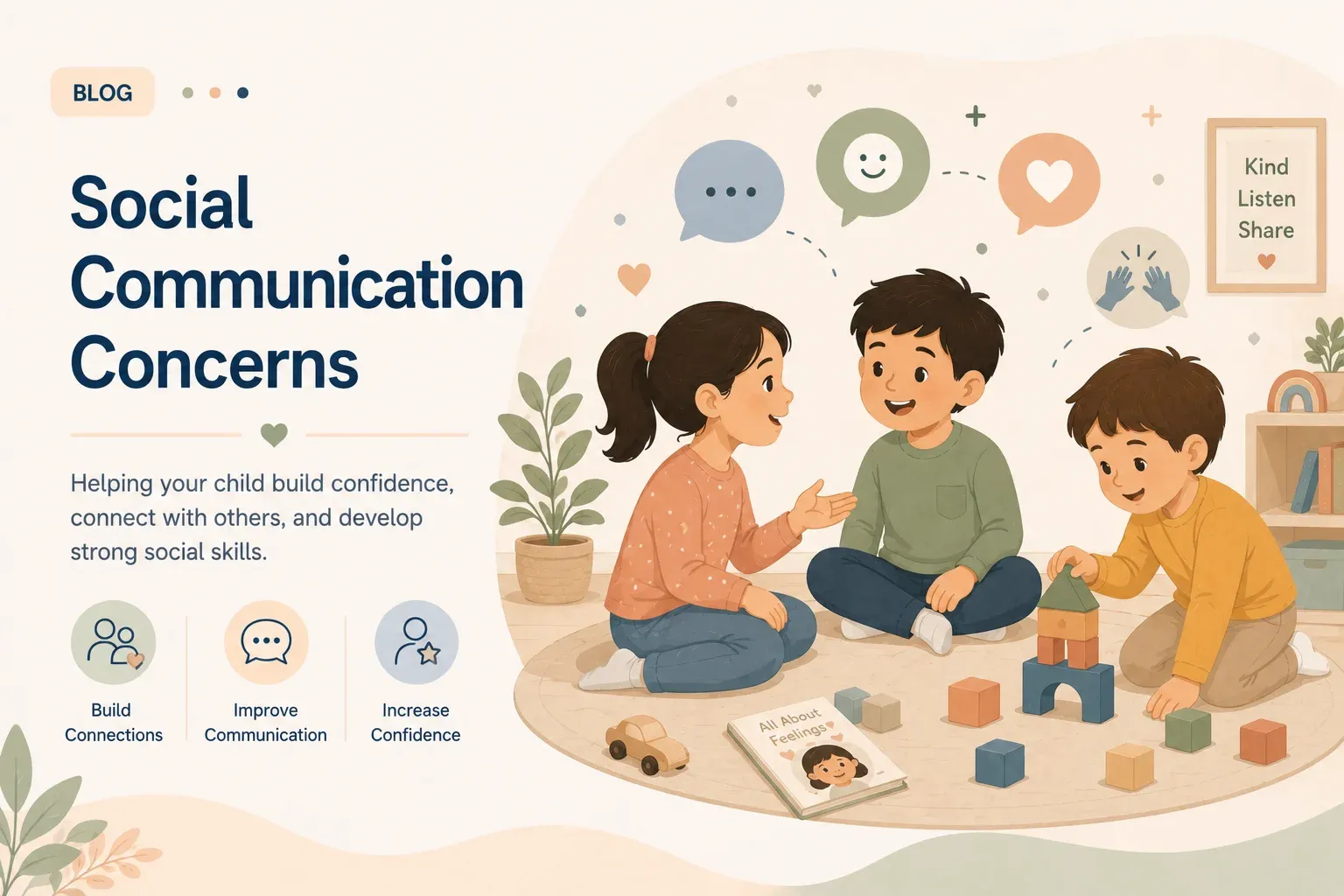
- Use 'Social Stories': Write short, simple stories with pictures explaining exactly what to expect and what to say in upcoming social situations (like a birthday party).
- Role-play at home: Practice taking turns in a conversation. Use a physical 'talking token' (like a small ball) to visually show whose turn it is to speak.
- Explicitly point out emotions: 'Look at Sarah's face. Her eyebrows are down and she is crying. She feels sad. What should we do?'
- Focus on shared joy: Encourage activities that require cooperative play, like building a tower together, rather than just playing side-by-side.
When to Seek Professional Help
If your child's social differences are leading to isolation, bullying, or extreme frustration, it is time to seek an assessment.
A clinical psychologist can determine whether these challenges stem from autism, a specific language disorder, or anxiety, and can guide you toward targeted social skills support or speech therapy focused on pragmatics.
Disclaimer: This article is for educational guidance only and does not replace a professional developmental, psychological, or medical assessment. If you are concerned about your child’s development, behaviour, attention, learning, or communication, it is helpful to consult a qualified professional.
Key Takeaways
- Social communication is the ability to use language and body language appropriately to connect with others.
- A child can have an advanced vocabulary but still struggle severely with social pragmatics.
- Talking entirely in monologues and missing social cues are common signs.
- These differences are a core feature of autism, but can also exist independently.
- Social skills must be explicitly taught and practiced through role-play and social stories.
Frequently Asked Questions
What is the difference between speech and social communication?
Speech is the physical act of forming words. Social communication (or pragmatic language) is the ability to use those words appropriately in a social context, like taking turns in conversation or reading body language.
Is my child just shy, or do they have a social communication problem?
A shy child usually understands social rules but feels anxious executing them. A child with social communication difficulties often does not pick up on the 'unwritten rules' of socializing, such as knowing when to stop talking about their favorite topic.
Can you have a social communication disorder without autism?
Yes. While social communication differences are a core feature of autism, some children have Social (Pragmatic) Communication Disorder, which means they struggle with social nuances but do not have the repetitive behaviours associated with autism.
Rabbia Ashraf
Clinical Psychologist | Child & Adolescent Development
Rabbia Ashraf is a dedicated Clinical Psychologist specializing in child and adolescent development. She provides parent coaching, developmental guidance, and psychoeducation.
Need Professional Guidance?
Book a consultation with Rabbia Ashraf to discuss your child's development and receive evidence-based recommendations.
Related Articles
Sensory Processing Difficulties
Understand sensory processing differences in children, how to spot sensory overload, and practical ways to create a sensory-friendly home.
Speech Delay vs Autism: Understanding the Difference
Not all late talkers have autism. Learn how social communication differences set ASD apart from a simple speech delay.
Parent Guidance After an Autism Diagnosis: What Next?
You have the diagnosis, but what do you do at home? A guide to focusing on support over labels.
Autism Early Signs Parents Should Notice
A guide for parents on what to look for regarding communication, social interaction, and sensory processing differences.
Table of Contents
Related Articles
Sensory Processing Difficulties
Understand sensory processing differences in children, how to spot sensory overload, and practical ways to create a sensory-friendly home.
Speech Delay vs Autism: Understanding the Difference
Not all late talkers have autism. Learn how social communication differences set ASD apart from a simple speech delay.
Parent Guidance After an Autism Diagnosis: What Next?
You have the diagnosis, but what do you do at home? A guide to focusing on support over labels.
Autism Early Signs Parents Should Notice
A guide for parents on what to look for regarding communication, social interaction, and sensory processing differences.