
Sleep, Routine, and Child Behaviour: The Hidden Connection

Quick Facts
In this article you'll learn
- How a lack of sleep mimics the signs of ADHD
- Why sleep is biologically harder for neurodivergent children
- The physical signs that your child is chronically overtired
- How to structure a sensory-friendly bedtime routine
- The impact of screen time on melatonin production
How Sleep Impacts the Brain
During deep sleep, the brain does its 'housekeeping.' It consolidates the things learned during the day and clears out cellular waste. Without enough sleep, the brain's prefrontal cortex—the area responsible for impulse control, planning, and emotional regulation—becomes sluggish.
This is why a child who usually handles a broken crayon with a slight frown will completely melt down over a broken crayon after a bad night's sleep. They do not have the neurological "brake fluid" to stop the emotional reaction.
"When my child is overtired, they look sleepy and yawn."
While adults yawn and slow down when tired, children (especially those with ADHD) often 'wind up' and become hyperactive, loud, and physically restless to fight off the exhaustion.
The Link with ADHD and Autism
Sleep difficulties are incredibly common in children with neurodevelopmental differences.
- In ADHD: The brain often struggles to transition from an active, 'awake' state to a resting state. Their minds may race with thoughts as soon as their head hits the pillow.
- In Autism: Children often experience differences in melatonin production (the sleep hormone) and may have heightened sensory sensitivities, meaning the slight hum of a refrigerator or the texture of a blanket keeps them awake.
Signs Your Child is Sleep Deprived
How do you know if sleep is the root cause of the daytime battles? Look for these signs:
- Extreme difficulty waking up in the morning, requiring multiple alarms or physical shaking.
- Falling asleep during short car rides during the day.
- Increased irritability, emotional fragility, or aggression in the late afternoon.
- A "second wind" around 8:00 PM where they suddenly become wildly hyperactive.
Building a Better Bedtime Routine
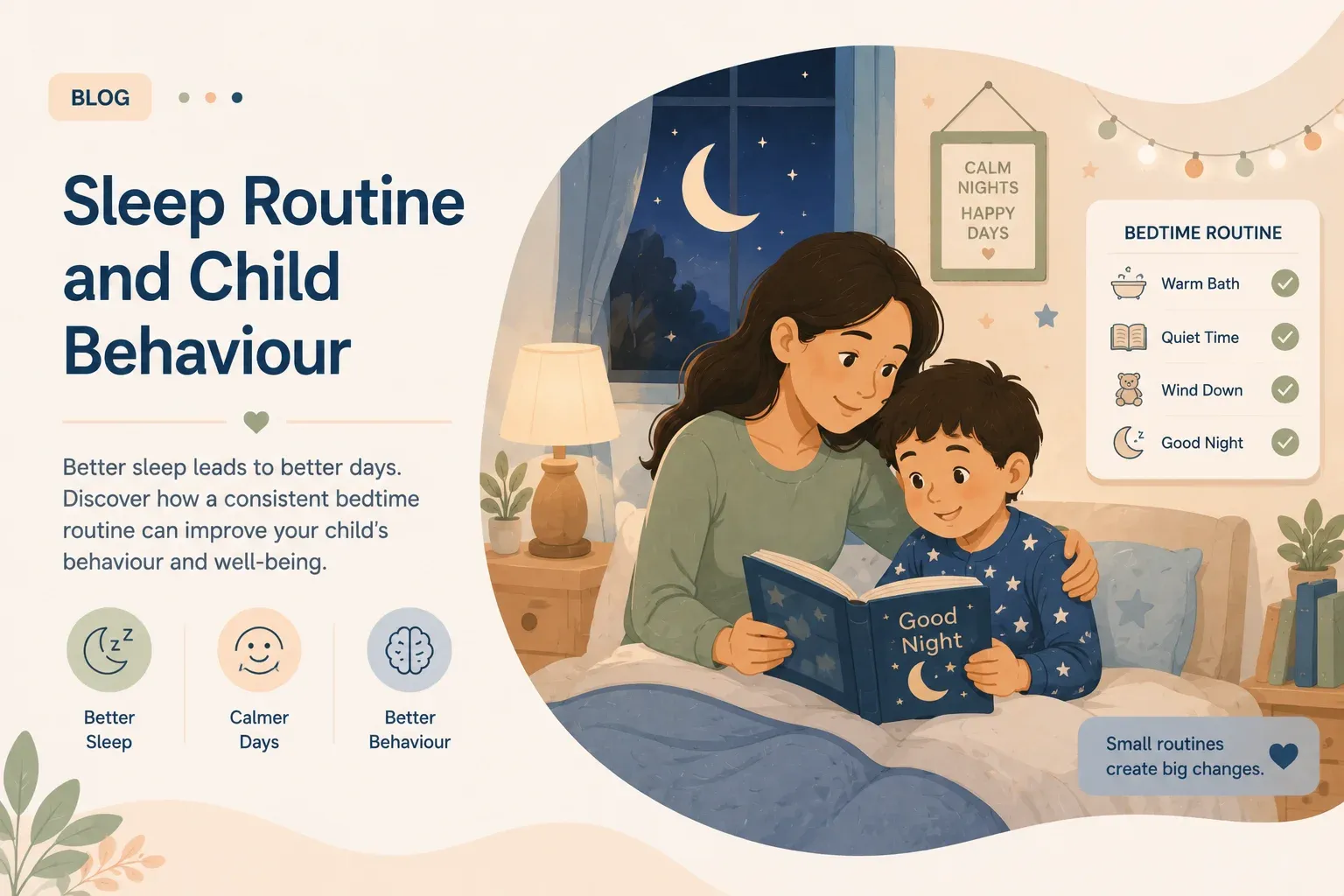
A good bedtime routine shouldn't start when they get into bed; it should start an hour before.
What Parents Can Do Today
- The 1-Hour Screen Ban: Turn off all tablets, TVs, and phones at least one hour before bed. Blue light suppresses melatonin.
- Lower the Lights: Dim the lights in the house to signal to the brain that it is time to wind down.
- Sensory Soothing: Incorporate a warm bath or a firm, deep-pressure massage (if the child is a sensory seeker) to calm the nervous system.
- Predictability: Follow the exact same sequence every night (e.g., bath, pyjamas, two books, lights out). Predictability reduces anxiety.
When to Seek Professional Help
If you have implemented a strict, calm routine, removed screens, and your child is still consistently unable to fall asleep or wakes frequently during the night, consult your pediatrician.
They can rule out physical issues like sleep apnea or restless leg syndrome. If the issue is anxiety-driven or behavioural, a parent guidance consultation can help you design a sleep-training plan tailored to your child's needs.
Disclaimer: This article is for educational guidance only and does not replace a professional developmental, psychological, or medical assessment. If you are concerned about your child’s development, behaviour, attention, learning, or communication, it is helpful to consult a qualified professional.
Key Takeaways
- Chronic sleep deprivation can look exactly like ADHD (hyperactivity, impulsivity, meltdowns).
- Neurodivergent children often have biological reasons for finding sleep difficult.
- Remove all screens at least one hour before bed to allow melatonin production.
- Create a predictable, 30-45 minute calming routine to signal safety to the nervous system.
- Consult a professional if severe sleep issues persist despite a solid routine.
Frequently Asked Questions
Can a lack of sleep look like ADHD in children?
Yes. While overtired adults usually look sleepy, overtired children often look 'wired' or hyperactive. Chronic sleep deprivation can mimic the symptoms of ADHD, including poor focus, impulsivity, and emotional meltdowns.
Why is screen time before bed so bad for sleep?
The blue light emitted from screens suppresses the brain's natural production of melatonin, the hormone that makes us feel sleepy. Additionally, fast-paced games or videos keep the brain in a state of high alert.
How long should a bedtime routine take?
A good bedtime routine should be predictable and take about 30 to 45 minutes. The goal is to slowly lower the sensory and cognitive demands on the child so their nervous system can calm down.
Rabbia Ashraf
Clinical Psychologist | Child & Adolescent Development
Rabbia Ashraf is a dedicated Clinical Psychologist specializing in child and adolescent development. She provides parent coaching, developmental guidance, and psychoeducation.
Need Professional Guidance?
Book a consultation with Rabbia Ashraf to discuss your child's development and receive evidence-based recommendations.
Related Articles
Screen Time and Emotional Regulation
Understand the neurological reasons behind screen-time meltdowns and learn practical parent strategies to manage transitions without the battle.

Parent Guidance for Behaviour Concerns
When traditional discipline fails, parent guidance helps. Learn how understanding the 'why' behind behaviour and changing your response can transform your home.
Morning Routine Problems in ADHD
Mornings are often the hardest part of the day for families with ADHD. Understand the executive function struggles behind morning chaos and learn practical parent strategies.
Behaviour is Communication: Finding the 'Why'
Children don't act out for no reason. Learn how to map triggers and understand what your child is trying to tell you.
Table of Contents
Related Articles
Screen Time and Emotional Regulation
Understand the neurological reasons behind screen-time meltdowns and learn practical parent strategies to manage transitions without the battle.
Parent Guidance for Behaviour Concerns
When traditional discipline fails, parent guidance helps. Learn how understanding the 'why' behind behaviour and changing your response can transform your home.
Morning Routine Problems in ADHD
Mornings are often the hardest part of the day for families with ADHD. Understand the executive function struggles behind morning chaos and learn practical parent strategies.
Behaviour is Communication: Finding the 'Why'
Children don't act out for no reason. Learn how to map triggers and understand what your child is trying to tell you.