
Screen Time and Emotional Regulation in Children

Quick Facts
In this article you'll learn
- Why screens have such a powerful hold on a child's brain
- Why the transition away from screens causes meltdowns
- Signs that screen time is negatively impacting your child's mood
- Practical, brain-based strategies to manage screen time limits
- How to replace screen time with regulating activities
Why Screens Hijack the Brain
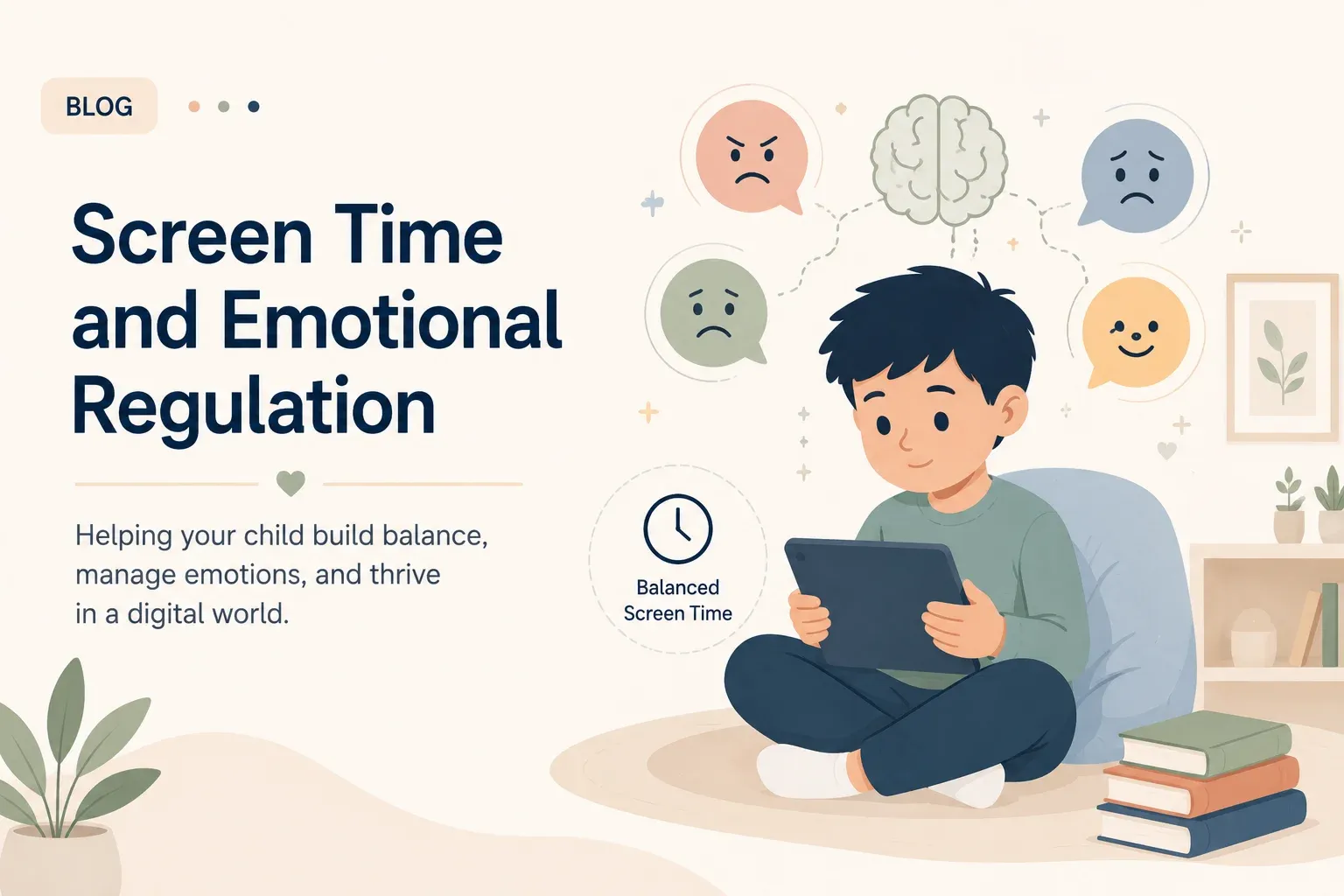
Screens—especially fast-paced video games and short-form videos—are designed to capture and hold attention. They do this by triggering the release of dopamine, the brain's reward chemical.
When a child is watching a screen, their brain is receiving a steady, effortless stream of dopamine. This feels incredibly rewarding, and the child's brain naturally wants this feeling to continue.
The Transition Struggle
When you say, "Time to turn it off," you are asking the brain to do something very difficult: abruptly cut off its supply of dopamine and transition to a much less stimulating task (like eating dinner or doing homework).
This sudden drop in stimulation feels uncomfortable, leading to emotional dysregulation. The resulting tantrum is the child's way of expressing that discomfort and protesting the loss of the reward.
"My child throws a tantrum when I take the iPad away because they are spoiled."
The tantrum is a neurological response to a sudden drop in dopamine. It is about brain chemistry and difficulty with transitions, not just 'bad behaviour.'
Signs Screen Time is Impacting Regulation
It is normal for a child to be mildly disappointed when screen time ends. However, you should take a closer look at screen habits if you notice:
- Severe meltdowns, aggression, or prolonged crying when the screen is removed.
- Loss of interest in non-screen activities (toys, going outside, playing with siblings).
- Difficulty falling asleep or staying asleep.
- Increased irritability, defiance, or mood swings during non-screen times.
Practical Strategies for Parents
The goal is not necessarily to ban screens forever, but to build structure that helps the child's brain regulate.
What Parents Can Do Today
- Use visual timers: Instead of saying '5 minutes,' set a visual timer so they can see time running out.
- Give transition warnings: Say, 'When this episode is over, the TV goes off,' rather than stopping a video in the middle.
- Bridge the transition: Have a moderately engaging activity ready immediately after the screen goes off (e.g., a snack or a preferred toy).
- Create screen-free zones: Keep screens out of bedrooms and away from the dinner table.
When to Seek Support
If screen time has become an unmanageable addiction that is disrupting your family's life, sleep, or your child's school attendance, it is time to seek professional support.
A parent guidance consultation can help you design a step-by-step behaviour plan to regain control of screen time without constant conflict.
Disclaimer: This article is for educational guidance only and does not replace a professional developmental, psychological, or medical assessment. If you are concerned about your child’s development, behaviour, attention, learning, or communication, it is helpful to consult a qualified professional.
Key Takeaways
- Screens provide a massive dopamine hit that makes turning them off physically difficult for the brain.
- Tantrums during screen transitions are a sign of emotional dysregulation, not just stubbornness.
- Children with ADHD often find screen transitions even harder due to their need for stimulation.
- Use visual timers, clear warnings, and 'bridging' activities to ease the transition.
- Stop screen use at least one hour before bed to protect your child's sleep routine.
Frequently Asked Questions
Why is my child so angry when I turn off the TV?
Screens provide a constant stream of dopamine, a feel-good chemical in the brain. Turning off the screen causes a sudden drop in dopamine, leading to frustration, irritability, and often a tantrum.
Should I ban all screen time?
Usually, no. Complete bans can make screens a 'forbidden fruit' and increase desire. It is more effective to teach healthy boundaries, use visual timers, and ensure screens do not replace physical play and sleep.
How long before bed should screen time end?
It is highly recommended to stop all screen use at least one hour before bedtime. The blue light from screens suppresses melatonin (the sleep hormone), and the engaging content keeps the brain alert.

Rabbia Ashraf
Clinical Psychologist | Child & Adolescent Development
Rabbia Ashraf is a dedicated Clinical Psychologist specializing in child and adolescent development. She provides parent coaching, developmental guidance, and psychoeducation.
Need Professional Guidance?
Book a consultation with Rabbia Ashraf to discuss your child's development and receive evidence-based recommendations.
Related Articles
Is My Child Manipulating Me — Or Actually Struggling? A Clinical Psychologist Explains
Your mother-in-law says 'He's manipulating you.' Your spouse says 'She's playing you.' But something doesn't feel right. The neuroscience of why true manipulation requires executive function most struggling children don't have.
Why Does My Child Only Listen When I Shout? The Neuroscience Behind the Yelling Trap
You've asked calmly. Then firmly. Then through clenched teeth. Nothing. Then you SHOUT — and suddenly they move. Why shouting 'works' is the exact reason it's destroying your child's nervous system.

My Child Was Fine Until Year 3 — Why Are They Suddenly Falling Apart?
Your child sailed through Reception and Year 1. Then Year 3 hits and homework takes 3 hours, reading comprehension nosedives, and their confidence evaporates. The Year 3 Wall is real.
Is It Normal That My 4-Year-Old Still Has Major Meltdowns? When Tantrums Cross the Clinical Line
Everyone said the terrible twos would end. But your child is nearly 5 and the meltdowns are BIGGER, louder, longer, and more physical. Here's the clinical threshold between normal and not.
Table of Contents
Related Articles
Is My Child Manipulating Me — Or Actually Struggling? A Clinical Psychologist Explains
Your mother-in-law says 'He's manipulating you.' Your spouse says 'She's playing you.' But something doesn't feel right. The neuroscience of why true manipulation requires executive function most struggling children don't have.
Why Does My Child Only Listen When I Shout? The Neuroscience Behind the Yelling Trap
You've asked calmly. Then firmly. Then through clenched teeth. Nothing. Then you SHOUT — and suddenly they move. Why shouting 'works' is the exact reason it's destroying your child's nervous system.
My Child Was Fine Until Year 3 — Why Are They Suddenly Falling Apart?
Your child sailed through Reception and Year 1. Then Year 3 hits and homework takes 3 hours, reading comprehension nosedives, and their confidence evaporates. The Year 3 Wall is real.
Is It Normal That My 4-Year-Old Still Has Major Meltdowns? When Tantrums Cross the Clinical Line
Everyone said the terrible twos would end. But your child is nearly 5 and the meltdowns are BIGGER, louder, longer, and more physical. Here's the clinical threshold between normal and not.