
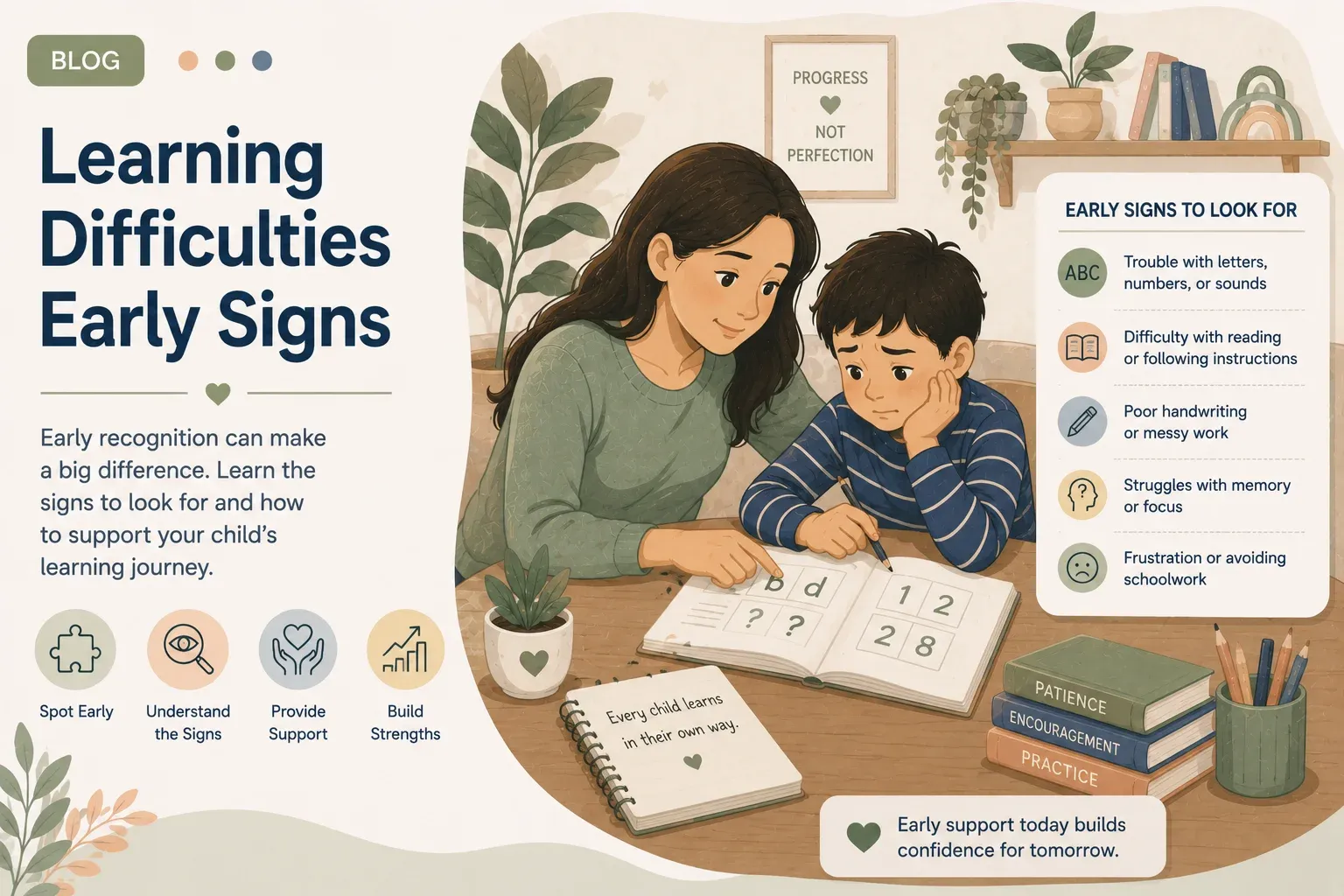
Nothing broke inside your child over the summer holidays. What collapsed was not their intelligence, but their compensatory scaffolding.
In my clinical practice, the transition into Year 3 (Grade 2/3, around ages 7 to 8) is the single most common referral point for previously unrecognized neurodivergence and specific learning difficulties. Parents arrive exhausted, guilty, and confused. They wonder if their child has suddenly become "lazy," or if a stricter classroom teacher is to blame. The truth is far more neurobiological: your child has been working twice as hard as their peers for three years, and the curriculum has finally outpaced their ability to mask.
In this article you'll learn
- The 'Year 3 Wall': How the shift from 'learning to read' to 'reading to learn' exposes hidden deficits.
- Why working memory and processing speed become invisible cognitive bottlenecks at age 7–8.
- How high verbal intelligence disguises dyslexia, inattentive ADHD, and dysgraphia in early grades.
- The 6 subtle compensation strategies your child has likely been using since Reception.
- A structured red flag checklist and exact scripts to bring to your teacher or clinical consultation.
- Why the traditional 'wait and see' approach is actively harmful at this developmental milestone.
1. The "Year 3 Wall": The Great Curricular Shift
To understand why your child is falling apart, you have to look closely at the radical structural transformation that happens between Key Stage 1 (Reception to Year 2) and Key Stage 2 (Year 3 onward).
In Key Stage 1, the classroom environment is gentle, concrete, and heavily adult-directed:
- High visual support: Pictures accompany nearly every sentence, worksheets feature large print, and tasks are broken down step-by-step on the board.
- Oral learning: Teachers read instructions out loud multiple times and check for understanding individually.
- Phonics mechanics: Literacy instruction is centered around learning to read—sounding out simple phonemes and decoding familiar sight words.
Then Year 3 hits, and the pedagogical paradigm flips. The expectation shifts decisively from "learning to read" to "reading to learn."
Suddenly, a child is handed a dense paragraph of text and expected to independently extract the instructions, deduce implicit meaning, hold four instructions in mind, and produce three written paragraphs in response. If a child has subtle early signs of learning difficulties, this is the exact moment the water level rises above their nose.
The Cognitive Bandwidth Crash
2. Working Memory & Processing Speed: The Hidden Bottlenecks
When parents bring their child for a comprehensive psychoeducational or developmental assessment, they are often stunned by the cognitive profile. Very frequently, the child displays superior or gifted verbal reasoning paired with borderline or impaired working memory or processing speed.
Think of your child's brain like a high-performance computer. Their intellectual processor (verbal comprehension, abstract reasoning, creativity) is a blazing-fast, top-of-the-line engine. But their working memory (the RAM) can only hold two pieces of data at once, and their processing speed (the data cable) moves information slowly.
In Year 1, when tasks are short and concrete, a massive intellectual engine easily compensates for limited RAM. But in Year 3, classroom multi-tasking becomes relentless:
- "Listen to the teacher's three instructions."
- "Remember which notebook to pull from the drawer."
- "Open to page 42, write the date, and underline it with a ruler."
- "Hold an original sentence in your head while managing pencil grip, letter formation, punctuation, and spelling."
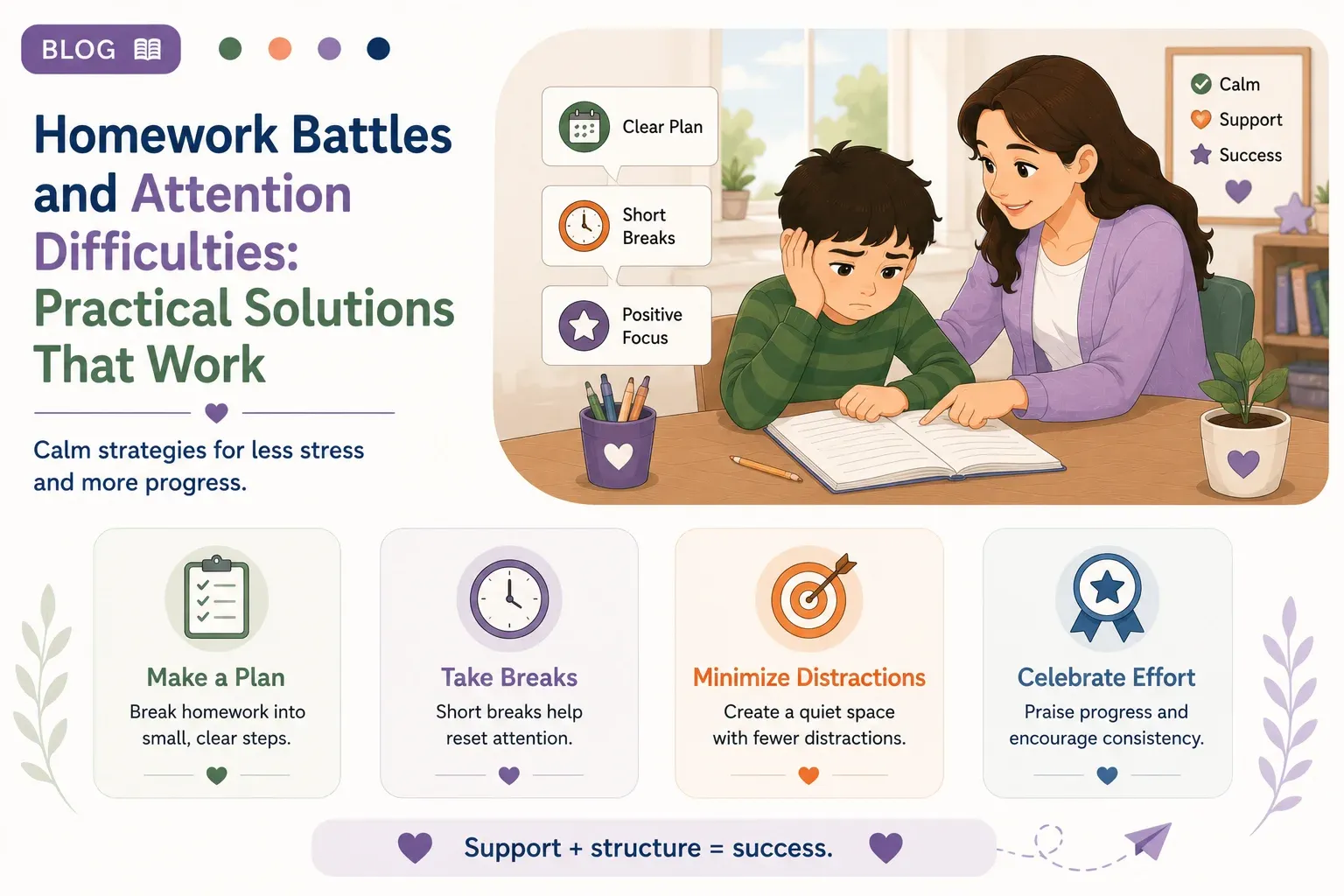
For a child with executive dysfunction, this isn't simply schoolwork—it is an overwhelming cognitive traffic jam. They freeze, look around the room, daydream, or erupt into tears. When homework transitions from 15 minutes of shared reading to 90 minutes of tears and table-slamming, parents find themselves trapped in exhausting homework battles and attention difficulties every single evening.
3. The Twice-Exceptional Mask: Why Bright Children Fly Under the Radar
One of the most heartbreaking phrases I hear from parents in my consulting room is: "The school says he cannot have ADHD or dyslexia because he has an advanced vocabulary and participates so well in discussions."
This misunderstanding stems from a lack of awareness about twice-exceptional (2e) and high-masking profiles. In our article on missed autism and ADHD in bright girls and quiet children, we explore how bright neurodivergent children use sheer cognitive horsepower to compensate for underlying processing deficits:
Instead of decoding phonetic blends, they memorize the visual shape of whole words like photographic snapshots. Instead of sustaining executive focus during teacher lectures, they tune in for 30 seconds, deduce the entire context from conversational clues, and blurt out an impressive answer.
To the outside world, the child looks like a star student. But internally, the child is running a mental sprint all day long just to maintain baseline performance. In Year 3, the sheer volume of reading and writing makes this compensatory strategy mathematically unsustainable. The mask cracks, and the child collapses.
4. The 6 Hidden Signs Your Child Has Been Compensating Since Reception
If you look closely at your child's developmental trajectory, the warning signs didn't start in September of Year 3. They were simply masked by coping mechanisms that have now broken down. Look for these six clinical indicators:
📖 1. Whole-Word Guessing Instead of Decoding
They memorize books word-for-word after hearing them once. When confronted with an unfamiliar word, they look at the first letter and make a wild contextual guess (reading "pony" as "horse", or skipping prefixes entirely).
✍️ 2. The Written Expression Bottleneck
They can narrate an intricate, creative 15-minute story aloud with rich vocabulary, but when handed a pencil, they take 45 minutes to write "The dog ran." The physical and cognitive act of writing short-circuits their thinking.
👀 3. Stealth Social Mirroring
They never hear the teacher's instructions. Instead, they survival-navigate by watching their desk partner—waiting until the classmate opens their folder, copies the page number, or pulls out a blue pencil, then quickly mirroring them.
💔 4. Perfectionistic Erasure & Paper Tearing
If a single letter is crooked or a word is misspelled, they erase until the page rips, or crumple the sheet in despair. This perfectionism is not high standards—it is anxiety masquerading as conscientiousness.
🌪️ 5. The 4:00 PM Restraint Collapse
The school reports: "They are an angel here!" Yet the moment they step into your car or kitchen, they explode over the wrong snack, dissolve into screaming fits, or collapse into unresponsive exhaustion from holding it together all day.
🩺 6. Sunday Night Somatic Symptoms
Unexplained tummy aches every Sunday evening, mysterious morning headaches, or sudden extreme sensory sensitivity to sock seams and uniform collars before school. Their body is sounding an alarm that their words cannot yet articulate.
"If my child was fine in Reception and Year 1, they can't suddenly have a learning difficulty or ADHD."
High verbal intelligence masks developmental differences in early years. Learning difficulties and Inattentive ADHD regularly go unnoticed until the curricular load outstrips a child's compensatory strategies around age 7 to 8.
"They just need to try harder and concentrate. When they want to, they can focus on Lego or video games for hours."
Hyperfocus on high-dopamine, visual tasks is a hallmark trait of ADHD, not evidence of willful control. Regulating attention during low-dopamine, high-effort academic tasks requires executive functioning networks that are biologically overloaded.
"Getting an evaluation will just label them and lower the teacher's expectations."
Children who struggle without an accurate clinical explanation do not think of themselves as 'free of labels.' They label themselves: 'I am dumb, I am broken, I am the bad kid.' A clinical evaluation replaces self-blame with precise, practical accommodations.
5. Parent Action Checklist: What to Bring to a Consultation
When you decide to advocate for your child, vague statements like "She is really struggling this term" often get brushed off with "Let's wait and see how she does next term."
To break through that dismissal, you need concrete, clinical data. Document these three dimensions over a two-week period:
Clinical Observation Log
Record how long a 10-minute worksheet actually takes. Note the erasures, emotional pauses, and the amount of adult co-regulation required to finish a single task.
Document the difference between what your child knows orally versus what they can write down independently. Record a voice memo of them explaining a concept, then photograph their blank written worksheet.
Note post-school meltdowns, bedtime anxiety, sleep disturbances, and physical complaints. This demonstrates to clinicians that the child's "good behavior" at school comes at an unsustainable emotional expense.
Verbatim Script for Your Next Teacher Meeting
"Thank you for meeting with us. We know [Child] is well-behaved and cooperative in class, but at home, we are seeing severe distress. A 15-minute homework task is taking two hours of tears, and their academic self-worth is rapidly deteriorating. Given the significant gap between their oral reasoning and their written output, we are concerned about a working memory or processing bottleneck. We are scheduling a formal developmental evaluation, and we would like to collaborate on immediate scaffolding in the classroom while that takes place."
6. Why "Wait and See" Is Dangerous at Age 7 to 8
When well-meaning educators or family members urge you to "give it time, boys mature late," or "let's wait until Year 4," be extremely cautious.
Developmentally, age 7 to 8 is a critical psychological inflection point. Before age seven, children view academic effort as malleable: if they try harder, they will improve. Between ages seven and nine, children transition into concrete operational thinking and crystallize their academic self-concept.
If a child spends Year 3 silently drowning while watching their peers finish worksheets in twenty minutes, they do not conclude: "My working memory has an executive functioning bottleneck." They conclude: "I am stupid. I cannot do school."
Once learned helplessness, school refusal, and chronic anxiety take root, treating the secondary emotional trauma is far more complex than remediating the original learning difference. Knowing when to seek a developmental assessment allows you to identify dyslexia, ADHD, processing deficits, or dysgraphia early, implement assistive technologies (speech-to-text, graphic organizers, extra time), and preserve your child's emotional wellbeing.
If you already possess testing from an educational psychologist or school screening, learning how to read a child psychological assessment report will help you decode the percentile splits between their verbal index and cognitive processing speed.
Key Takeaways
- The Year 3 transition marks the pedagogical shift from 'learning to read' to 'reading to learn,' which suddenly exposes hidden processing deficits.
- Bright children frequently possess high verbal intelligence that camouflages ADHD, dyslexia, or weak working memory throughout Reception and Year 1.
- Watch for whole-word guessing, extreme written output avoidance, classroom social mirroring, and severe after-school meltdowns.
- A child who concentrates for hours on Lego or video games can still have ADHD; hyperfocus is driven by dopamine, not executive control.
- Do not 'wait and see' at age 7–8: early diagnostic clarity prevents secondary school anxiety, learned helplessness, and cratered self-esteem.

Rabbia Ashraf
Clinical Psychologist | Child & Adolescent Development
Rabbia Ashraf is a dedicated Clinical Psychologist specializing in child and adolescent development. She provides parent coaching, developmental guidance, and psychoeducation.
Need Professional Guidance?
Book a consultation with Rabbia Ashraf to discuss your child's development and receive evidence-based recommendations.